Joe Canning departed with a hurling record - but two sharpshooters are on his tail
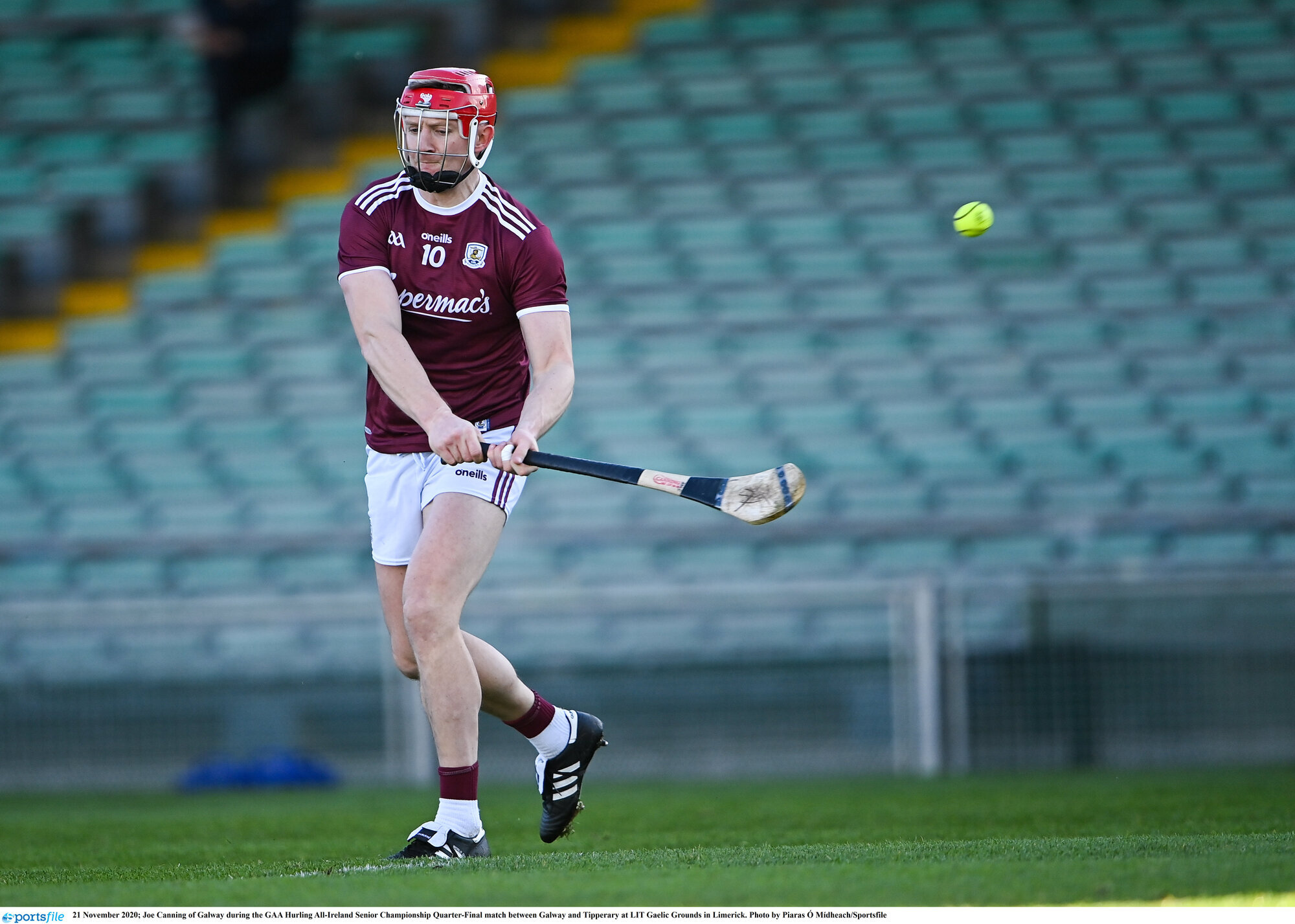
Joe Canning: Became the hurling championships top ever scorer before retiring this year. Picture: Piaras Ó Mídheach/Sportsfile
When Steph Curry scored his second 3-pointer in the Golden State Warriors’ match against the New York Knicks this month, he passed Ray Allen to become the NBA’s all-time leader with 2,974 career 3-pointers.
Curry made the historic basket with 7:33 left in the first quarter, an accomplishment all the more remarkable again considering it took Allen 1,300 career games to set the previous mark. Yet Curry broke the record in just his 789th career game.
As soon as the ball dropped, Curry began beating his chest and blowing kisses to the crowd before the game was stopped to mark the historic moment. The game was on in New York, but the crowd rose to their feet and roared in acknowledgement of Curry’s achievement.
As nostalgic and dramatic music boomed around Madison Square Garden, a huge love-in took place between Curry, his teammates and management as they all warmly embraced the player who changed the game, especially in how he ignited the 3-point revolution in the NBA.
It was classic American sports glitz and razzmatazz, but it was also a reminder of how much supporters value records in a professional sporting context compared to amateur sports.
The GAA is much more grounded and down to earth, but it has still never fully embraced the concept of compiling stats and data. With no official public record to make factual comparisons, the acknowledgment of fantastic individual feats has only come about through the dedication of some outstanding individual statisticians.
The research of someone like Leo McGough was able to inform everybody else of how Joe Canning became the all-time leading championship scorer after flashing over a point with five minutes remaining in Galway’s qualifier against Waterford in July.
As Canning silently slipped into the record books, he modestly ran back out the field to set up for the puckout. Galway were still trailing a game they looked certain to lose but there were certainly no fist-pumps, chest beating or crowd adulation to mark his achievement in surpassing Henry’s Shefflin’s total.
Although Galway only played two championship matches — and failed to win a game for the first time in 30 years – Canning’s quest was a constant source of debate all summer until he finally broke the record.
Canning was expected to do it on Galway’s first day out in July in the Leinster semi-final against Dublin, but Galway blew up that afternoon. It took them until the 15th minute to register their first point, which was Canning’s first score from his first seven attempts. Two of those shots could have been goals, but Galway had switched the freetaking duties from Canning to Evan Niland shortly after half-time.
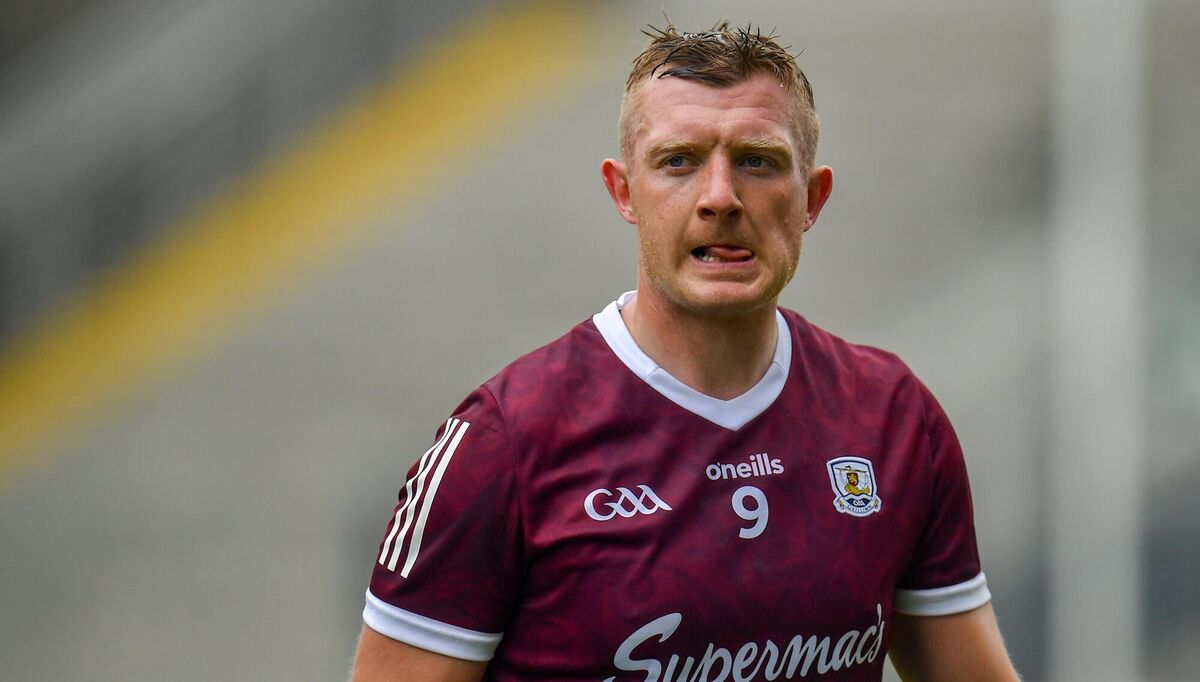
When Canning finally broke the record just three weeks later, his nine-point haul increased Canning’s tally to 27-486, which edged him past Shefflin by two points.
It was fitting that if Canning was to break the record that he did it on that scorching afternoon in Thurles – because he announced his retirement just four days later.
It was some small consolation in his departure, but Canning would have broken the record a lot sooner if he hadn’t been injured for the 2019 championship, which ruled him out of three of Galway’s four round-robin championship matches that summer.
Canning only made his return with 28 minutes remaining in their final match against Dublin, scoring two points. Galway lost and went out of the championship on scoring difference, something that surely wouldn’t have happened if Canning was around.
Canning’s remarkable scoring consistency was his calling card. His scoring average is higher than Shefflin’s, hitting 9.3 points per game to Shefflin’s 8, while Canning’s final haul came from 62 championship matches, nine less than Shefflin.
Yet while some of the narrative before the 2021 championship focussed on Canning’s attempt to break Shefflin’s record, a similar theme will follow Patrick Horgan into — and throughout — the 2022 championship; Horgan is now just 19 points behind Canning’s record which he will surely smash next summer.
Horgan already surpassed another milestone in 2021 by becoming the leading point scorer from play in championship history; he has now raised 146 white flags from play, which pushed him 12 clear of Canning.
Horgan also joined an exclusive club of hurlers to have broken the 500 points barrier. Horgan went into Cork’s qualifier against Clare with 22-433 to his credit, adding up precisely to 499 points, but he had reached the 500 mark within three minutes.
After coming on the loop across the D to take a pass from Alan Cadogan, Horgan checked back, but as he side-stepped inside John Conlon, Horgan lost his footing and fell to his knees. Conor Cleary was just about to swoop to tie up Horgan but he immediately got off the shot. From the moment Horgan hit the turf to when the ball cleared the crossbar, the sequence of play took just 1.9 seconds.
It was another incredible score, but Horgan’s overall numbers are staggering since making his debut in 2008; in 144 appearances between league and championship, Horgan has scored a combined total of 46 goals and 1,038 points.
The change in equipment, especially sliotars, has helped the modern forwards. But Canning, Shefflin and Horgan have mostly benefitted from the backdoor system, which has given the greatest forwards of the modern era far more of an opportunity (and way more games) to showcase their scoring talents compared to so many generations before them who knew nothing only knockout.
In modern sport though, everything is accelerated. At 33, Curry is playing arguably the best basketball of his career as the Warriors pursue another title, so there’s no telling where his record will stand by the time he retires. But with the 3-point volume increasing every season, Curry’s Warriors’ team-mate Draymond Green believes that the record will only last for “five or six more years”.
The hurling championship record was held by Eddie Keher for over 30 years before Shefflin grabbed hold of it in 2010, but it’s now expected to change hands twice in the space of less than 10 months.
Indeed, if Horgan breaks it next summer, he will certainly hold the record for longer than Canning has it, and possibly Shefflin too, who held it for 11 years after surpassing Keher.
If Horgan does break that record, the only player still playing that could catch Horgan in time is TJ Reid, who is currently 59 points behind Horgan. After Reid, the only other player still playing who is anywhere close to the Kilkenny man is Séamus Callanan. However, Callanan is still 151 points behind Reid.
Reid’s achievements in being so close to the top is all the greater again considering it took him so long to fully establish himself on a superb Kilkenny team. Reid also only assumed the primary freetaking duties in 2014, which further elevates his incredible tally of 26-414.
Reid played one more game than Horgan. He is also a year older, but the Kilkenny man’s ability to climb up the charts can’t be dismissed because of his metronomic accuracy. The return of the round robin in 2022 will further increase that scope to accumulate more scores because Reid only played three championship matches in 2021. But like in any player’s career, especially in the autumn of that career, staying motivated and injury-free will ultimately define how long the journey lasts.
When Canning’s incredible journey ended in July, at least he fittingly signed off with the record his scoring genius deserved. Yet assuming everything goes to plan for him in 2022, that accolade as hurling’s highest championship scorer should belong to Horgan by as early as next May.


CONNECT WITH US TODAY



Be the first to know the latest news and updates