Waterford says final farewell to hero Mick Flannelly
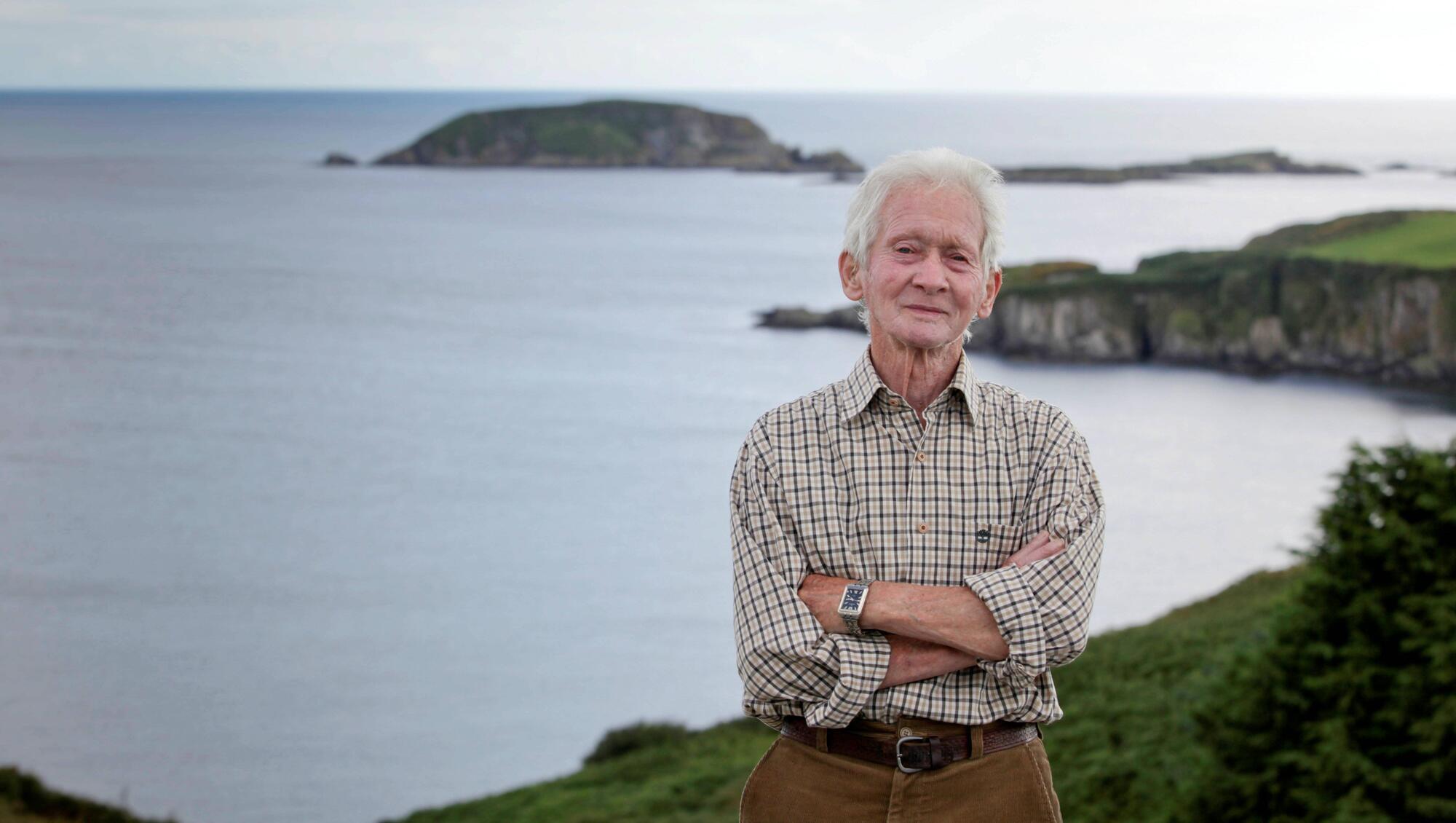
Waterford hurling great Mick Flannelly pictured at his holiday home in West Cork in September 2013. Picture: Emma Jervis
Something glorious, said the priest halfway through the service.
We were in the small church in Butlerstown near Waterford city for the funeral of Mick Flannelly. The celebrant, Fr Pat Fitzgerald, had just cited Mick’s record in the white and blue of Waterford: an All-Ireland winner with Waterford in 1948 (minor) and in 1959 (senior), not to mention over two dozen county titles at various grades in both codes with his club, Mount Sion.
Fr Fitzgerald was accurate in describing Flannelly as being part of something glorious, that dazzling period from the mid-50s to the mid-60s in Waterford’s sporting history when the county hurlers contested three All-Ireland finals, winning one.
He also acknowledged that the quiet man from Griffith Place might have lit up a different series of venues in another sport altogether. Alfie Hale had confided to the padre that Mick Flannelly had had all the makings of a top-class soccer player as well: a strong endorsement on the grounds of witness credibility alone.
The ceremony was of a piece with the man commemorated: low-key and unflashy, befitting someone who helped his county to its greatest days but didn’t deploy those experiences to grow his brand later in life, to use a modern phrase.
After the mass, out in the sloping cemetery, the rain paused while everyone filed uphill to the graveside. It was easier then to look around and take in the surroundings: Henry de Bromhead’s gallops in the middle distance, in the soft rolling countryside, but closer to the church a couple of Mick’s old comrades in arms were on hand to say goodbye.
It’s well over half a century since Martin Óg Morrissey and Mickey O’Connor operated further back the field from Mick Flannelly but they were there in Butlerstown to accompany their teammate on his last journey.
The pandemic has taken a lump hammer to traditions great and small, and the GAA funeral has been pummelled as much as any of them. The usual knots of people replaying old games and reviving past jokes and yarns have been banished by distancing; when an old team-mate or two come together there’s even a reluctance, or awkwardness, about whether a handshake or a fist-bump is the appropriate greeting. Calling someone over from another group to verify or deny some yarn or other is now a fraught exercise.
But some traditions can’t be broken. Players who go through the fire together in pursuit of victory are bound by experience, and the strength of that experience is too strong to be denied. A damp Monday morning in Butlerstown wouldn’t be mistaken for Croke Park on an All-Ireland afternoon, but the bond forged in one was still visible in the other.
So was a distant echo of those afternoons now half a century distant. In his time Mick Flannelly and his teammates knew well what All-Ireland final Sunday sounded like, or the other championship days when all the chips were on the table: the rolling waves of noise coming down from a crowd agonising and exulting in every puck of the ball, that sound swelling and dipping to track the action, and on Monday there was a hint of that even as the mourners said a decade of the rosary at the graveside.
Shouts and screams from the children in the local national school, running around the yard on their break, could be heard drifting up the hill. The voices were higher and lighter than the deep bass roar you’d expect in Semple Stadium or Croke Park, but the joy and sense of freedom was palpable.
Incongruous? Not a bit. It was all part of something glorious.


CONNECT WITH US TODAY



Be the first to know the latest news and updates