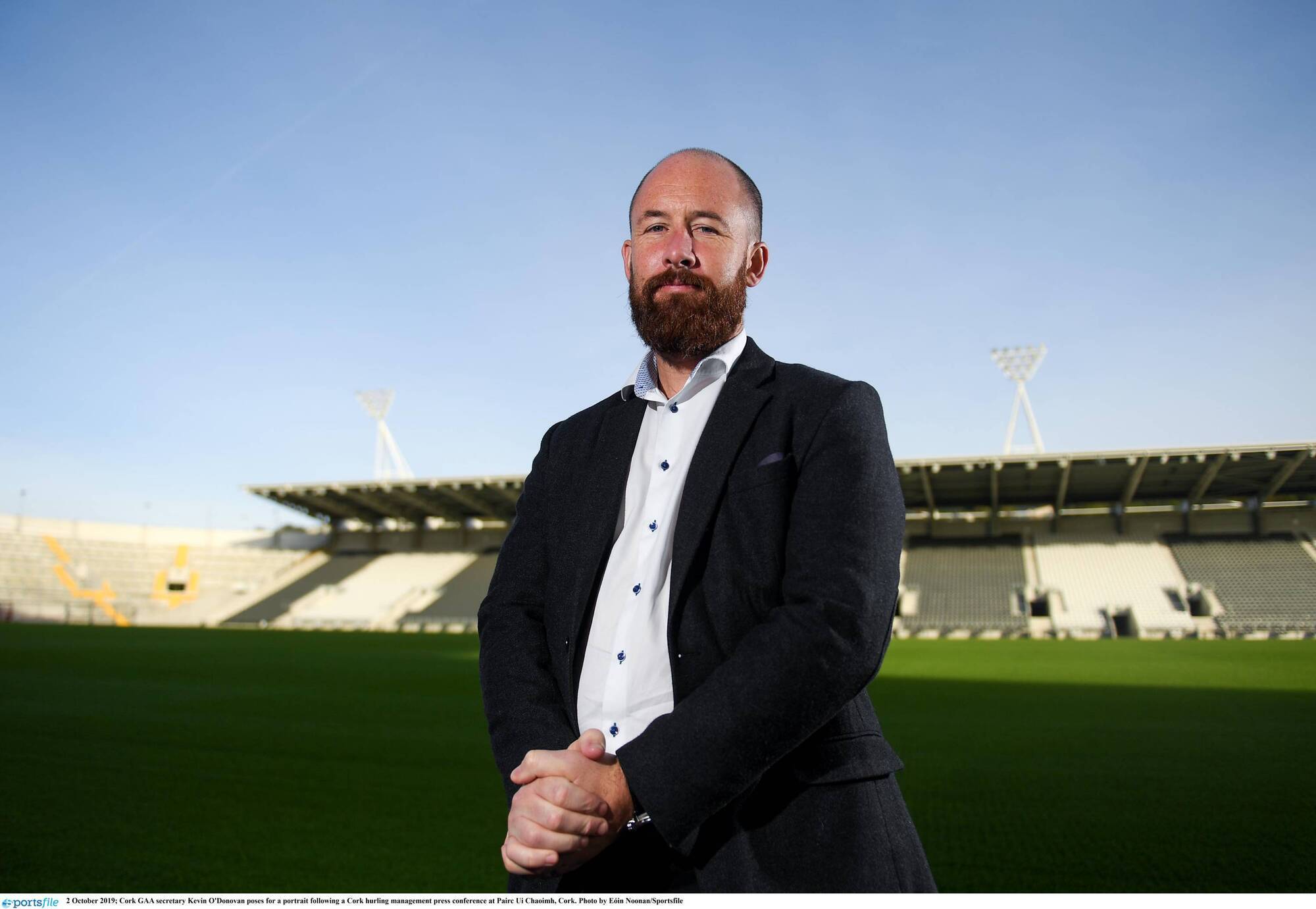
KIERAN SHANNON : When we last met four years ago, after Cork had won the 2017 Munster Championship but before they played and lost to Waterford in the All-Ireland semi-final, you talked about how the team’s run had lifted spirits in the county. ‘It’s more than the fella walking down the road with his hurley. It’s the conversation, the positivity, people wanting to get involved. It feels like we’ve been living in Kilkenny the last month.’ Where and what has this summer felt like?
Kevin O’Donovan: It’s been really exciting. My first instinct if anyone asks me what is it I’ll remember most about this summer, I tell them it’ll be of my first time seeing this [underage] player or that player or that player stepping up to the mark, fully-grown men, with a mad desire to play for Cork, and you said to yourself, ‘Wow, I haven’t seen that in a while.’ You’d have seen it with that minor hurling team of ’94-95 with Seán Óg [Ó hAilpín], Joe Deane and those lads: that there was something about that group that they weren’t going to finish as just minors. You’d have said the same about various underage teams in other counties. And I see that in a good few of the guys around now.
KS: What is it you see in them?
KOD: Their character and presence and belief to play at an adult level. And how comfortable they are in the moment, a bit like the Limerick hurlers appear to be at this point in time. So it’s exciting, seeing some of our underage players and saying, ‘God, I can see him wearing the X jersey for the Cork seniors in two or three years’ time.’
KS: What are your other big takeaways of the summer?
KOD: That this is only the start of the journey. The changes we’ve made in Cork that some people are attributing to the recent success, they haven’t started showing dividends yet. I’m very slow for this to be perceived as a celebration. This is a taste of what we could achieve. We have achieved absolutely nothing yet.
KS: What is achieving something?
KOD: Achieving something is Liam MacCarthy and Sam Maguire in Páirc Uí Chaoimh, but also that every club player is getting a meaningful full programme of games. That every young boy and girl has a road to a Cork jersey, whether it’s through a squad, a school, a club, or whatever way they need to get there. So I feel we’re just at the beginning of that.
What has actually happened is that an early dividend has come. And the seniors have made a brilliant leap from last year. So I’d be hoping this [Sunday] is an All-Ireland like the ’99 one, one that we could win. But if it’s not won, it’s then about making sure the organisation is in a healthy place to win the next one.
While we’ve had a lot of success this summer, we’re only starting on the journey this county needs to go on, in terms of reforming structures, equal opportunity for all players, being really commercially astute so we can maximise commercial dividends to reinvest in coaching at grassroots level — that’s what we’re about. We need to be consistently there [at the top table] — in both codes. People are forgetting the underage football success as well, following on from the two All-Irelands two years ago. We’d Covid last year but this year we’re back winning two Munster titles. Our minor footballers [All-Ireland semi-final against Tyrone today] are as important to me as any game this week because that is the nature of our county.
So while I want to get carried away in the excitement of the week and all these young players because new things are fun, we’ve also to ask: Are we doing things the right way, as best we can? Because as someone said to me recently, ‘You wouldn’t mind if Cork didn’t win an All-Ireland for a couple of years as long as when they did win it they won it the right way and could win five more of them.’ That said, that’s all off for this weekend. There might not be a better opportunity for Cork than this weekend to win a [senior] hurling All-Ireland, because if you win it early with a young team, as you saw with Limerick in 2018, there’s more All-Irelands there. It could open up a door. But if it isn’t won, does it undermine or devalue all the work that this management team have done, and the work being done in the development squads, schools, clubs? It doesn’t.
From the Irish Examiner, August 2017: ‘O’Donovan believes it comes down to nine boxes, 3x3 and each one is linked and inevitably part of the one ecosystem.
“The GAA is essentially played in three places — club, school-college, and county. And say a player can only play at three levels — child, youth, and adult. That’s your 3 x 3, that’s your nine boxes. In Cork now we’re saying all our programmes are solved because we’ve development squads. But that’s just one-ninth of what you’ve to do. And that’s what I’m worried about. What primary schools coaching is going on in Cork city? It’s good in places, missing in others. Is a 10-year-old engaged following Cork, dreaming the dream? Administrators and coaches need to stop putting on their hat and just say ‘I’m only concerned with what happens in this box here.’ We’ve to say, ‘It’s Cork today, it’s Kilmeen tomorrow and it’s Clon school tomorrow and one can’t walk on top of the other.”’
KS: Are the nine boxes (by two) still your model?
KOD: Totally. But back then I had the luxury of simply proposing it. Now that I’m in this seat there’s the harsh commercial reality of figuring out who’s going to pay for it.
KS: What’s different about being in that seat?
KOD: That’s the only difference.
KS: What has it allowed?
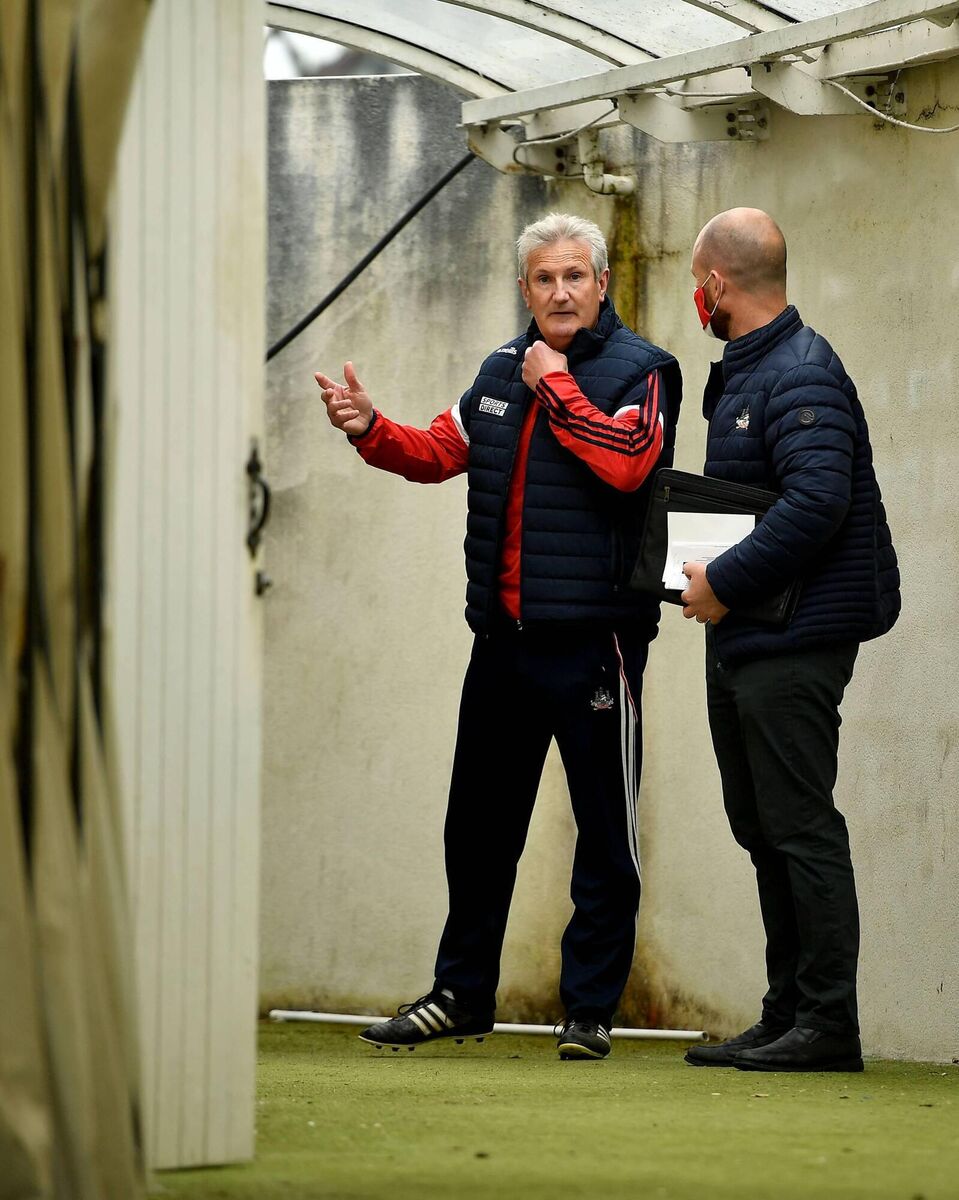
KOD: Sure it’s a dream to have a finger in each one of those pies. I’m not the one driving any of them. That would be the inspirational people on the ground in those areas: the teachers and coaches going out training school teams on a Monday after school, the people going to a monster blitz on a Saturday morning. They’re the people who have put Cork in Croke Park on Sunday, with Kieran Kingston and his management team as the leaders on the battlefield. But in my role, I get to see into every room, every box, and listen to the people in each of them. That then puts you in a huge position in terms of knowledge.
KS: Where do you feel you are in those first three boxes of primary schools, secondary schools, third-level, in terms of games development?
KOD: There’s been improvement in each of those areas over the last five to 10 years but we have a long way more to go. GDAs [games development administrators] were appointed in this county for the first time in 2009; I was one of them. That gave it a kick. Now we need to look again and see how we can invest more boots on the ground in terms of coaching. What’s appropriate, what’s required? It’s not as easy as just throwing resources and money at it.
KS: The most obvious example in all of this is the Dublin model where they have over 40 GDAs. How many do Cork currently have and is the Dublin model one you’d be looking to adopt?
KOD: We brought in six then and there’s been no more since. We are looking at the Dublin model closely but you’ve to be careful because it’s not the only way of doing things. Should GDAs be leaders and facilitators or should they be in every school in Cork? At the moment I’d lean towards the latter but there are contrary views to that as to what’s the best way of investing in a long-term sustainable way in terms of employment and so on.
“So yes, we’ve absolutely looked at the Dublin model but we’ve also looked at Wexford, Mayo, Kerry, Meath. I can name people in all those counties who’ve blown my mind in a 30-minute phone call with what they’re doing, be it commercially, how they run their inter-county teams, their club games programme, or their coaching and games development. We’re always looking to see what we can learn and take from them and pilfer accordingly. We’re doing very well at Harty but we need to expand that. We need to give Corn Uí Mhuirí schools more support in football. We need to get to schools on the outer circle to help them.
We can do more to help our female players as close as possible as soon as is possible. We have great links with them, the home venue now for all our camogie and ladies football inter-county competitive games is Páirc Uí Chaoimh as long as they want it. There are still challenges there in terms of integration and a lot of it will probably have to be led at national level but we would hope in the future that they would have exactly the same entitlements for our female players and teams as our male players and teams.
'Nothing will fill the stadium faster than a winning Cork team'
KIERAN SHANNON: One of the boxes you talked about four years ago was the child’s relationship with the county. Unlike at youth or adult, they’re not yet able to live the dream of playing with a Cork team, they’re just dreaming the dream. And one of the ways you said to help with that was to lay on a load of free buses and tickets for kids to fill Páirc Uí Chaoimh for league games. We’ve been in Covid for most of your tenure but is that still a runner?
KEVIN O’DONOVAN: Totally. We did something in that vein this past week. There are 700-800 [Cork] county season ticket holders who were entitled to a ticket from Croke Park but Croke Park weren’t in a position to give it. We gave each one of them an opportunity to buy a ticket for Sunday. That wouldn’t have happened before. That’s your bus. The bus hasn’t happened yet because of Covid so let’s find another way. Let’s reach out to those spectators. We looked at the club season ticketholders who paid €150 and got very poor value because of Covid. They all got access to an All-Ireland final ticket this week. So you hold true to the value even if the job you wanted to do maybe got disrupted along the way.
KS: You mentioned the difference between now and 2017 is that you’ve now to find a way to pay for all the games development and everything else. With the debt Cork GAA has because of the stadium, how do you pay for it?
KOD: What has changed everything in the last 12 months has been the formation of ‘One Cork’. One Cork is a group of people comprising county board officers, Páirc Uí Chaoimh board members, and supporters from the business community which formerly would have been with Cairde Chorcaí. We’re all in as the one group, One Cork. And that gives us the commercial edge and huge credibility in terms of their reputations and ability to pull the whole thing together. They have expertise in areas that we can use. So say on a coaching development proposal that involves money, they would have the opportunity as a sub-committee under the executive to vet that. The final buck always stops with the executive but this allows us to bring in people who don’t want to coach Cork or be a county board officer to still contribute.
We’ve reformed the county championships. Rebel Óg was formed. We’ve appointed a commercial director, a finance manager, a high-performance manager, a full-time underage secretary, a football project manager in Conor Counihan — there’s your services. How do we fund all that? You need a commercial model. The stadium needs to generate revenue. You see all the partnerships we’ve formed in the last 12 months with sponsors and so on. And One Cork is a simple summation of all of that. You open the doors. Cork County Board is no longer seen as a closed house. It’s now seen as an open house.
KS: Well, now that you mention what the old perception of Cork and its culture would have been, have you found much resistance from the old guard? How open has the general Cork GAA membership been to what you’re trying to do?
KOD: I’d rather look at it on an issue-by-issue basis. With almost every issue you face huge challenges. Take the county championships — we now have a group stage instead of merely a backdoor championship. We got relegation back. We reduced the numbers in all competitions and regraded a load of clubs to lower grades. And the clubs voted for all that. That wasn’t easy. It was tough.
KS: What other issues have been challenging?
KOD: Rebels’ Bounty [draw]. There were massive objections to it last year. But it made €2.8m gross last spring for the clubs and county board. So I respect the battle on a case-by-case basis because everyone will have different opinions. And the beauty of that then is that there isn’t a cabal of us and them. It’s issue by issue. You’ll vote on an issue and we’ll be on the same team, and on the next one we’ll be poles apart and you’ll vote against me.
I love that. Because that’s the opposite of identity politics which is destroying the world nowadays. We have loads of rows but it’s issue by issue. And I think that is probably the fundamental basis for us doing good work here. It’s healthy when you go into an executive meeting and you say, ‘Jeez, we better put up a good show tonight, I’m not sure we’ll get the vote.’ That’s the way it’s supposed to be, rather than going in thinking, ‘Well, he always votes left, he always votes right. Can we get enough?’
KS: Who do you say is running Páirc Uí Chaoimh now: Croke Park or Cork?
KOD: It’s 100% Cork. We’re co-borrowers or co-signatories with Croke Park on the debt, so you could say Croke Park are guaranteeing us. But we see it as one operation, one vision now. If you go back to March 2020, the Cork County Board effectively took over the running of the stadium. I was appointed to a joint role which was not only Cork GAA CEO and secretary but also de facto stadium manager. We run it on a day-to-day basis, obviously with great support and advice from Croke Park, but it’s fully Cork.
The key part of that was that it allowed us then to create joint positions. Our finance manager joined Páirc Uí Chaoimh-Cork county Board. The same with our commercial director. Otherwise we’d have had two commercial operations where one would be ringing you for sponsorship of a sign in Páirc Uí Chaoimh and the other would be in competition with them.
KS: So you so do see Páirc Uí Chaoimh now more as a gift or as an albatross?
KOD: The position I’ve come to now is that Cork GAA needs to be successful commercially so we can invest in our games. Cork GAA owns Páirc Uí Chaoimh and Cork GAA needs Páirc Uí Chaoimh to be commercially successful. There is a debt on Páirc Uí Chaoimh: it’s not unmanageable, it’s not insignificant. But in the context of a €100m investment, a debt of €30m is manageable for this county. We feel we can deal with that debt over the next 10 to 20 years.
But here’s the thing — the key is we don’t make our games suffer in the meantime. Because there is nothing going to fill that stadium faster than an All-Ireland- winning senior Cork hurling or football team. And there’s nothing going to turn that debt around faster.
'To hear people on radio stations and websites that are sponsored by betting companies lecturing us on our ethics just blew my mind'
KS: There was a lot of controversy over Cork partnering with Sports Direct as sponsors to its county teams. Several commentators wondered was there not another sponsor Cork could have gone with? What were the factors that of all the potential brands you could have gone with, you went with Sports Direct? And how has it been now that you’re nine months into the relationship with them?
KOD: Firstly, the Sports Direct proposal was fully vetted by our new sponsorship committee through One Cork that we formed; they went through the contracts and it was all approved. Secondly, the partnership with Sports Direct Ireland came through a Cork link. Sports Direct Ireland have stores all over Cork and employ hundreds of people in Cork and were very excited and eager to become partners of Cork GAA.
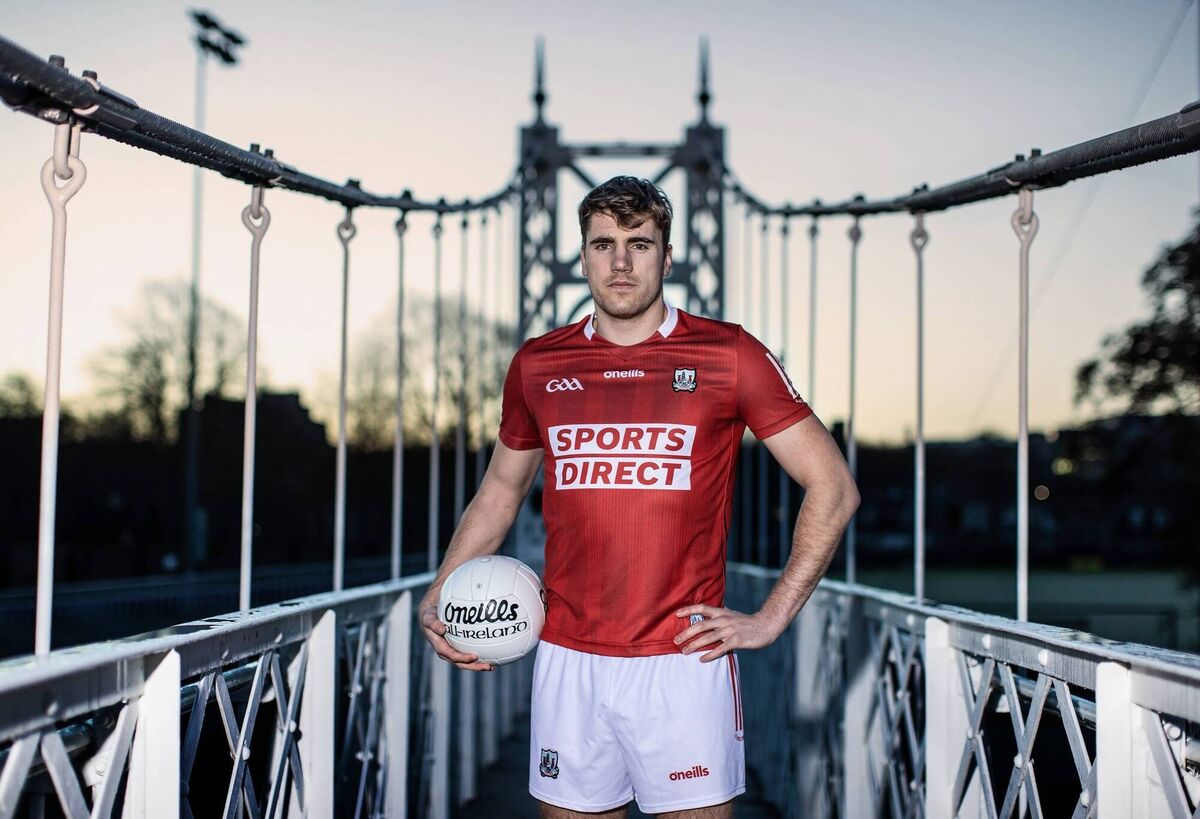
Maybe it’s lucky that we’ve had a good year in terms of our teams but even from day one, their activation and willingness to promote Cork GAA was on a different level. They’ve invested significantly in promoting the partnership which has benefits for our brand as well. I wonder how many people in Ireland don’t know that Sports Direct are sponsoring Cork at the moment, such has been the visibility and marketing of it?
KS: Did you factor in that there would be blowback if you partnered with them? Or did the scale of it surprise you?
KOD: Ah no, we would have factored it in because Sports Direct is a high-profile company. If we partnered with Apple, imagine what people would be saying about tax breaks? I could go through a lot of partners with other counties that might have issues. So, no, it didn’t’ surprise me, but I do think when it’s Cork GAA there’s a special glee and want to dance on our grave on any particular issue. I wonder if Sports Direct had sponsored any of most of the other 32 counties would it have made headline news? And one other thing: to hear people on radio stations and websites that are sponsored by betting companies and to see people in newspapers carrying betting ads lecturing us on our ethics just blew my mind in terms of hypocrisy. Sports Direct, when we signed that deal with them, had only one blocking point which was that Cork GAA would have no association with betting companies; otherwise they wouldn’t partner with us. So the hypocrisy in this space is almost hilarious, in terms of us getting a lesson on ethics of people who are living off the profits of betting.
KS: When we last met four years ago, you spoke highly of Kieran Kingston who was in his first stint as Cork manager. He’s now in his second stint. He would have been one of the first appointments you’d have made in your new capacity as Cork CEO. What was it about Kieran that made you go to him again?
KOD: Number one, he’s an incredible leader because he wears it lightly. A leader without ego — and they’re the best ones. Number two, Kieran gets it. He gets the fabric of Cork GAA, he gets that there’s nine boxes, he gets that there’s other things that might impact on an inter-county team, and he’s not going to throw the toys out of the pram. But then underneath it all which people mightn’t know, he’s an incredible fighter. Though again, he wears that well.
KS: An incredible fighter in what way?
KOD: For what he’ll do for that team, how he’ll stand up for them to get what they need?
KS: Has he stood up to you?
KOD: Of course! Those conversations are always had. He’s seen as a great diplomat but there’s an edge that you need to win and he has that. Those are the reasons he got the job. He was the top choice for the job. Look where we are now.
KS: Last year you’d have had Donal Óg Cusack as minor manager, now it’s Noel Furlong having brought through that core group of players at U15 and 16. In the past you’d have been manager at the same grade for three years rather than being with the same team for three years. Is it to widen the pool, to have different minor managers?
KS: I’m a huge advocate of that [current rotation]. The Noel Furlong model is the optimum one if you can set it up: now people come and go with other commitments so it might not always run from A to B to C. But I think [it’s best] to take a group of very committed young boys at 14 going on 15 and telling them we’re going to set up a three-year structure to take them through to minor, and tell the management team it doesn’t matter if you win the U15 or U16 tournament: you’re there to U17. That gives huge stability and they can then develop and grow a team over that time and leave a real imprint on those young fellas. The alternative is to put the same person at minor for three years, dealing with different teams and closing the pathway off possibly for the next manager to come up. I think we forget at times our development and underage squads are as much about making coaches as players.
KS: So does a Dónal Óg come back into the system?
KOD: Yes, you would hope that good people will come back or stay in the system. Look at Donal O’Mahony. Was John Myler’s right-hand man, now he’s back in with Pat Ryan [with the All-Ireland-winning U20s]. Who knows where any of them will go next? Once they’re in the system somewhere influencing young players, I am happy.
KS: What has the appointment of Aidan O’Connell as high performance manager brought to Cork GAA?
KOD: Well, it’s still in its infancy. When you make big strategic appointments like that, working with six inter-county teams, the schools, clubs, coach education, we won’t be seeing the dividend on that for a while. But I think Aidan has a personality that really suits the role. If there’s a county in Ireland or any a structure as big as Cork GAA where everything needs to be about coordination, unity and communication, it’s us, and Aidan is great at all that. So personality-wise, he’s already made a huge impact. Strategy-wise, you’ll only see the tangible rewards of his work in the next three, four, five years.
KS: You mentioned the appointment of a football project manager in Conor Counihan. Are their plans for an equivalent in hurling?
KOD: There are no plans at this time. Conor’s appointment very much came out of the football plan which was to address specific football issues. I don’t think anyone would rule it in or out in the future. But there isn’t a hurling plan at this moment.
KS: Is there a need for one?
KOD: I don’t know if it’s a plan or not but to me the nine boxes would be the plan. To make sure our boys and girls are being looked after at all levels.
KS: Speaking of football, delegates were told at the most recent meeting of the county board that there would be a review of the senior football team and management in the wake of Killarney. Where is that review at the moment?
KOD: We’re lucky that we have great people like Conor and Aidan [O’Connell] in the system so we’re considering that matter at the moment.
I suppose after a big defeat it’s important not to have that kneejerk reaction the day after. But it is top of the priority list to deal with now. Because this idea that the county board are happy once the Cork hurlers are winning, I can tell you is completely wrong.
KS: Four years ago as outgoing coaching officer you said that at times you’d wonder if you’d have been better just sticking to coaching in a pocket of West Cork but ultimately you felt that you could make more change as an administrator. Are you still glad now you took that wider view?
KOD: Well what I’ve learned most is how little I know about everything. And that could be my strongest point. Because I’ve learned that it’s not what you know that is going to make this thing work, it’s who you know. Now, normally that’s said in a negative way but I mean it in a positive way! So what I’ve learned in this job is that one person can’t impact a single thing. But I look then across the people I’ve met in that time, the guys like Kieran with the senior hurlers, the guys with the underage teams, the guys with the football teams, the people in One Cork. The club delegates, much criticised for years and yet only waiting for proposals to be put in front of them so they can bring them through.
So what I’ve learned is that in this position you get to meet all those people, and if you can just figure out the best way of engaging with them and using their knowledge and expertise, you can actually at the end of the day put yourself out of a job. I know if you ring me with a problem, I’ll say ‘I haven’t a clue, I know nothing, but you know what, I know someone who could help.’ And luckily at the moment we have a lot of people who can help.
KS: Finally, four years ago you estimated Cork GAA was operating at about only 25% of its potential. Where is at now? At about 40%?
KOD: About that. We’re heading in the right direction. I genuinely believe that. And 100% won’t be winning All-Irelands or five in a row: winning is about a ball hitting a goalpost. 100% will be competing at all levels with all teams and looking after every single group, be it a child, youth or adult, male or female.
CONNECT WITH US TODAY



Be the first to know the latest news and updates