Justin McCarthy is talking about photography. His sitting room fascinates, one in which career memorabilia are arranged in low key but arresting fashion. There hangs a framed Cork jersey, number 8. There stand mementoes from teams with whom he worked, plaques from Ballygarvan and Ballymartle and Shamrocks of Ringaskiddy, photos of jubilant Cashel King Cormacs players. There is a painting of Whitepark Bay in North Antrim, gifted to him in thanks for his time with that county’s hurlers.
Yet I am struck equally by a couple of landscape photographs on the wall. McCarthy made himself a highly accomplished lensman. One shows round bales under a flurry of clouds that seem no more than a few yards above the shorn field. “Taken two fields back from the house here,” he notes. “When I shot it, I felt I could have reached out and pulled the clouds down onto the ground. They were woolly. Five minutes later, they had gone back up in the sky.”
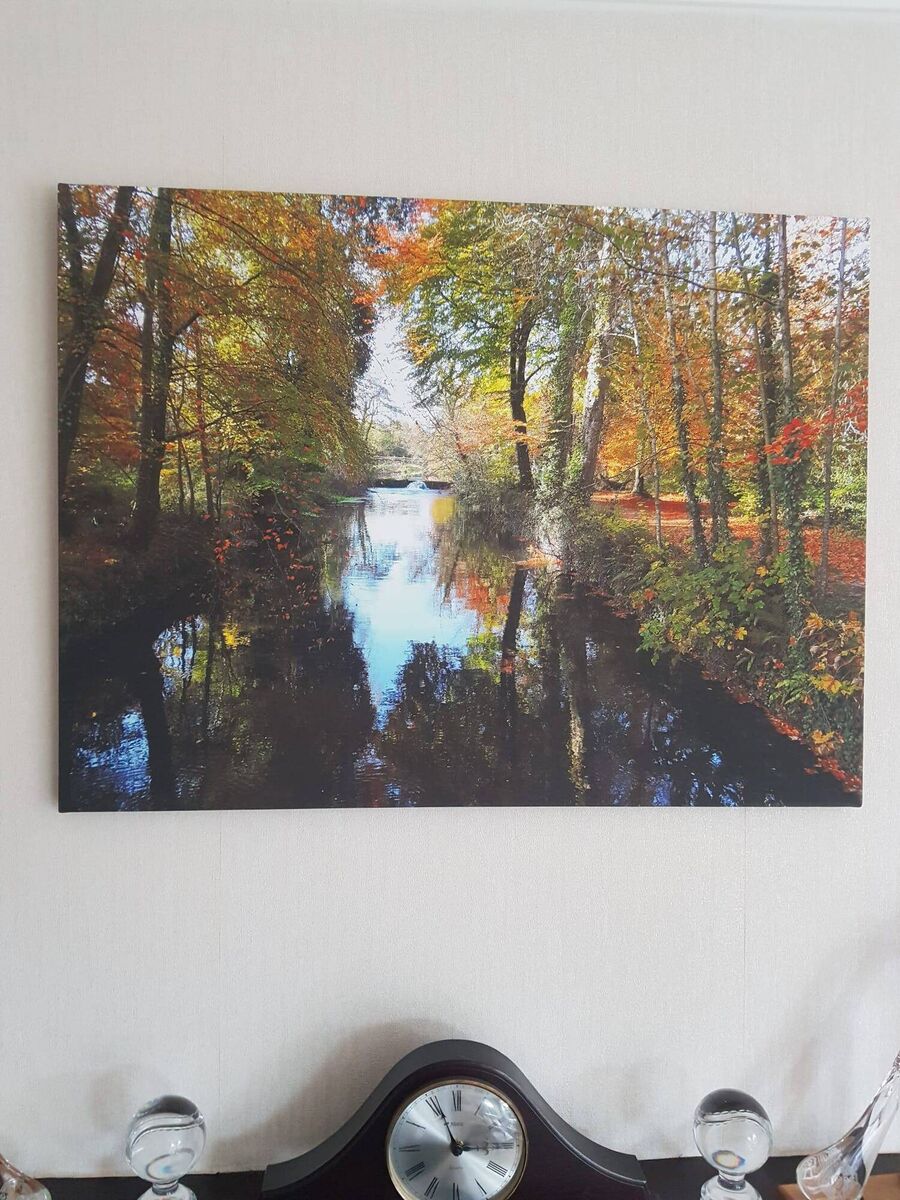
The other photograph focuses on a water scene, some still stretch in dappled light. The fancy words? Sylvan and bucolic and autumnal. “Taken in Doneraile Court, up in North Cork,” he clarifies. “An old estate. Fantastic place to visit. I love the autumn, all the colours. I took it standing on a little bridge there.
“It’s like scoring a goal. You have to be watching for the opportunity. I have a good eye. You have to be watching out the whole time. It’s all about light and opportunity.”
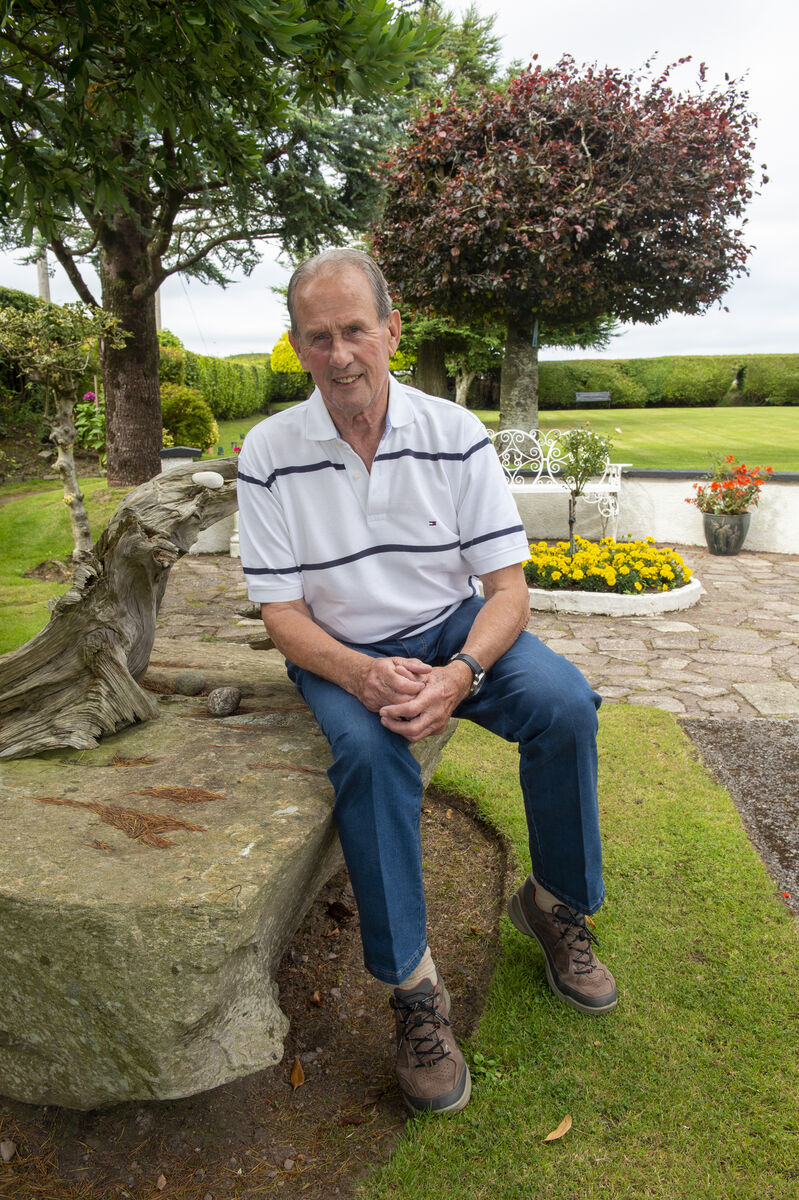
Unique perspective sees two passions converge. Born in 1945, a star player and a gifted coach, Justin McCarthy counts as one of the GAA’s most intriguing figures. Hooked: A Hurling Life (2002), his autobiography, remains one of the code’s most important publications, a repository of wisdom and insight.
This man could x-ray a player’s style. One passage in Hooked describes how Clare’s corner backs, Johnny McMahon and Jackie O’Gorman, got coached to mark Kilkenny’s Eddie Keher and Mick ‘Cloney’ Brennan before 1977’s NHL final. McCarthy had spotted that Brennan could manage the feat of striking with his arms fully extended, a trait that necessitated a different approach on O’Gorman’s part.
To this day, he can x-ray styles of play with similar incisiveness. A question gets posed: “Is there any real marking going on in hurling at the moment? Long ago, if a player was loose, they’d say: ‘How did Johnny play?’ And the reply would come: ‘Ah, he got a few points, but he was on nobody. He was getting them on the other side of the field. He is a real loose player.’
“Today, it suits Johnny. It suits a lot of loose players, because it’s all running around the place. So you’ve no responsibility. Shane Kingston got seven points the last day against Kilkenny. But who in the name of God was picking him up? Pádraig Walsh?
“If Kingston got two or three points, you’d say to Walsh or whoever: ‘Come on, you need to smarten up. Start actually marking him. He’s running amok there. Put the shackles on him.’ But a fella gets seven points and nobody says anything. Walsh was cleaned out. He was cleaned out seven times.”
He elaborates, instancing Limerick’s success in 2020: “Their wing forwards, Tom Morrissey and Gearóid Hegarty, scored a dozen points between them in last year’s All-Ireland final. I said: ‘Come on, who’s meant to be marking them?’
“That’s grand in its own way. But if that stuff was stopped, there would be teams less successful. I think Limerick are great to go into space, drift into situations, and next thing it’s over the bar. But surely someone should try to tie them up?”
A broader issue is discerned: “The game of hurling is coming into football terms now, whether we like it or not. There’s a lot of simplicity in the game too, at the end of the day, without complicating it too much. Managers have brought a lot from Gaelic football and maybe even from soccer. They got barging into lads from rugby.
“There is this upper body strength idea and a lot of fellas capitalise on it. People now say: ‘We had better find a strength and conditioning guy, because we are not tough enough.’ Next thing, we have fitter teams, physically stronger teams, but totally congested, with so many frees and
melees that the game itself, as a spectacle, slides. There are pluses to the current game but there are plenty of minuses as well.”
For him, certain approaches can become too scripted: “I don’t think players today study other players anything like as much as we did. They’re shown videos from trainers or management. But can the players today visualise as we tried to do, from studying other players?
“I remember watching Séamus Hearne. He played with Wexford, and he also played club here with Blackrock, when he was working on a big dam scheme out beyond Ballincollig. He’d go up for a ball and he’d bring it right down here [indicates cupped hand].
“I was maybe only nine or ten and I said to myself: ‘God, I’d love to be able to do that.’ I used to be practicing that touch, non stop, out the back at home. Wasn’t it an amazing thing to be able to kill a ball straight down into your hand? And I got that from just watching Séamus Hearne.”
Time’s advance has blurred Justin McCarthy’s status as a pioneer. Before the mid-1970s, few people got involved with a non-native county. For him, this dynamic was compounded by Clare meeting Cork in both the 1978 and the 1979 Munster Final. Much criticism was vented on home ground about coaching against his own crowd, noise amplified when Cork won on both occasions.
“I heard all that giving out at the time,” McCarthy recalls. “And I suppose it was much the same when I managed Waterford. There were an awful lot of games with Cork during the early to mid-2000s, an awful lot of great games, brilliant contests. Most spectators loved that kind of fast and furious hurling.
“I suppose if I had been given a chance, or if I had been given a choice, I would rather have been with Cork. That’s being entirely honest. But I didn’t fit the bill, for whatever reason. Maybe I was too outspoken or too independent. Maybe they didn’t want my judgement.”
He widens the frame: “See, it’s really the appetite I have for hurling, and the energy for it. I wanted to be involved with the game. I like to see people doing well. You would like to try and give them a lift, to let them experience something they maybe haven’t done before.
“When I went to Waterford, or to Clare, or to Limerick or to Antrim, I never tried to change them to a Cork way of thinking. I just tried to enhance their own situation, and to bring in ideas and things that would help them along and help them to be successful.
“I would hate to coach or manage a team in too programmed a way. I feel you are taking the goodness out of the game a bit. Hurling is a game of a variety of shots and strokes, a variety of things you have to do with the ball, every position and so on. I’d hate to have it be too clinical or too programmed, because I think you are taking the soul out of the game.”
You could say Justin McCarthy is a Cork native with a particular handle on Limerick. But this claim, in significant part, would be misstatement. Yes, he did have a close relationship with the county’s hurling, in that he managed their Senior panel in 2009 and 2010. Player unrest sped his departure. But this man established a bond with many hurling cultures across the island. The most beautiful game was what mattered, once he travelled outside of Cork.
As early as 1970, McCarthy coached Antrim to an Intermediate All-Ireland victory, their first success at that level. Then Clare were coached to successive NHL titles in 1977 and 1978. He coached Cork to 1984’s Centenary All-Ireland Final. But his abilities, patent and well established, got discarded after 1985’s All-Ireland semi-final loss to Galway. His outspokenness grigged influential administrators.
McCarthy managed Waterford between 2002 and 2008, winning three Munster titles and an NHL title during the county’s most successful period, before that move to Limerick. He enjoyed intimacy with Tipperary hurling via a stint managing Cashel King Cormacs, which culminated in 1991’s Munster Club title.
His standing in the game originated in unusual brilliance as a player. As per that framed jersey, he generally hurled at midfield but was comfortable in any spot from right half back to left half forward. He arrived young and he arrived elegant, footwork and stickwork impeccably in tune.
Cork beat Kilkenny in 1966’s senior final, ending a 12-year famine. Justin McCarthy got chosen as Hurler of the Year. He was surging towards prime, hurling with uncontainable brilliance, when fate intervened. A motorcycle accident shortly before 1969’s senior final against Kilkenny gravely injured his right leg.
He did return to the game, against massive odds, but his inter-country career more or less ended after defeat to Kilkenny in 1972’s senior final. Much was achieved but much more could have been achieved. This bad luck ended up good fortune for the x-rayed players he honed into better hurlers.
McCarthy remains forthright: “I wished Limerick well before I went there and I wish Limerick well at the weekend, while obviously hoping as hard as possible for a Cork win. And Limerick will be wary of Cork, even though they are a better team than Cork. Limerick are the best team there, in all the lines of the field, from the goalkeeper up to the full-forward line. They are very effective. They are a better team today, Tuesday, but the match will take place on Sunday.”
He glosses his experience: “I was with Limerick at a time when there were a lot of fellas I thought weren’t serious inter-country hurlers. And even if they were good enough to be a decent inter-country hurler, I felt a lot of them weren’t serious about what was required. There was a lot of messing going on. The GPA was very strong there. There’d be GPA meetings here and GPA meetings there.
“I didn’t think they were serious. So that’s why we got rid of a lot of fellas and sort of cleaned the whole thing out, so as to move forward. But obviously, there were too many ‘palsy-walsy’ there, backing one another up, and they wouldn’t go forward. That was okay. That happened.”
Sunday’s happenstance is his true pre-occupation: “Limerick will be that bit cautious. Cork are the one team that could slip Limerick. They could slip them. But Cork must be good enough to take the opportunity, because when they played in the Munster semi-final, earlier this summer, Limerick were there for the taking, that day. But Cork weren’t good enough to take them down.
“Cork have improved since, because of the additional games. But so have Limerick improved. You have contrasting styles. Limerick are a big team, a physical team, but they are very good hurlers. Their first touch is excellent.”
History’s previous contour likewise gets glossed: “Limerick, before this bunch came along, always had seven or eight very good hurlers. But there always was a tail, seven or eight slashers who would just get stuck in. They’d be tough and all that, but they had very little hurling, those fellas. But every one of the 15 Limerick hurlers today has a high level of skill. They lack nothing in skill. Their long range striking is top class. Their accuracy is very solid.
“If they win on Sunday, Limerick become a great team. If they don’t win, Limerick are so so. It’s a big game for Cork, but it’s a massive game for Limerick. I wouldn’t say Limerick have to win it more, because Cork are down 16 years at this stage, and flopped in 2013, at two attempts.
“So Limerick have a lot going for them. The question might be whether they can get into their stride. They are a stride team. Can they get into a pattern of play that will suit them? If Cork can stop them doing that, Cork get their chance.”
This contest compels: “Waterford made a mistake by trying to outmuscle Limerick. You wouldn’t do that with an extra strong physical team that are mature. Whereas Cork will have to be able to stand up to them, yes, but play around them too. Otherwise Cork will get bogged down and Limerick will thrive.
“And they’ll have to watch the aerial balls, because Limerick are strong in the air. Cork will have to make sure they are not catching too many balls in the air. If they can’t make a clean catch themselves, they’ll have to knock it down, or break the ball, because Cork are plenty happy with the ball on the ground.”
Concentration and application are his recurrent emphasis: “They need to take responsibility for the six or so fellas that make the Limerick team tick. Cian Lynch, for instance, at centre forward. He is their playmaker, orchestrates a lot of moves. Can they limit him? Or is the fella on him just going to be roaring around the field, just playing his own game, and Lynch off doing damage. That’ll be crucial.
“Séamus Flanagan is a real threat. He is kind of more old-fashioned Limerick, tough and hard but very accurate. Can hit it over his shoulder, can hit left and right.”
There exists a default description of Justin McCarthy as a dour aloof man. My experience ends up the exact opposite. Here is a man who insisted on picking me up from Cork city centre, brushing off apology for the lateness of my bus (“The traffic from Castlemartyr in can be a terror”).
Then he drives out to his house in Rochestown, passing the two ball alleys in Rochestown College where his gift was honed during the 1950s, and gives me lunch. This man and his wife, Pat, become the soul of hospitality and kindness. He was well able to laugh at many things, including some of his own decisions. Justin McCarthy is a man who understands that foibles underwrite every fable and never more so than in sport.
“I suppose I am a spiritual person,” he states. “I talk to Our Lord and Our Lady every day. I need it. I love nature. I love birds and animals. We are making an awful mess of the planet, which is a crime.” He cycles every day. He strikes a sliotar 70 times out the back in his garden every evening.
“I have plenty I still want to do,” he says.
Justin McCarthy had his fallings out with people and went his own way when the situation dictated. But I think he was a man before his time. He was a youth sure of his ability and strikingly handsome, self asssertive in an Ireland where compliance and meekness were expected except for the chosen few. That young man possessed, innately, a confidence most young Irish people now take for granted.
That young man carried himself like a rugby idol, like a Tony O’Reilly or a Brendan Mullin, at a time when a young fellow from Rochestown, a boilermaker in Verolme Dockyard, should have been more reserved. I find it oddly pleasing that RTÉ’s Justin McCarthy, the political journalist, is their son. His grandparents were young when the Irish state was founded and now he is a commentator on Irish affairs.
My reverie is interrupted by an entrance. Suddenly the air is full of ticket talk’s confetti, as the McCarthys’ daughter Úna arrives back from a break in Killarney with her husband and two children. Her parents had been minding their dog, Millie. Their son, Jamie, and daughter, Grace, both play for Carrigaline. “It’s an upcoming GAA area,” Úna relates. “Lots of young families. There is a good energy and buzz not just to the hurling club but to the other community groups.
“There are a lot of blow ins, like myself, but everyone is pulling together as Carrigaline. It’s a fine place for children to grow up. All we need now are tickets!”
Their grandfather draws a moral: “If Cork win next Sunday, it could unleash a tsunami in the county. Every young boy, same as Jamie, will be mad to hurl. And young fellas are the future, not hyper critical old fellas.
“A Cork hurler is every boy’s hero. You hear maybe his father saying: ‘There was three points scored off that lad.’ Maybe he has it right and maybe his comment is accurate. But the young fella does not care about what was scored off his hero. He just sees a Cork hurler. And if he sees a Cork hurler winning the All-Ireland…”
This weekend will frame 2021’s hurling for all time. The moment of a match will become the eternity of a result. Justin McCarthy, in so many senses, has an expert but human eye. Going home, I recall his wry coda about that photograph in Doneraile Court.
“There was a swan there on the water, when I first walked onto the bridge. But by the time I got the camera up and focused, he had drifted around the corner. So there is no swan in that picture, but he was there.”
Then that charming, undecipherable smile: “I suppose you can’t have everything.”
CONNECT WITH US TODAY



Be the first to know the latest news and updates