John Allen, the Cork man who managed Limerick: 'It was strange for a while'

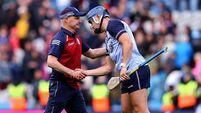
Seamus Hickey and John Allen celebrate Limerick's Munster final win over Cork in 2013. Picture: Ray McManus
The spotlight on an inter-county manager dims but never really disappears.
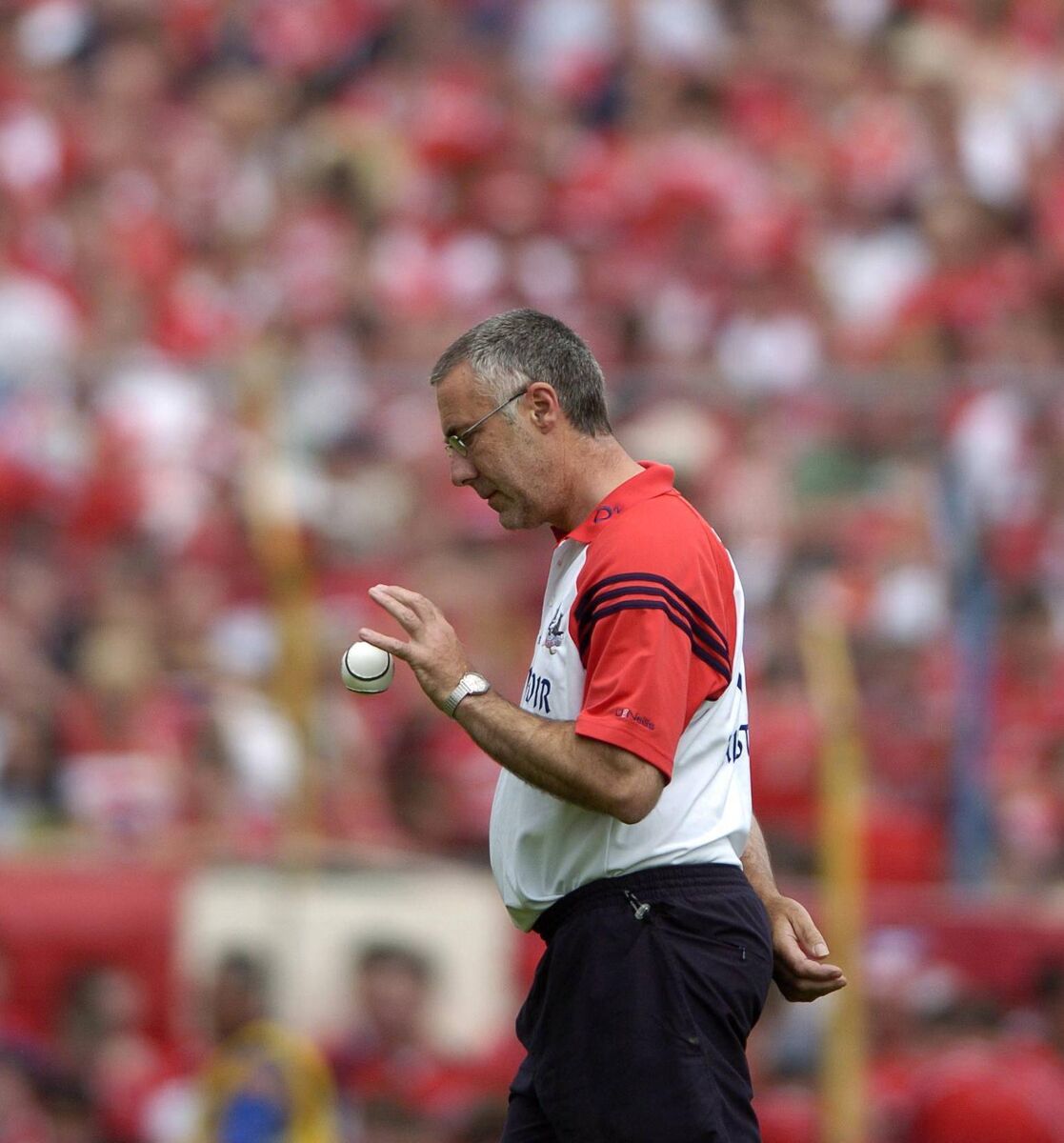
In his time as Cork hurling manager, John Allen got used to the questioning of his tactics when he visited the local supermarket. His team remains the last to win an All-Ireland for Cork, back in 2005.
When he became Limerick hurling manager six years later, however, he noticed an immediate difference.
“There’s no doubt, it made it easier to be away from Limerick and living down here. Obviously if you’re an inter-county manager you have a status and a profile within that county, which is certainly true in Cork.
“When I was manager of Cork, living here in a place like Ballincollig, which has a strong GAA tradition, any time I left home there was a whole cohort of people who had something to say to me about teams and fellas we picked and changes we’d made — and fellas we didn’t pick, and changes we didn’t make.
“It made a big difference to be managing Limerick, because obviously people here didn’t have the same level of interest.”
He can recall weighing up the Limerick offer when it came, assessing the pros and cons.
“When I was approached first about the job I said there was no way I could do it — I couldn’t manage against some of the players I’d managed with Cork, some of them were still playing.
“I can remember being at the removal of Dr Con Murphy’s mother around that time and the whole thing was going around and around in my head. It wasn’t public knowledge, but that evening I met a huge cross-section of people I’d played with and played against, and I was wondering if I could stand up a month later and be introduced as the Limerick manager.
“I spoke to various people about it and decided to go for it because I’d just retired from school and was thinking I might have nothing to do for the next few months. There was also going to be a challenge involved: there always is with a team at that level.”
The next realisation came a few months later when he was up in Rathkeale and pulled on a green and white shirt.
“But it’s probably like coming into a company or some job in a position of power, you build relationships with people, you see players and selectors and friendships develop, so when the championship came along, six months later it was all quite natural.”
One thing that always comes back to Allen is the Munster final of 2013, and driving up the road from Cork to Limerick.
“Up through Mallow and Buttevant and Charleville, the usual — and all the red and white flags were flying. And yet here I was, a Corkman, going up to take Limerick’s side on that occasion.
“After that game, which Limerick won, and we all went for a meal together and then I headed home down the same road.
“But at that stage it was a very quiet road. I didn’t realise that back behind me in Limerick fellas were going wild, because they hadn’t won a Munster title in 17 years, and I was away from all of that coming back to Cork — where there was probably a pall because they’d lost.”
Before that game Allen had actually managed Limerick twice against Cork. The Shannonsiders were in the second division of the league and therefore the sides didn’t meet in that competition, but they still played two challenge games in 2013 before the championship.
“One game was out in the Barrs — Jimmy Barry-Murphy was managing Cork and I was with Limerick, so it was a bit of a novelty for the Barrs to have two inter-county managers in the club.
“That was a wet Saturday night and it was a functional game, really, but it was still strange going into the Barrs as Limerick manager.
“In the run-up to the Munster Championship we played Cork again in Kilworth, and that evening I really realised the style of hurling Cork played, that brand of play, was very attractive — how fast it was, the goals they could get — and I remember thinking how I mightn’t have appreciated that when I was Cork manager.
He stepped down later in 2013 but maintained links with many of the Limerick players and was delighted to see them win an All-Ireland in 2018.
“I was in contact with a lot of those lads — Nickie Quaid, Declan Hannon, Graeme Mulcahy, Tom Condon, Seamus Hickey, Paul Browne, all of them were very hard-working, very loyal to Limerick.
“I was delighted to see them win that time, 1973 was a long time ago and it’s good for every sport to have a spread of winners.
“That’s something you’d appreciate more when you’re in another county, the fact that so many of them have to keep going when there’s a long gap between successes —like Limerick up to 2018, Clare and Wexford for a long time, Waterford.
“To be so competitive for so long when you’re without success is some going.”
Allen describes his Limerick players as “quality people”. Like one of his selectors that time, John Kiely.
“The fact that John is a teacher has its advantages, you’re used to speaking to people, to dealing with people, to organising them to do things.
“After a few months as manager I remember meeting Jim Wolfe of Dairygold, who was on the appointment committee, when we played Waterford in Mallow, and I said to him that I didn’t need to be there — that John Kiely could do the job easily.
“He had a testing first year but he’s won a lot of trophies since.”
Did he have a sense Limerick were coming back in 2013?
“No doubt,” says Allen. “I know there’s been a discussion in Cork about having a centre of excellence here, but in Limerick they use Rathkeale, and we’d be training on one pitch, the Limerick minors on another pitch, development squads at different ages and levels . ..
“All of the stakeholders had met in 2011 to decide a path to take Limerick forward, and you could see the work being done there. Cork have done something similar since which is showing in terms of success now, but back then in Limerick, I was at some of the meetings and met the people who involved, and I could see they were going the right way.
“That doesn’t guarantee success, but if you don’t have that ground work done you can guarantee you won’t have success.”
CONNECT WITH US TODAY



Be the first to know the latest news and updates