Quality assurance: How a new production line transformed underage GAA in Cork
The overhaul of the Cork development squad system in 2013 with the creation of regional hubs, and a greater emphasis on talent identification, has proven to be a masterstroke
Quality assurance: How a new production line transformed underage GAA in Cork

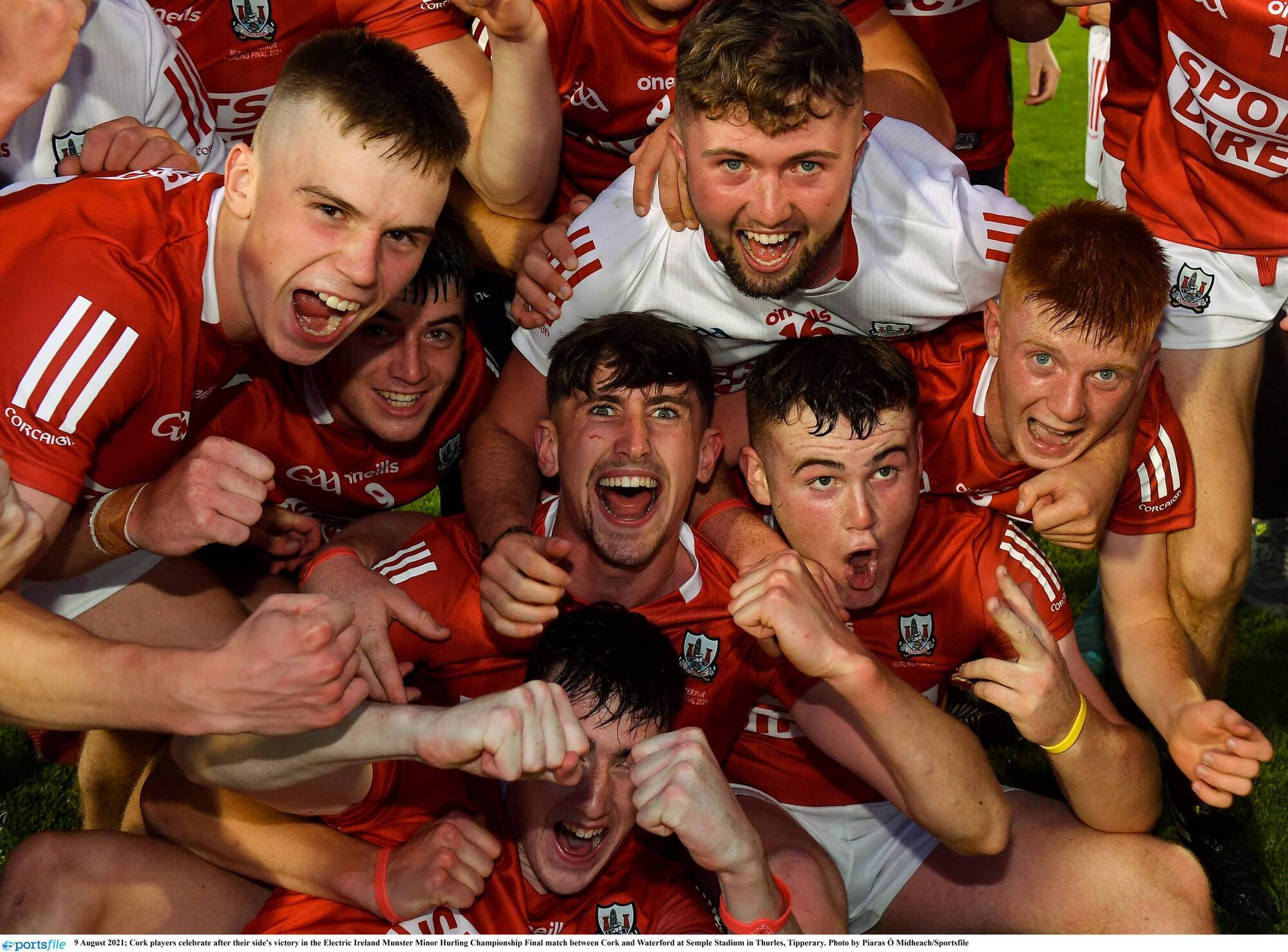
FRESH FACES: Cork players celebrate their Electric Ireland Munster MHC final win over Waterford at Semple Stadium earlier this month. The creation of regional teams in Cork has led to a quadrupling of the number of players being brought into the system and their subsequent exposure to top-level coaching and early introduction to S&C work. Picture: Piaras Ó Mídheach/Sportsfile

Noel Furlong's Cork minor hurling panel comprises 36 players from 25 clubs.

To have such a representation in a single set-up is quite the spread, but far more striking is the number of lower grade clubs scattered across the Cork team sheet.

Of those 25 clubs who can claim a link to this so far untouchable Cork minor hurling side, four — Ballinora, Clyda Rovers, Cobh, and Kinsale — hold junior status at adult level, with all bar Kinsale represented on the Munster final starting team.

Mind you, there would have been four junior hurling clubs represented on Cork’s Munster final team had Lisgoold, the home of half-forward Diarmuid Healy, not gone and won the county junior title two days before Cork were in provincial final action.

Furlong’s team and, indeed, bench has the usual sprinkling of players from city strongholds the Barr’s, the Glen, and Na Piarsaigh, as well as Erin’s Own and Midleton out east, but this, as outlined above, is counterbalanced by the involvement of clubs one does not regularly see on Cork hurling team sheets.

On the Monday evening of Cork’s 1-26 to 1-15 Munster final win, the left flank of Furlong’s defence was occupied by James Byrne of Ballinora and Timmy Wilk of Cobh, the latter landing a pair of points at the beginning of the second-half. At full-back was Kevin Lyons of Ballygarvan.

Further forward, the central spine of the Cork attack was held down by Ben Nyhan of Clyda Rovers and Jack Leahy of Dungourney, the pair contributing 0-13 between them.

The involvement of players from such a spread of clubs is tied to the overhaul of the Cork development squad system back in 2013, with the new model drawn up by Kevin O’Donovan and Brian Cuthbert leading to a significant widening of the net and far greater emphasis on talent identification.

Where previously Cork were operating with just two panels at the various development squad age-grades, meaning no more than 48 players were involved at U14 or U15 level in a single year, the creation of regional teams has led to a quadrupling of the number of players being brought into the system and their subsequent exposure to top-level coaching and early introduction to S&C work.

“The fact that Cork is so big, you are more in danger of missing fellas, but over the last number of years we have really started to nail talent identification and are getting the best people in and getting them in early,” explained Ronan Dwane who served as Cork county board coaching officer from 2017-20.

“From the GO GAMES model up to our games development administrators (GDAs), people like Paudie O’Brien and Sean Crowley who are very good at early talent identification, we are a lot more set than would have been the case previously.”

The aforementioned widening of the base means there are now eight regional teams at U14 level.

At U15, the year starts with four regional teams (city, north, west, and east).

The almost 120 players across these four panels are kept within the development squad system for the first six months of the year, with two ‘even’ Cork teams then selected for the summer months.

Furlong spent five years working at development squad level before rising to Cork minor manager this season. Cork’s player development structures, he says, are up there with the best around.

“The production line for players coming through is very, very strong and that is the way it should be in Cork with the numbers Cork have. It is long overdue,” he said.

“The widening of the base is keeping more players in the system for longer and giving them expertise at a regional level that may not have been there previously. So instead of just 25 lads getting top-class coaching, you now have at U15, for example, 100-plus lads getting top-class coaching in the regions.

“Especially with Cork’s numbers, Cork should be able to provide that. All along it wasn’t, but, in fairness, the structures and policies now in place for player development are really up there with whatever the best is out there from other counties.”

The Cork minor manager added: “Someone who hasn’t got enough credit for the transformation because he is new enough in his role is high-performance manager Aidan O’Connell. Having Aidan in there is a massively positive resource and support for any coaches going in. Him, Ronan Dwane, and Kevin O’Callaghan (county games manager) are three key guys in this process.”

Such has been Cork’s run of wins at minor and U20 level this summer, as well as the fact that Wednesday represented the fourth successive season Cork have reached the All-Ireland U20 final, there is the danger that the collective eye will be taken off the ball at development squad level or that the status quo is perceived to be working so well that no improvements are sought.

Furlong has no fear of either eventuality becoming a reality. “Everyone involved is of the same mindset in that we have a good model, it is working great, but it can be better. I know already there are plans in place for the off-season, led by Aidan O’Connell, to progress the model even further.

“For it to be sustainable, you need good coaches, you need them educated and you need them in the system, and because there is such a good vibe around Cork hurling at the moment, everyone wants to be involved.

“That is a huge part of what is coming down along the tracks, to get more coaches up to speed on high-level coaching. When you have high-level coaches, you can get them into good systems, good set-ups, and that will only result in one thing which is more improved players, which, in turn, benefits the clubs, schools, and Cork.”

More in this section

Cookie Policy Privacy Policy Brand Safety FAQ Help Contact Us Terms and Conditions

© Examiner Echo Group Limited