Limerick v Waterford: Semi-finals are for learning, finals for showing what was learned
Limerick had a double-digit win over their opponents to book their place in a third All-Ireland final in four years in a game that was over as a contest quite a while before the final whistle
Limerick v Waterford: Semi-finals are for learning, finals for showing what was learned

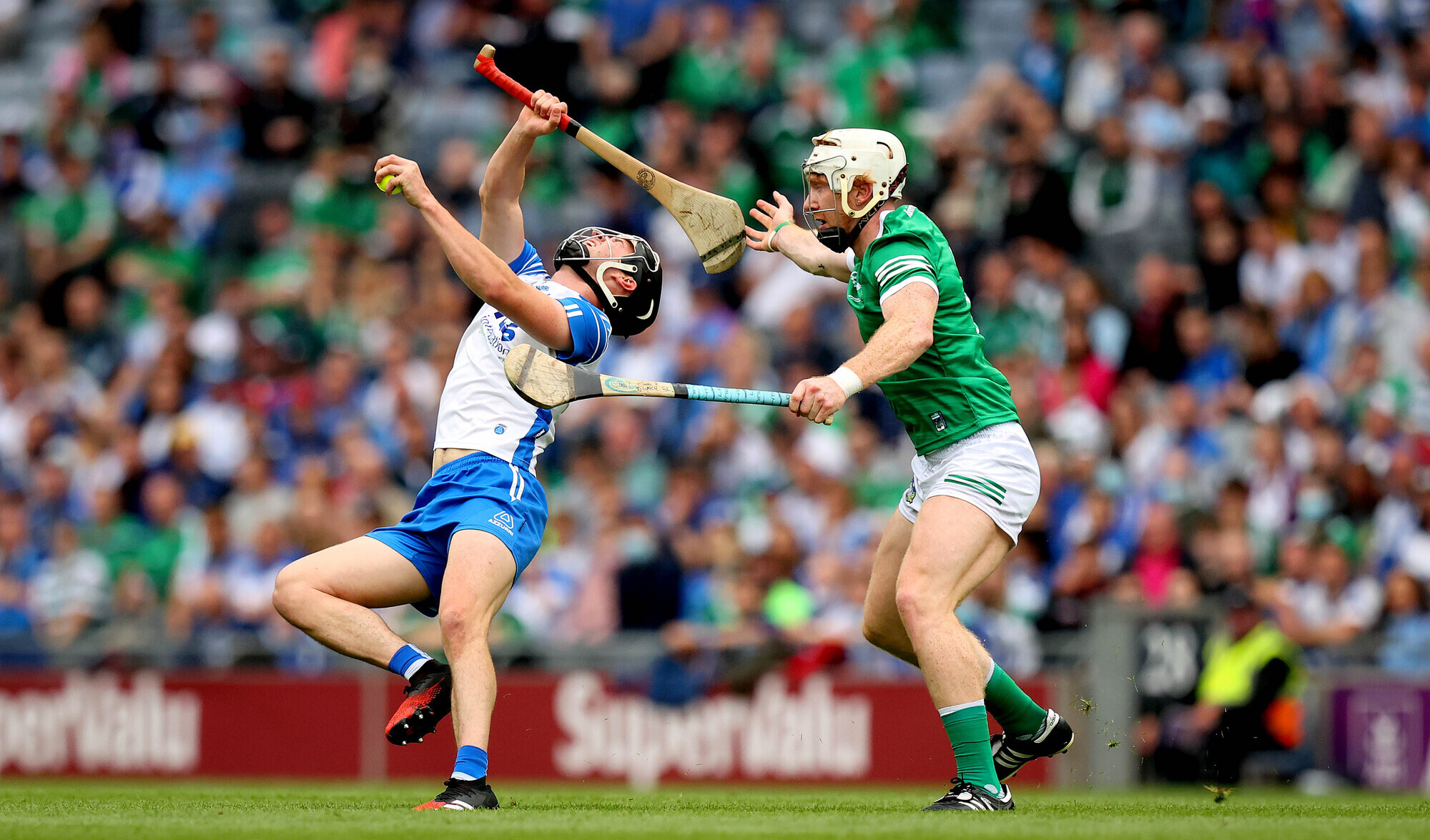
Limerick’s Cian Lynch tackles Conor Gleeson of Waterford on Saturday. An efficient rather than spectacular Limerick weren’t the elemental force they were in the second half of the Munster final because they didn’t need to be.  Picture: INPHO/Ryan Byrne

Semi-finals are for winning, but that applies to the winners and the winners alone.

For the rest - from defeated opponents to us humble groundlings - the semi-final is for learning. Saturday’s clash between Waterford and Limerick is a case in point.

The bare facts are that Limerick had a double-digit win over their opponents to book their place in a third All-Ireland final in four years, and the game was over as a contest quite a while before the final whistle, the red card received by Peter Casey of Limerick on 60 minutes notwithstanding.

As a neat summary Waterford manager Liam Cahill’s recap would be difficult to beat: “I think overall it was a powerful display from Limerick, physically commanding - they have a really good awareness of what they bring on the field, they have an awareness of where every player is and where he needs to be.

“They held possession, found the right man at the right time - our boys, in fairness, battled hard.

“After the first water break we emptied a little and gave Limerick a foothold, they kept the scoreboard ticking over and were five or six out before we knew it.

“You’re chasing the match after that.”

Cahill’s charges began with a thirst for combat and turned Limerick over more than once in the opening quarter. Once the champions found their rhythm after that water break, however, they hit five in a row and were in charge.

Limerick led by eight at the half and though Waterford tested their pulse again on the resumption, just before the second water break they were floored. Diarmuid Hegarty didn’t dominate as he has in other games, but he won the ball, carried it goalwards and parted at just the right time to Aaron Gillane for the only goal of the game - 1-20 to 0-14. The rest was just paperwork.

And so to the lessons.

Limerick weren’t the elemental force they were in the second half of the Munster final because they didn’t need to be. They were more efficient than Waterford, more effective in creating their chances, more clinical in taking them.

And more effective in blunting their opponents. The high work rate from Limerick from numbers five to twelve comes with a double benefit, and afterwards John Kiely looked at that in a little more detail: “Yeah, we were resilient, but equally, they were putting their stall out there.

“But for the fact that we worked so hard, I’m sure that they would have got more scores on the board.

“They did have shots that went wide, I think their wide tally might be higher today than it was in any of their previous two games. I think their shot accuracy was 87 per cent the last game, and maybe 75 per cent the previous game, so their shooting accuracy has been tremendously high.

“I’d say you’ll find in today’s stats that it’s way down. So they could have got a few more scores in that first quarter had they been more accurate, but the pressure obviously that was being put on them forced those wides.”

This is true. Waterford struggled for room in Limerick’s killing zone, the middle of the field. In previous games the likes of Calum Lyons and Jamie Barron have sailed through that part of the field to pick off the scores that adrenalise their side, but Saturday that space wasn’t available. Against Limerick it rarely is.

More lessons. Liam Cahill acknowledged that his side were the team which badly needed the goal which came at the three-quarter point of the game.

“I thought we were getting some wind in our sails but we were going to need a lucky break to put the cat among the pigeons.

“When you meet a team of the calibre of Limerick you have to be taking everything on offer. We had five or six wides early on, and everything needs to go over.

“I would think Waterford created three or four goal chances in the second half alone. They mightn’t look to the ordinary viewer like goal chances, but the way we train, they’re goal chances.

“We just didn’t take the ball on to places to test a goalie of the calibre of Nickie Quaid.

“You need to do those things. That’s hurling, that’s life, and if you don’t do those things you pay the consequences.”

Kiely was keen to pay tribute to Quaid, unsurprisingly. “Goalkeepers, I assure you, work twice as hard as any other player on the field. They are obsessed with their aspect of the game. And he gets rewarded by just being able to do all those things so well. And he makes them look easy, and they’re not easy. Like the catch on the ball off the crossbar. I would give Nickie Quaid a chance at that, all day, every day. And to have that in your goalkeeper is very reassuring, and obviously great for your defence to know you have that guy behind you.”

Observers may take a step back and wonder why the manager of a team which just won by ten points is eulogising his goalie, but the significance of Quaid’s display won’t be lost on their final opponents.

Which is yet another lesson. Limerick’s opponents in a fortnight’s time will note the fact that Waterford created those goal chances, though they found Nickie Quaid too good to beat on Saturday.

A cold evaluation would suggest the odds were slightly in Quaid’s favour rather than the shooter with each of those chances, but the main take-away for interested viewers is that Limerick’s defence was breached more than once.

Quaid is entitled to the plaudits: he still had to show the necessary steadiness to stifle the prospect of a helter-skelter end game, and the calming influence of a goalkeeper on his defence can’t be overestimated - but that doesn’t alter the fact that the chances are created.

In the modern game the likelihood of outpointing one’s opponent is remote. Though we hardly needed Saturday’s game to make us aware of that, it offered a graphic example of how poor a team’s chances are if it doesn’t raise a green flag at all.

Was that the main lesson, then, from Saturday, the absolute necessity for goals if a team is to have a chance of beating Limerick? If so we may have to tweak our opening aphorism: semi-finals are for learning lessons, but finals are for applying what’s been learned.

More in this section

Cookie Policy Privacy Policy Brand Safety FAQ Help Contact Us Terms and Conditions

© Examiner Echo Group Limited