Hurling Tactics: Will Kilkenny revert to type when heat comes on?
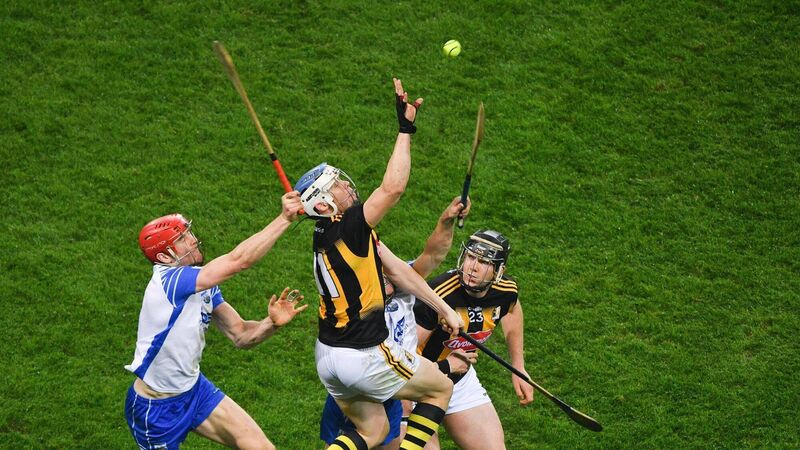
TARGET MEN: TJ Reid, left, and Walter Walsh of Kilkenny in action against Waterford in last year's All-Ireland semi-final. The pair remain Kilkenny's go-to men for long deliveries.
Photo by Daire Brennan/Sportsfile
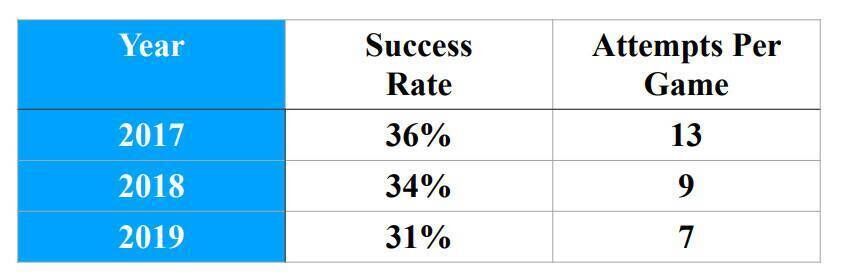
Over the last number of years, the hurling championship has seen a change in how teams are delivering the ball into the opposition’s half of the pitch. This is illustrated by the change in the number of deliveries from inside a team’s own 45 to inside the opposition 65-metre line in the 2017 and 2019 championships.
Much has been spoken about Kilkenny’s tactical change, which sees them using a more measured approach with their use of possession and support lines of running. This new approach is married with the traditional style of Brian Cody where his wing forwards drop deep to smother teams in the middle third of the pitch.
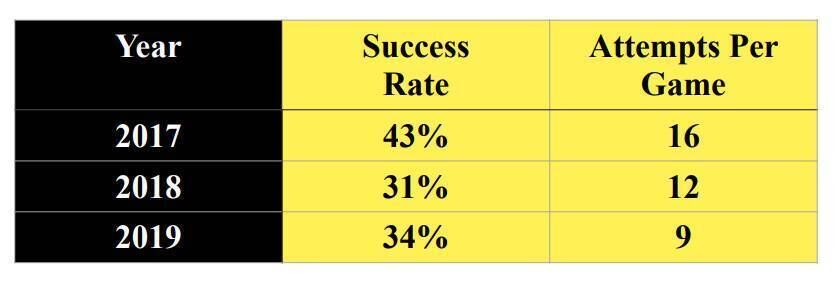
Kilkenny’s evolution in their use of possession can be seen in the number of deliveries hit from inside their own 45-metre line between the 2017 and 2019 championships. Kilkenny had an average of 16 deliveries per game from that area in the 2017 championship and this had reduced to nine per game by the end of the 2019 championship.
However, there is still a randomness to Kilkenny’s use of the ball which does not seem to be as prescribed as teams like Limerick or Wexford. This randomness can be seen in some of Kilkenny’s championship losses over the last four seasons. When Kilkenny are under pressure and chasing an opposition’s lead they tend to revert back to their old habits where the backs are delivering long deliveries from inside their 45-metre line.
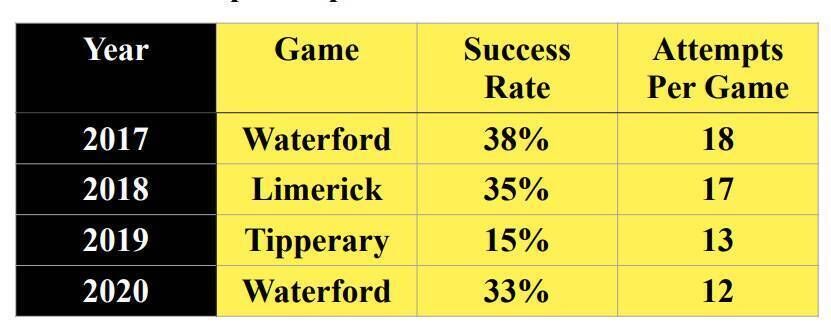
Kilkenny’s loss to Waterford in the 2020 championship highlighted how they struggled to use the ball when the pressure was applied. Some players tried to stick to the new methods of working the ball while others reverted to the old Kilkenny ways — Eoin Murphy hit five deliveries from inside his 45-metre line which were all turned over by Waterford.
The Leinster semi-final between Kilkenny and Wexford saw the Cats win five out of their eight deliveries that were hit from inside their 45-metre line during normal time. The aerial ability of Cody, Reid, Walsh and Donnelly can allow Kilkenny to dominate the skies when playing against a team like Wexford as their long use of possession may not have been exposed or turned over.
Walter Walsh and John Donnelly were only introduced as subs in the Leinster semi-final win with their performances in extra-time driving Kilkenny to victory. A feature of Kilkenny’s victory over Limerick in 2019 was the performance of Walsh, Reid and Donnelly in the forward line where they dominated the air and pressurised the Limerick backline. The presence of these players can give Kilkenny the ability to contest long deliveries when their backs are under pressure and may help them avoid becoming exposed to the randomness of breaking ball during play.
This presence in the air can be seen on Kilkenny’s long puckout stats over the last three seasons. Walter Walsh, TJ Reid and John Donnelly have been the Cats' top target men. Data produced by @gaa_insights shows that these three players have been the target on 292 out of 594 long puckouts over the 2019, 2020 and 2021 seasons.
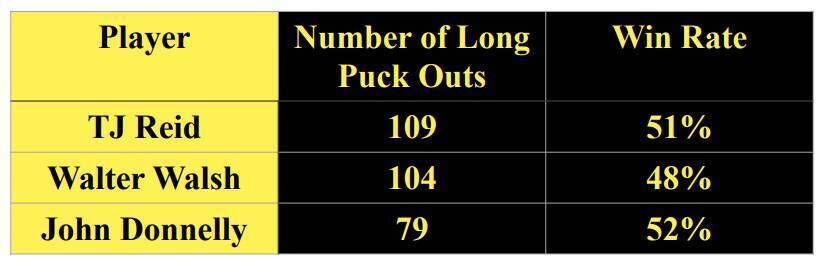
More data from @gaa_insights highlighted how Eoin Cody could be another potential aerial target for Kilkenny going forward as Kilkenny won three out of four long puck outs against Wexford.
Kilkenny’s commitment to work possession higher up the pitch and passing the ball to support runners may be challenged against Dublin in the middle third of the pitch. Though the absence of Eoghan O'Donnell could help the Cats dominate the aerial game on Saturday in Croke Park. This could see Kilkenny taking a more direct approach and Brian Cody will demand that his forwards finish more goal chances than they did against Wexford.


CONNECT WITH US TODAY



Be the first to know the latest news and updates