No pre-match parade in Thurles tomorrow evening means no bustle. No chance for someone like Pa Collins to immortalise his predecessor Dónal Óg Cusack’s shout to the Clare players before the 1999 Munster final and remind Limerick they have nine All-Irelands and Cork have 30.
Cork may not be as unfancied to beat Limerick as they were against Clare 22 years ago but their wait for an All-Ireland SHC title now extends seven years longer than back then, the joint largest stretch in the county’s history.
Cusack’s battle-cry came just two months before Cork ended their third-longest spell without the Liam MacCarthy Cup, which was first presented in 1923, four years after Cork’s first 16-year famine. It was as much to bemuse, even upset Clare as to benefit his own Cork team with an average age of just over 22.
Predicting the Cork team to face Limerick in Semple Stadium, the average age should be considerably higher, almost 25, but that’s not to say that they too need some comforting with history on their shoulders.
Gerald McCarthy had not yet turned 21 when he lifted the cup to end a drought of 12 years. He recalls trainer Jim “Tough” Barry had a great knack of putting players at ease, recalling the previous May when Kilkenny faced Cork in a Division 1 semi-final in Croke Park.
“We used to travel in cars and we (Barrs) had four or five lads travelling in one car. On the Saturday night, we were all warned to be back at 10pm. One of the lads said, ‘Let’s go into O’Connell Street and go to the pictures’. Johnny (Russell) the driver said he knew a shortcut back through the Phoenix Park but the gate on the other side was locked and we had to go back into the city.
“We came back at 11 o’clock and got to the stairs and we were all walking up, I was the last being sheepish, and we were met by Jim. He said to me, ‘I’m telling you now, this is your last time travelling with the Cork team’. It was desperate altogether, I couldn’t sleep because of it.
“Breakfast the following morning and Jim called me from the table and apologised, ‘I’m sorry, I thought you were the taxi driver’. I was a new face and he didn’t know me. Come the All-Ireland final and he was still bringing it up, ‘See taxi driver there’.”
The gap to 1954 was never mentioned, not when there were so many greenhorns in the group although McCarthy notes, “we all thought it was the county’s longest time without one but we then found out it was back in the 20s.”
McCarthy smiles recalling the singsong on the way from Lucan into Croke Park for the final against Kilkenny. “Five U21s, there was a lot of inexperience, we were going into the unknown and you could see the tensions setting off to Croke Park but the rebel songs started, ‘We’re All Off To Dublin In The Green’ was popular at the time. In no time we were in Croke Park and we were settled.”
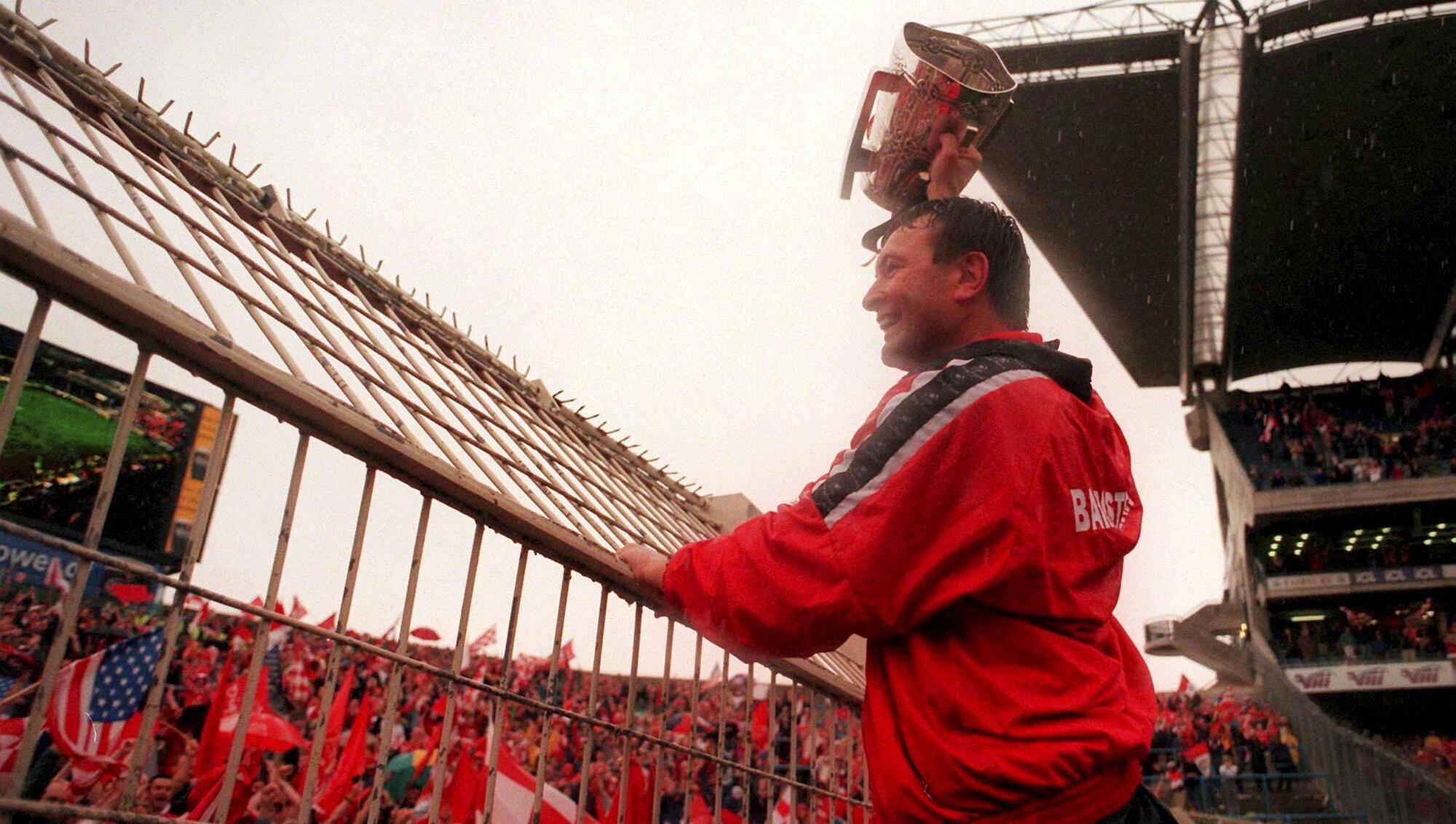
Five was also the magic number for Cork 33 years later when Jimmy Barry-Murphy gave as many players their debuts against Waterford on their way to ending nine years without the MacCarthy Cup. “There was huge confidence gained from beating Waterford with five debutants,” recalls then captain Mark Landers. “I remember Jimmy saying to me that year, ‘If we’re going to go down, we’re going to go down with hurlers’.
“We didn’t feel any sense of the drought, no pressure to end. We were so young that there was no expectation. Going into the first round against Waterford, the pressure was to actually beat Waterford. That was our All-Ireland and from there we started to snowball. The minors from ’95, the two U21 winning teams, National League winners in ’98, there were winners in the group and we started to believe.”
Landers’s speech before the Munster final win over Clare was all about how they had pushed Cork around in the previous season’s semi-final.
There was a photo that showed Dalo standing over Seanie McGrath or Joe Deane and we just said ‘that’s not happening today’. Some people might say we manned up but we matured.”
Before defeating Offaly in the All-Ireland semi-final, he spoke of the team giving a performance to give a boost to Fred Sheehy who had been diagnosed with cancer. Prior to the final win over Kilkenny, the captain’s oration was all about the manager.
“He had been captain in ’82 and ’83 and Cork were beaten in both finals. We wanted to do it for him. We had massive fun along the way with the wins, with the panel, the management and supporters. We had massive fun. There was huge camaraderie. The team spirit was fantastic.”
CONNECT WITH US TODAY
Be the first to know the latest news and updates