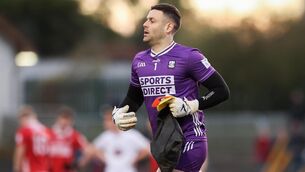
Centre of the game: Back or forward at number six?
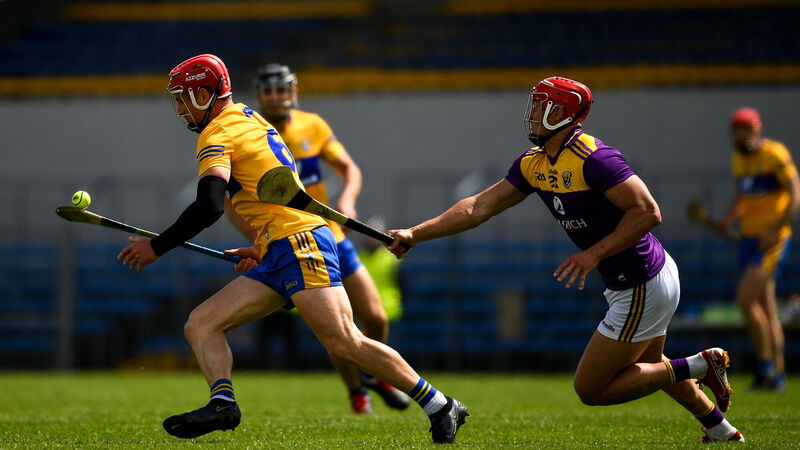
BACK IN ACTION: John Conlon of Clare is tackled by Lee Chin of Wexford during the Allianz Hurling League match between Clare and Wexford at Cusack Park in Ennis.
Forwards becoming centre-backs: the must-have accessory for the modern hurling team?
Clare have repurposed attacking linchpin John Conlon as a centre-back while Waterford boss Liam Cahill seems to have settled on number six as Austin Gleeson’s permanent posting, after the Mount Sion man’s frequent stints up front for the county.
All-Ireland champions Limerick were one of the trend-setters in this regard, with one-time half-forward Declan Hannon now settled at centre-back.
Ronan Curran has All-Stars and All-Irelands in the number six jersey with Cork. He points out that the job spec has “changed a lot even since I played — and when I was there it had changed a lot since Brian Corcoran’s day, who had been there before me for Cork”.
“You can still hear people talking about the importance of holding the centre, for instance, but that’s very hard to do.
“Part of that has to do with the general change in defending, where players have to be able to do a job anywhere in the defence. When I was there if I had to move to corner-back I’d have been lost because I wouldn’t have had the skills for that position. Now all players need to be able to do that.”
The St Finbarr’s clubman teases out the logic behind the relocations mentioned above.
“In fairness, Austin Gleeson to me is a genuine centre-back. I can remember seeing him as a minor with Waterford and thinking he was the best centre-back I’d seen in years.
“With Declan Hannon, he was a very good forward for a couple of years starting off with Limerick — but what makes him different to the others, I think, is Limerick have a very good system in place around him.
“They really protect the centre anyway, and that means Declan can do his hurling, find his men with those passes, and chip in with a few points because he’s such a good striker of the ball.
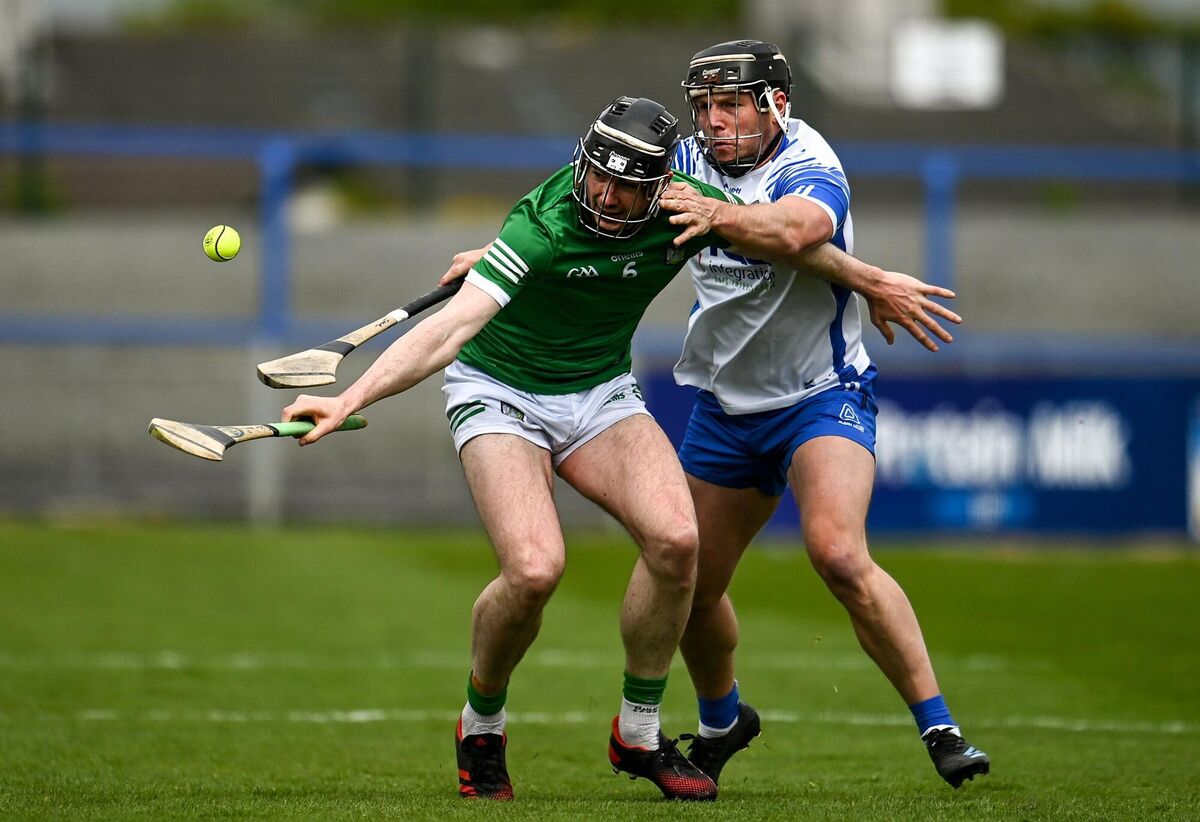
“Going back a few years Waterford under Davy (Fitzgerald) had a similar approach, crowding the centre and allowing ‘Brick’ Walsh to drop back further to read the play and get on the ball — which is basically a centre-back’s dream, when you have the protection. That protection depends a lot on the other players buying into the system, though.
“In general it’s a tough transition to make. If the management have a good plan in place, they can do it, but if not . . . when things are going well it’s the best place on the pitch to be, but when it’s not you’re attacked from every angle.”
Curran points out that centre-backs “carry a lot of responsibility”, even compared to their half-back colleagues.
“I used to slag the lads playing alongside me, telling them all wing-backs had to was beat their man to the ball and play it on. At centre-back you have to link with the midfielders, protect the full-back line, support the wing-backs, cover the centre and mind your man.
“If there isn’t a structure of play to support you, then that’s a lot of work. There’s no doubt that the players playing now are the best that played because that’s how the game goes, but with all that in mind centre-back is a very tough position.”
The irony for the centre-back manning the centre of the defence in traditional fashion, he adds, is that many of the scores seem to come from elsewhere on the field.
“A lot of the points come from midfield and the wing, or from ball played into the full-forward line, rather than the centre-back’s area. But then the number of bodies around that area can make it hard to create the space to shoot.
“The other thing to bear in mind is when the opposition are moving the ball out from defence with those 15- or 20-metre passes. When the centre-back sees that building in the other half he’s got to get tight on his man, because if he doesn’t then his man will collect one of those passes and shoot.
“That’s become a lot tougher now because the wing-back knows he has to work it up the field. And if the centre-forward is someone like Noel McGrath, he’ll drift out, collect the short pass, and nail a point from 70 yards if the centre-back doesn’t follow him.”
Is that one of the most serious tests of the repurposed forward, the man learning how to play centre-back?
“I think so. To me that’d be the big challenge for the centre-back, because he’s in a game of his own with the centre-forward.
“And that’s why the first 10 minutes of a championship game are so important. If the centre-back wins a couple of early balls and delivers them then the forward feels he has to follow him; if the situation is reversed, though, the centre-back feels he has to follow his man — but that leaves the centre open.
“That’s the dilemma. Follow or hang back? It’s a judgement call, because every situation is different. You can’t have a blanket rule of, ‘well, if he goes that far I’ll leave him off’, because he may have teammates backing him up or creating an overlap. Five or 10 yards of space out the field means trouble for the centre-back.
“That’s where experience comes in, where a player who’s been years playing in that position has the advantage, and where I’d be worried about moving a forward back there.
“If I were a manager I’d be testing out a forward who was moved back to play centre-back — force him to choose whether to stick or go if there’s space in front of him, make him decide whether or not to track his man to the wing for puck-outs and so on.”
It raises an obvious question...
“Would I survive as a centre-back now? I’d like to see what it’s like, but people forget that this will change as well in time.
“When I played, fellas often roamed around from centre-forward, to try and drag you out of position.
“Before that there were often big strong centre-forwards who hung out of the centre-back and kept the ball traveling in to the full-forward lines.”
Different times. Different questions. That never changes.
CONNECT WITH US TODAY



Be the first to know the latest news and updates