Christy O’Connor: The best hurling forwards now assist as much as score
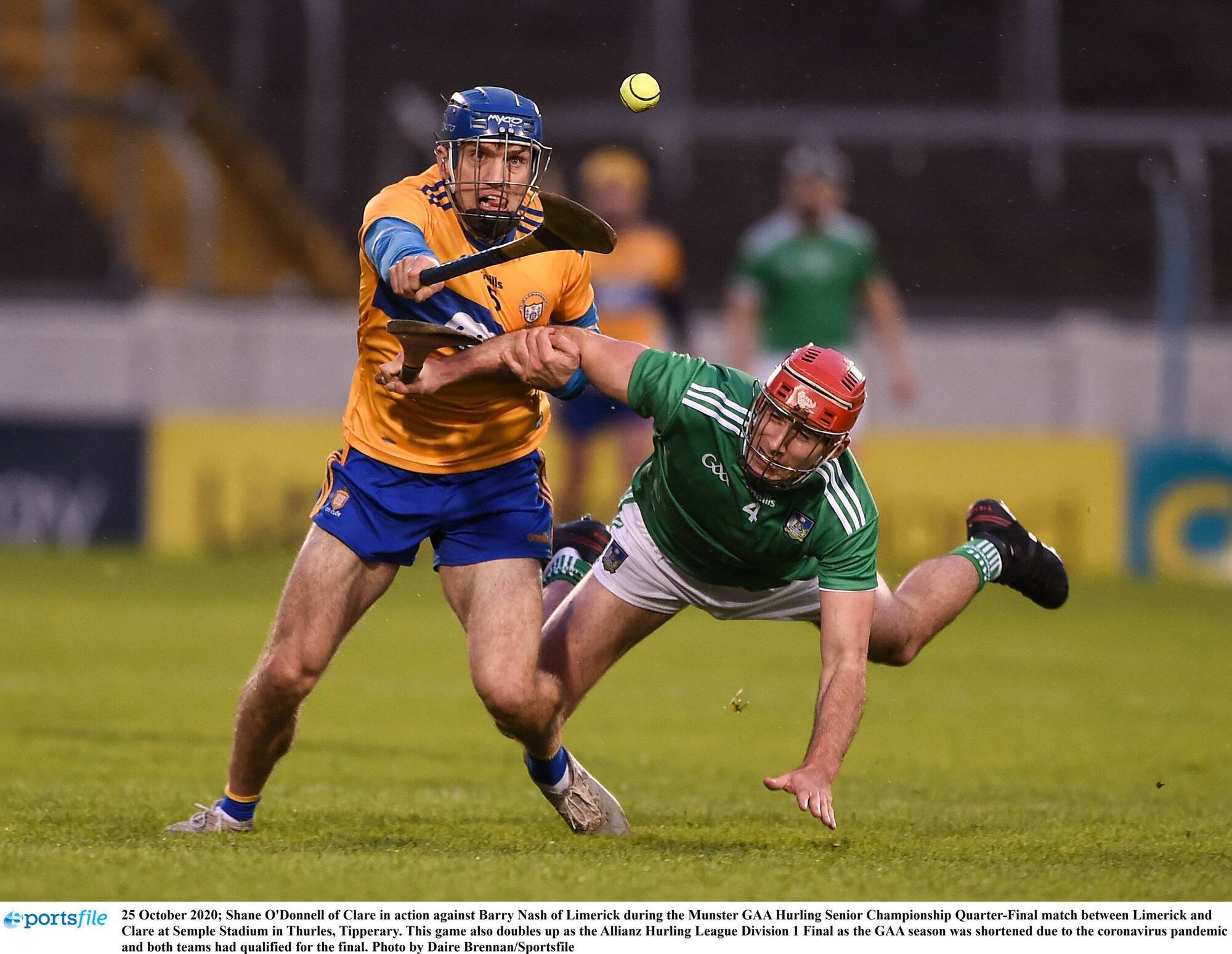
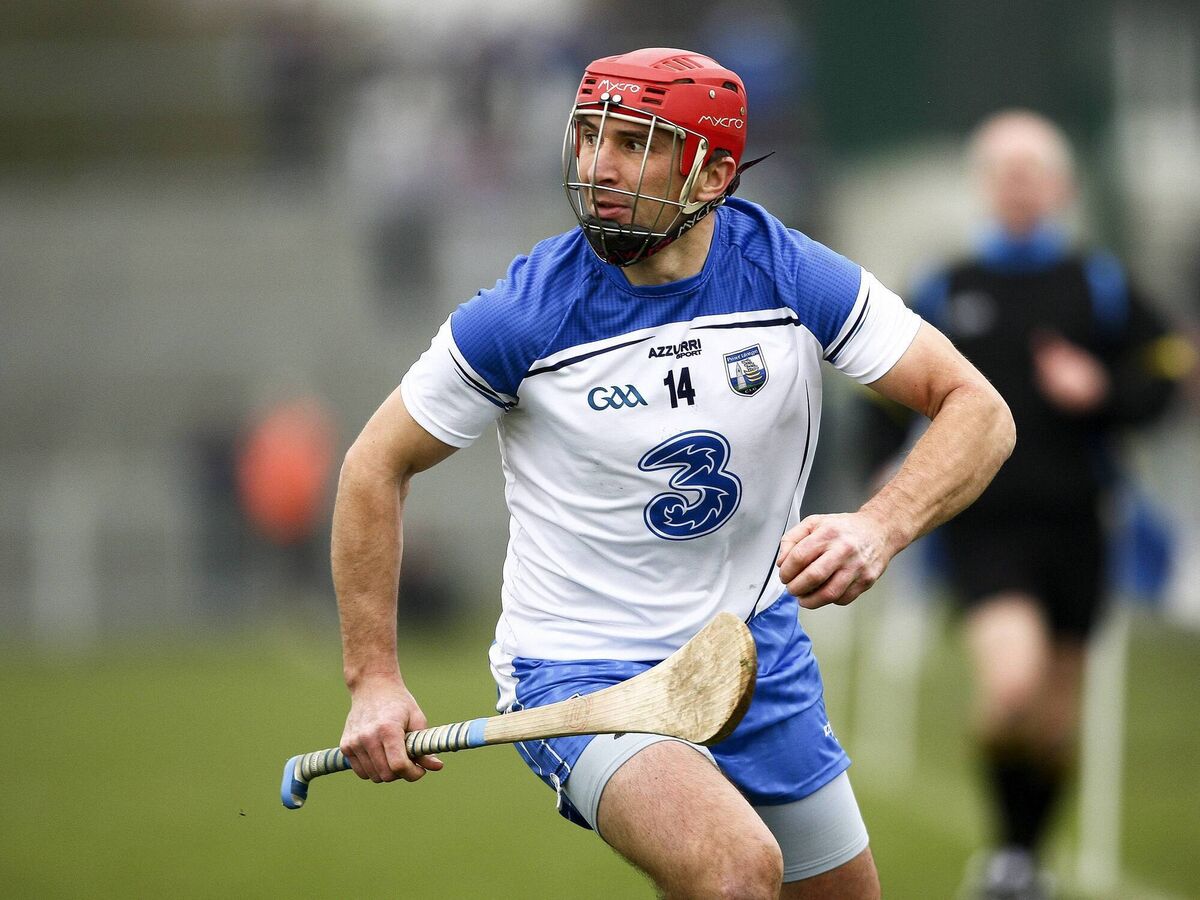
Because of his low-scoring return, the general perception was that Shane O’Donnell had a poor championship, but the overall numbers show otherwise. Picture: Daire Brennan/Sportsfile
The great Cork team of the 2000s was packed with brilliant players, high-profile characters and revolutionary minds, on and off the pitch, but Timmy McCarthy was often portrayed as an outlier.
McCarthy was a crucial component of that system but, while that group painted a glorious picture of ambition and achievement, McCarthy’s career was a stunning portrait of endurance and stoicism.
Nobody took more stick on that team than McCarthy.
He was routinely doubted by the public and press, but McCarthy’s resolve was an enduring tribute to the type of player he was, and the selfless part he played in Cork’s success.
Outside of All-Ireland finals, McCarthy started 35 championship matches for Cork and was replaced in 20 of them, reflecting an oscillating vulnerability that defined his senior career. In 115 league and championship appearances, McCarthy scored 10-98, which was an average of 1.1 points per game, well below the minimum level expected of a wing-forward.
And yet, despite all the criticism that McCarthy needed to do more, that he should have done more, that external conflict was always counter-balanced by the internal appreciation of what McCarthy brought to the group.
His place was always seemingly under threat, but McCarthy was only dropped once in the first seven years of his senior inter-county career.
Despite being regularly substituted, five different Cork managers placed their faith and trust in McCarthy.
Although Gerald McCarthy didn’t start his namesake in his first five championship matches in charge in 2007, McCarthy was a starter for Cork’s two epic All-Ireland quarter-finals against Waterford that summer.
McCarthy was taken off in both games, but the management still started him in each of Cork’s six championship matches over the following two summers. McCarthy was subbed off in five of those games but, even at the end of his career, management could see the value McCarthy always brought to the side.
The devil was always in the detail. In the 2006 Munster semi-final against Clare, the key talking point around McCarthy afterwards centred on a fluffed goal-chance, when Tom Kenny opened up a route to goal for McCarthy, who dropped the pass.
McCarthy failed to score that afternoon. He only had four possessions but a more nuanced study of that game underlined McCarthy’s real contribution to Cork’s win.
He did so much decoy running that McCarthy’s marker Gerry Quinn was completely out of the game. Moreover, McCarthy’s selflessness opened up huge tracts of space for Joe Deane to cut loose.
Long before the phrase was popular, McCarthy was an assists machine. Back then, the term ‘assists’ wasn’t really part of the GAA lexicon.
Performance analysis had taken root, but it wasn’t as advanced and insightful and informative as it is now.
There have always been players around like McCarthy, whose wider contribution in set-up play and setting up scores was always more valued than what they scored. But the modern culture of performance analysis can now put a whole different level of nuanced appreciation and measurement on those contributions.
The modern game has also demanded so much more of players, especially through hurling’s modern style change. The dynamics of the game at elite inter-county level have forced a fundamental shift in responsibility, with that first responsibility now on the player in possession: By trying to ensure that the ball is not put at immediate risk, that player in possession no longer has a licence to just hit it and hope.
A hurler’s compass now is no longer pointed in one direction because every player needs 360-degree awareness in possession. With layered defensive systems, sweepers, covering players with a licence to move anywhere, and so much space compression, shooting on sight is not always the best option.
With scoring spreads increasing by the season, players are nearly measured as much on assists as scores.
Two of the best games Reid played in the last three seasons were the 2019 All-Ireland quarter- and semi-finals against Cork and Limerick.
Reid had only two shots from play in those games. He failed to score from play but Reid either set up, or was fouled for, 10 points; he also won 14 puckouts in the same two games.
“If I score five points from play, great, but it’s the overall work-rate you really want,” Reid said in December 2018.
“You have to sacrifice yourself for the team. I don’t mind if I don’t score as long as I know in my heart that I worked my ass off for the team. In most games, I know I’m setting up scores for other individuals. If I win the ball, there are going to be two or three lads racing at me. You can’t be selfish and just take on three lads. You can’t be Superman. You have to use your intelligence.”
That demand is increasing with each season. Shane O’Donnell provides a brilliant case study from the 2020 championship.
O’Donnell, one of Clare’s most lethal finishers, scored just 0-2 from seven shots in last year’s championship. Yet statistics from the brilliant ‘GAA Insights’ team showed how O’Donnell had 24 assisted shots, with an average dividend of 0-4 per game.
O’Donnell was second in the assists chart behind Galway’s Brian Concannon. The Galway player scored 2-8 from 15 shots but Concannon’s excellent season was further underlined by his assists contribution, with 26 assisted shots, an average of 6.5 per game. Concannon was fouled for 14 frees; in a tight All-Ireland quarter-final against Tipperary, Galway’s return of 0-5 from six frees won by Concannon was decisive.
O’Donnell was also regularly fouled for converted frees but his fingerprints were smeared all over a number of key Clare scores. For Tony Kelly’s goal against Wexford, O’Donnell won a puckout before haring past two Wexford players and playing a perfectly weighted pass to Kelly running off his shoulder.
“Tony Kelly was brilliant but how many of his scores last year were set up by Shane O’Donnell?” asks Barry Cleary of the ‘GAA Insights’ team. “Everyone was focusing on Tony but maybe the opposition should have been focusing more on the guy who was putting the ball in his hands. That is the guy you have to stop first.”
What cemented Gearóid Hegarty’s Hurler of the Year status in 2020 was his stats from having the highest number of shots from play (28) and shots assists (21) combined (49). Tom Morrissey wasn’t far behind Hegarty with a combined total of 40 (22 shots from play and 18 shots assists). In the All-Ireland final, Morrissey had assists for 0-5.
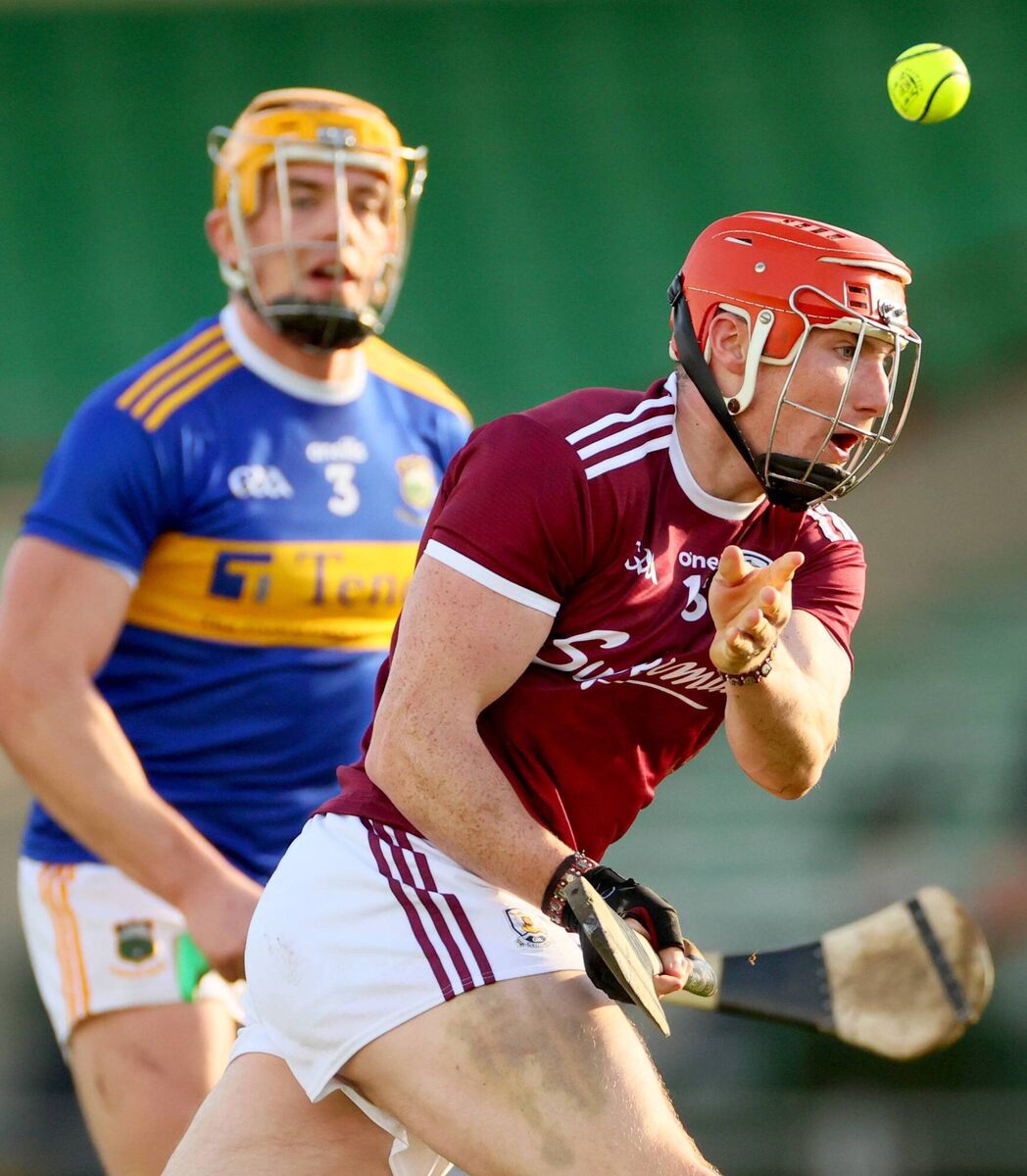
The best forwards now strike that ideal balance between workrate, scoring and creating scores. Conor Whelan didn’t score a goal for Galway in the 2020 championship but he had the second-highest number of goal-shot assists (four). Over the championship, Whelan had as many shot-assists as shots (18 each).
On the ‘GAA Insights’ top 20 list of assists, all 20 players were either forwards or midfielders, but players are measured on assists now from all over the field. In the 2018 championship, Limerick goalkeeper Nickie Quaid was eighth on the assists list; despite missing three games in Leinster the following summer, Kilkenny goalkeeper Eoin Murphy was 12th on the list in 2019.
At times, it can be easy to exaggerate numbers, but the metrics provide the detail behind the data. “The easy thing to say would be that Eoin Murphy just hammered the ball long and TJ Reid was winning it in the air over three defenders and putting the ball over the bar,” says Cleary. “But Murphy’s puckout distance that summer was putting the ball in a position that completely unsettled the opposition.”
Assists are analysed using a whole different set of metrics, from where the ball started, to how impactful the pass was to the scorer, to frees won.
“How do you classify an assist?” asks Damien Young, Tipperary’s performance analyst. “Is it a set-up assist or is it a 50-50 assist that happens by accident? It’s either black or white but the definition provides coaches and players with more accurate information. It’s no longer good enough to just belt the ball up the field, or to shoot from all over the place.”
There was a stage in the middle of the last decade, especially when sweepers were fully in vogue, when teams were shooting from distance, and far more liberally. Yet possession has become far more systematically produced in recent years. With so many players moving now, and with the players in possession constantly looking for the best option, teams are consistently working on improving their shooting range.
That was obvious in Limerick’s play last year. In three of their championship matches in 2019 — against Waterford, Tipperary (Munster final) and Kilkenny — Limerick hit a combined total of 53 wides.
They won two of those games handy but some of the profligate and wild shooting Limerick had shown in Munster came back to haunt them against Kilkenny when they only had a 50% conversion rate.
The ‘GAA Insights’ data from 2020 though, showed that, while Limerick had the highest number of shots per game, they also had the highest number of shots per game inside the 45-metre line (24.2), and the highest number of shots between the 45-65 metre lines (14.6). Yet Limerick had the second-lowest number of shots from outside the 65-metre line (6.4).
To work the ball higher up the field into better scoring zones requires higher risk, but greater awareness, more economical use of possession, clever movement and intelligent space creation.
And more players making more defined scoring assists.
CONNECT WITH US TODAY



Be the first to know the latest news and updates