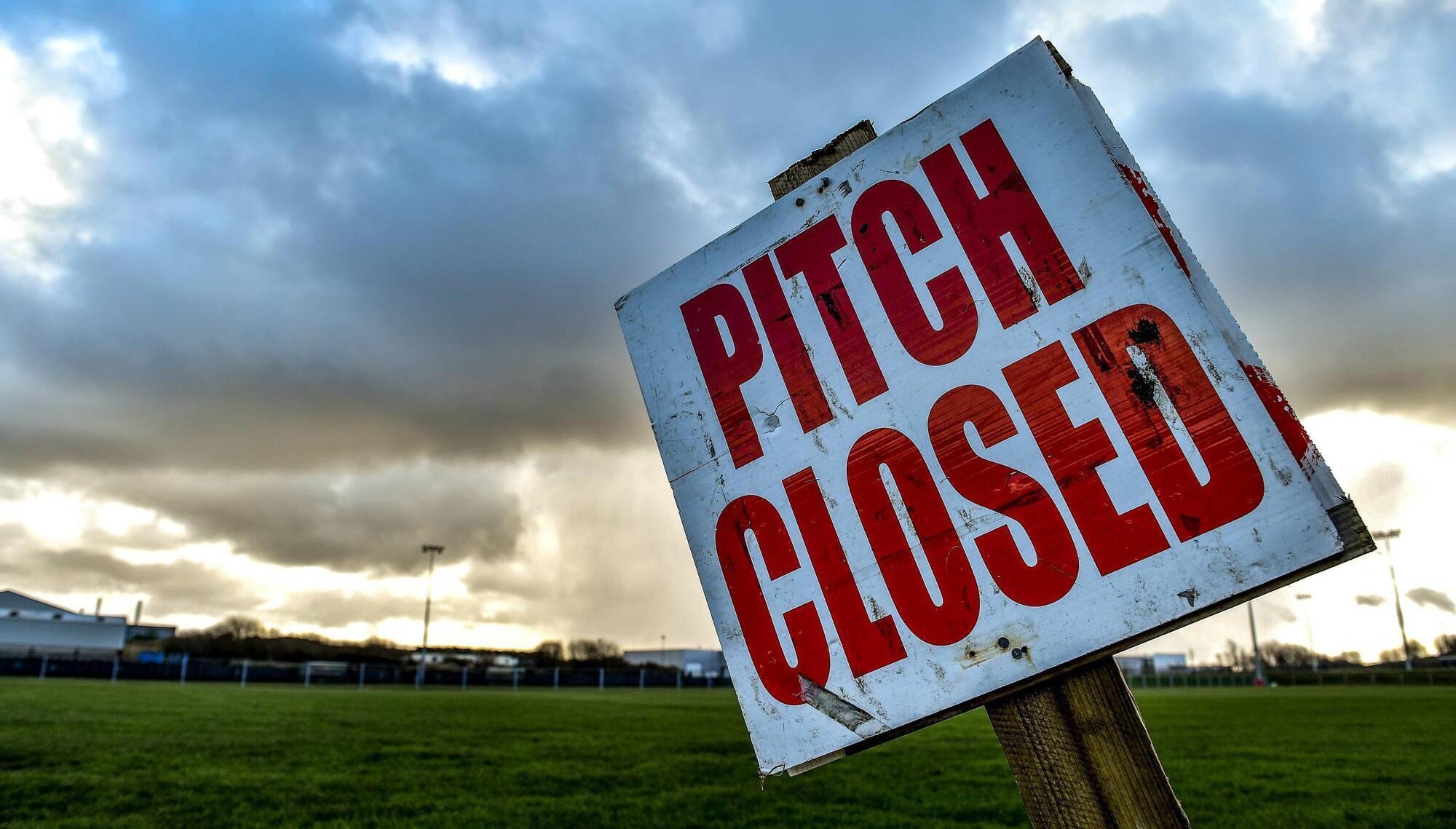
A new academic study has commended the role of the GAA and sports media in helping and reflecting the country’s response to the initial Covid-19 lockdown last year.
Written by NUI Galway’s Dr Seán Crosson and Mary Immaculate College’s Dr Marcus Free, “‘This Too Shall Pass’: Gaelic Games, Irish Media, and the Covid-19 Lockdown in Ireland”, praises the sports organisation and the likes of RTÉ for cultivating a collective conscience in the period from March to May 2020.
“The period of lockdown across many countries globally undermined the structures that have supported sporting practices, particularly in the arena of professional sport heavily dependent on spectator attendance, viewership, and engagement for its financing,” write Crosson and Free.
“However, the pandemic has also highlighted the importance of sports organisations and sport media in facilitating and encouraging responses at local and national level to the challenges Covid-19 has brought.
“In the Irish context, the rhetoric of shared sacrifice and collective discipline that was evident during the early months of the Covid-19 crisis signifies the GAA’s unique role as an amateur organisation touching every part of Irish society through its players’, administrators’, volunteers’, and supporters’ family and social connections.”
The authors make reference to the importance of The Sunday Game during that time when interviews such as GAA president John Horan’s on May 10 were broadcasted and the highlights of famous games from the past were replayed and reviewed.
“The absence of international sport, especially suspended English Premiership soccer, from Irish sports media and transnational subscription services gave the GAA, RTÉ, and the ‘national’ a renewed centrality, with broadcast discussions of the GAA as metonymic and metaphorical gauges of how ‘we are doing.’
“In this respect it exemplified how even in the increasingly commodified and marketized sphere of sport, public service broadcasters can continue to, ‘offer a forum for democratic debate and cultural exchange against a background of a deregulated global media system,’ and ‘treat people as citizens rather than consumers.’
“The duality of the GAA as metaphorical and metonymical of the national experience was exemplified by the May 31 edition of The Sunday Game Classics. At this point contributors were calling for resumption of training and competition with risk containment measures as soon as possible. They represented perspectives that were already contributing to the changing critical environment informing the GAA’s published ‘roadmap’ on June 5. The roadmap permitted first local club competition (from July 31), then inter-county competition (from October 17).
“That the contributors, all former players, also hailed from particular professional or business backgrounds, typified how the sporting-related discourse of the GAA was always implicitly ‘about’ the challenges facing the nation generally.”
Crosson and Free acknowledge the careful approach taken by the GAA in returning to play with clubs in July last year.
“Administrators’ and members’ pragmatic acceptance of an element of risk appears to signify a balancing of safety concerns with cultural value, sustaining meaningfulness for players and volunteers whose interest might diminish, and the overall psychological “wellbeing” of participants, from players to supporters, resulting from participation.
“However, its longer term and more cautious timescale (initially three weeks behind the schedule permitted by government) reflects its avowed commitment to the insurance of safety rather than an economic ‘bottom line’ of revenue generation through paying supporters’ attendance.
Corsson and Free also point to the “national inclusivity” shown by the GAA in making available stadia for coronavirus testing as well as the phenomenal DoItForDan fundraiser last year in aid of Dan Donoher as providing “social purpose in the absence of sport”.
They comment: “Such campaigns evince a nostalgia for the experience of mass participation, highlight the ordinariness and community situatedness of Irish sporting celebrities, and offer a proximation and idealisation of the collective experience of sport as symbol and exemplar of national integration.”
- “‘This Too Shall Pass’: Gaelic Games, Irish Media, and the Covid-19 Lockdown in Ireland” written by Dr Seán Crosson and Dr Marcus Free is featured in the newly-published collection “Time Out: National Perspectives on Sport and the Covid-19 Lockdown”.

Cancel anytime
CONNECT WITH US TODAY
Be the first to know the latest news and updates