Jonathan Lyne: 'County commitment is professional in everything but name'
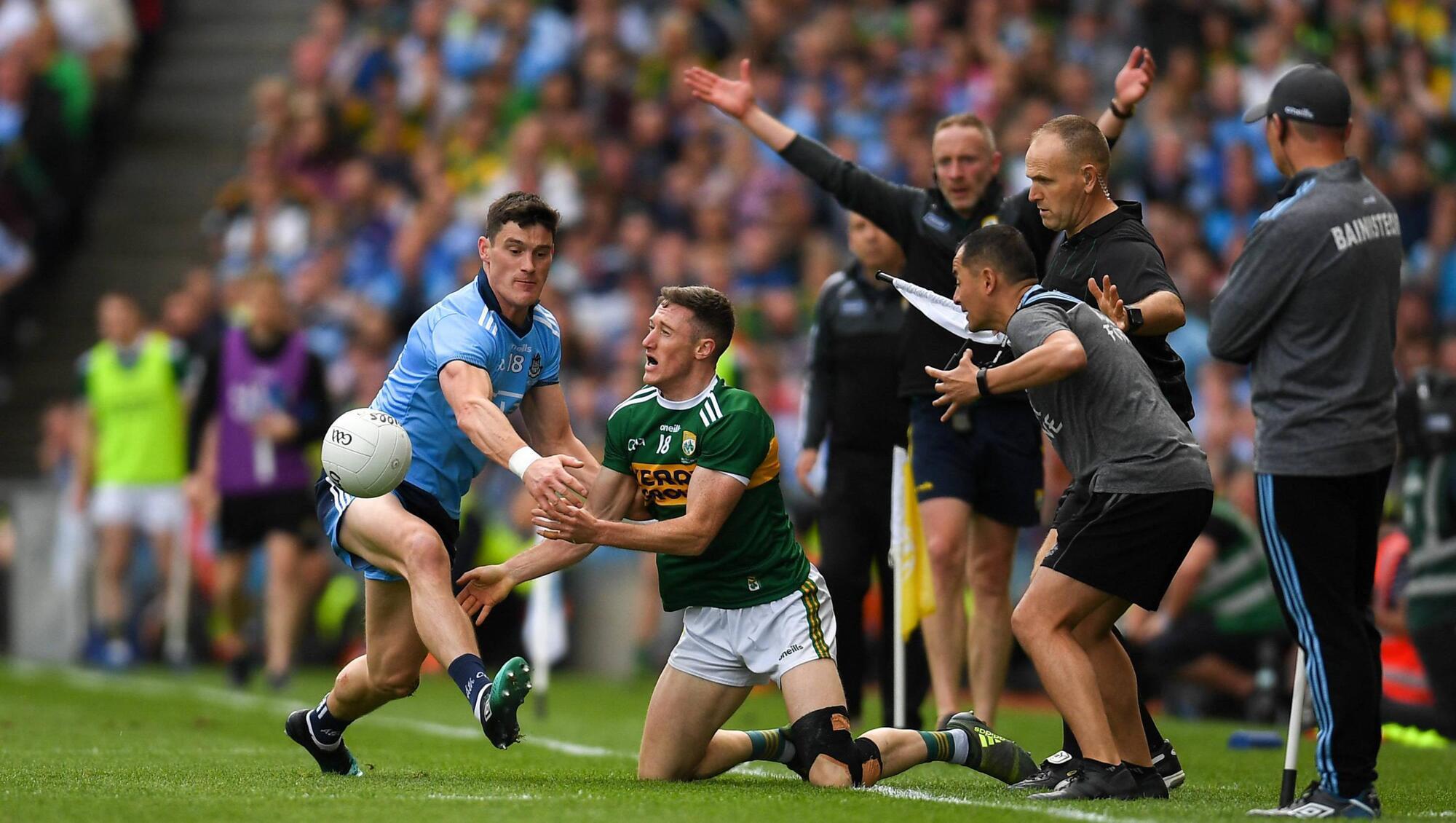
Jonathan Lyne: "I am not sure where it is going to go. I wonder what level it is going to get to."
The inter-county game is “professional in everything but name”, according to retired Kerry footballer Jonathan Lyne.
As well as limited game-time in recent seasons, Lyne said the “unbelievable” time commitments required to be an inter-county player was a determining factor in his decision to step away from the Kerry set-up last week.
An ESRI report in September of 2018 found that inter-county players are giving up to 31 hours a week to their sport, but Lyne has said the amount of hours a player is putting in between gym work, training, video sessions, and meetings has “gone to a new level” over the past two years.
Further contributing to the professionalism of inter-county Gaelic games, he added, are larger backroom teams and the creation of new roles within county set-ups to mirror the management structures seen in professional sports.
Last month’s All-Ireland SFC final match programme highlighted how the Dublin backroom team contains 29 personnel covering 17 roles. Hurling champions Limerick had a backroom team of 21 for the 2020 season.
“When you are talking to people that aren't from Ireland and trying to explain the game to them and the way it is run, they can't understand how it isn't a professional game. But it is professional in everything but name,” Lyne told Kerry Radio’s Terrace Talk on Monday evening.
“I am not sure where it is going to go. I wonder what level it is going to get to. It is hard to know, and I am not sure what the best thing is. It really has stepped up the last couple of years.
“The roles that the strength and conditioning coaches and all the other people that are in the backroom teams, they are playing an even more important role. It is not just the manager, trainer, and selectors any more, there are so many people in the background that are pushing the standards and making it a professional game like a soccer team in England or an American football team in the States. Those roles are being introduced from other sports and they are replicating those high standards that you see in other professional sports.”
Such is the commitment required, the 30-year-old expects it will become the norm for players to retire earlier rather than soldering on into their mid-thirties.
“Obviously you had fellas in the past like Tomás Ó Sé, Aidan O'Mahony, and Marc Ó Sé going into their mid-thirties, but I just don't see that being the norm going forward with the amount of time and commitment that is going into it.
“I wasn't a guaranteed starter and game-time was getting a bit more scarce, so that was definitely a factor, as well. Those lads, when they were going into their thirties, they were playing a lot of games, but it is different when you are not in that position. You have to take stock and see is it worth the amount of hours and commitment you are putting in.
“For me, it got to the stage where I wasn't sure any more and when you are not sure, you have to be 100% committed. I had always been for the years I was there and if I wasn't going to be giving it 100% like I wanted, then it is the right time for me to step away.
“At the start of 2020, I knew it was going to be my last year with the squad, if I'm being honest.”
Lyne started Kerry's 2015 All-Ireland final defeat to Dublin and was introduced as a sub during the drawn All-Ireland final against the same opposition in 2019. A "major highlight" from his time in the green and gold was the 2014 extra-time All-Ireland semi-final replay against Mayo in the Gaelic Grounds. The Killarney Legion clubman was sprung from the bench late in the second-half and kicked two crucial points. He was an unused sub during the subsequent final win over Donegal.
His retirement post on social media last week included three pictures, or three “legends” as Lyne described them, all of whom passed away in 2020.
“2020 was a very difficult year for me and my family, and my friends, as well. We lost my brother Damien there in April which was obviously heartbreaking for us. Then in October, one of my best friends, Derek Twomey, a clubmate of mine and a friend since I was going to primary school and all the way through my life, passed away very suddenly. In December, my grandfather, Arthur O'Keeffe, he was 99, passed away after a short illness. They were in my mind when I was putting up the tweet and I just had to mention them. I hadn't really mentioned them much on social media, but when the time came to announce it, they were definitely on my mind. It was my way of showing a bit of respect for them.”


CONNECT WITH US TODAY



Be the first to know the latest news and updates