Bloody Sunday centenary: Tipp players 'are very honoured' to wear commemorative jersey
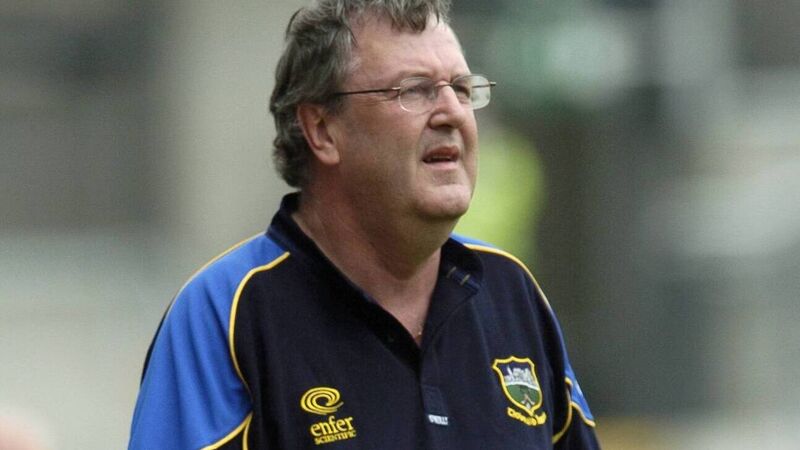
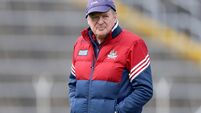
Former Tipperary senior football manager Seamus McCarthy. Picture: Damien Eagers
As luck would have it, Tipperary and Cork’s last meeting in Thurles eight months ago also marked the stage for the launch of the county’s Bloody Sunday commemoration events programme.
A few days before the lockdown, the pandemic put paid to a considerable part of the series to mark the centenary year.
Before the inter-county season was rescheduled from summer to winter, Dublin and Tipperary were also set to finish out the remaining 48 minutes of the abandoned 1920 game in Croke Park on Saturday.
However, one idea put forward by Tipperary’s commemoration committee has gone better than ever hoped as a result of David Power’s side reaching Sunday’s Munster final. Instead of just being donned for that challenge game, Tipperary will be kitted out in the white and green jersey of Grangemockler in Páirc Uí Chaoimh.
The players didn’t have to but they insisted. “It look like the stars have all aligned for this particular match,” says former Tipperary senior football manager Seamus McCarthy, the chairman of the commemoration group.
“And the players themselves are very honoured to wear the jersey. History can sometimes be a very big weight to carry but they wanted to do it and if they can draw inspiration from that then that would be wonderful.”
Power and his players clearly see it as a duty to remember their predecessors. Having led Tipperary to the 1993 and ’94 Munster finals only to be beaten by Cork each time, the last thing McCarthy would want is for the team to be distracted from bridging the gap to the last provincial success in 1935.
“‘93 seems like a lifetime ago now but the event probably overshadowed what we should have been concentrating on, which was the match.
"We hadn’t been there for 50-odd years and everybody was talking about how great it was to get there but the most important thing for that group was the match and the opportunity that had presented itself. I’m hoping the whole Bloody Sunday piece will inspire the current group and not deflect them from the real purpose, which is trying to win a Munster final. These games are not to be sniffed at particularly when you’re in Tipperary.”
Michael Hogan will be at the forefront of many people’s thoughts this weekend but the commemorative committee were keen to pay tribute to his team-mates, some of whom suffered trauma following that fateful day.
“We were determined that we would be stand alone, non-political and commemorate the match and the people,” says McCarthy, also mindful two Tipperary supporters were murdered that day, Daniel Carroll and James Teehan.
“All those footballers were victims. While Michael Hogan died, anybody who went through that suffered their own share of trauma and rarely spoke about it. Maybe they had difficulties speaking about it.”
The graves remembrance, McCarthy admits, has been an extremely affecting part of the committee’s work. So far, ceremonies for the deceased players have taken place in Cahir, Fethard, Grangemockler and Loughmore-Castleiney with events in Ballylooby-Castlegrace, Clonmel, Loughmore-Castleiney and Glasnevin reorganised for later dates.
“They’re poignant in their own way because ownership was taken back by the clubs, which is exactly what we wanted and all of a sudden people are aware of what these men went through,” remarks McCarthy. “It’s heroism in its basest form. We were just interested in the people and what they contributed.
“At the grave ceremonies so far, I have been speaking about how we’re two generations removed from Bloody Sunday.
“Since then I’ve met four direct descendants. I’ve met Jerry Shelly’s daughter, Mikey Tobin’s two sons and Tony Nolan, son of Mick Nolan, I met in Mullinahone.
“To find that direct connection means it’s not that long ago but if we don’t remember them now then that legacy would be lost and that would be a shame. I’m delighted and I’m proud that we have had the opportunity to reflect on them. While the football side of things is immense, the human side of it is so very important.” McCarthy expects a tense, less open than usual affair on Sunday. “If we looked at both semi-finals, Cork set out to win the match with a distinctive game-plan and did it as did Tipp. I’ve a feeling it could be a defensive type game and the team that transitions quicker from defence to attack will win it.
“Tipp have some very good forwards in Conor Sweeney, Michael Quinlivan and Brian Fox came on and produced the goods last week. Unless we can get the ball up the field quickly, all that will amount to naught.”
Frank “Scout” Butler (Fethard); Mick Hogan (Grangemockler), Ned O’Shea (Fethard, captain), Jerry Shelly (Grangemockler); Jim Egan (Mullinahone), Bill Ryan (Loughmore-Castleiney), Tommy Powell (Clonmel); Jim Ryan (Loughmore-Castleiney), Tommy Ryan (Castlegrace); Billy Barrett (Mullinahone), Jimmy McNamara (Cahir), Jimmy Doran (Mullinahone); Gus McCarthy (Fethard), Jack Kickham (Mullinahone), Jackie Brett.
Dick Lanigan (Grangemockler), Tommy O’Connor (Castlegrace), Mick Nolan (Mullinahone).


CONNECT WITH US TODAY



Be the first to know the latest news and updates