How to survive and win in the GAA's winter wars
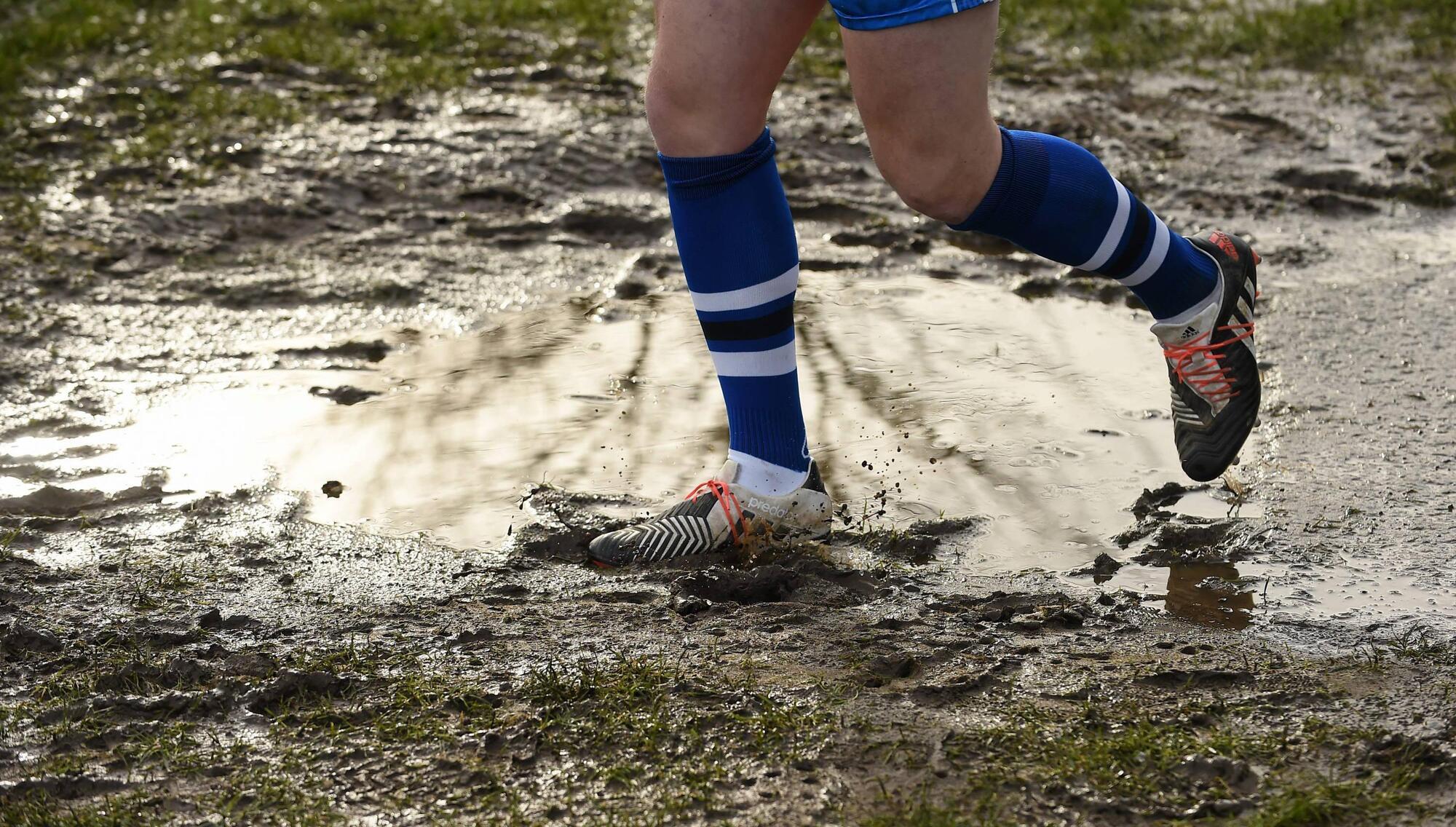
A Waterford player makes his way out for the start of the game. Waterford Crystal Cup Quarter-Final, Limerick v Waterford. John Fitzgerald Park, Kilmallock, Co. Limerick. Picture credit: Diarmuid Greene / SPORTSFILE
It's been a long time coming, but now the Gaelic Games fraternity and sorority can legitimately opine on the abilities of teams to ‘do it on a cold rainy night in Stoke.’ Or something similar.
‘Winter football’ is the new ‘senior hurling’ go-to catchphrase. In the muck and the gutters you require a less fussy type of operator.
Shapers need not apply. The lad with the hair gel and disco trousers in the kitbag who will run you up 1-4 in a challenge match? He’s not your guy. Not this year.
And yes, we hear you down the back, muttering that Limerick and Clare hit a score every 0.6 seconds. And indeed, that game was definitely staged after the clocks took a tumble backwards. But the sod was dry and the rain stayed off.
The weather apps on the phones of intercounty managers will account for a fair few hours of screen time this week. The rain sweeping in from west Cork late Friday night and spreading northwards, along with the wind getting up will spook a few. ‘Games of two halves’ are now a genuine thing.
Lee Chin acknowledged it this week.
“Obviously, there is mindsets of it being Championship, but the elements are going to make the pace of the game probably a little bit slower,” said the Wexford man.
“And when the game is a little bit slower, it's the physical teams that can have that little bit of an advantage. So I think it will pay some dividends this time of year.”
It’s not as if players would be unused to rough conditions, but when the county game encounters it, it’s usually in the early stages of generally meaningless leagues when close scrutiny is unnecessary.
However for the top club teams, it is a way of life, their seasons only truly hotting up when the mercury dips, the floodlights are on and smoke spills from the chimneys.
“When we were playing for Ballygunner, we had a fairly big team and when we got to county final stage it generally suited us better because there was a cut in the ground and the type of hurling we played, we never really went in for the short hurling,” says Andy Maloney, the All-Ireland winning former Ballyhale manager who also had his experiences in playing into the depths with Ballygunner.
He also believes the winter elements can protect a team with a questionable age and injury profile.
“When I was over the (Ballyhale) team, nine, ten of the lads were in their 30s and they had a lot of miles on the clock. A lot of injuries picked up over that time. You could have been looking at the likes of Michael Fennelly, the soft ground would have suited. Henry (Shefflin) would have been another one. Cha Fitzpatrick struggled with his groins and the softer ground suited him.”
And look away now, Corkonians. A Tipp man who played club in Waterford and managed in Kilkenny has his doubts. You hardly expected anything else.
“If you play tippy-tappy like what Cork are doing at the moment, tipping and tapping the ball to one another, that’s good in the summertime.
There may be few players across Ireland that has prepared for rain as often as Slaughtneil and Derry’s Brendan Rogers, across two codes.
He was in the thick of it last Sunday in Celtic Park as Derry defended the wind whipping in from Lough Foyle, himself at full-back as Armagh ran up a 0-11 to 0-5 lead by the break in the Ulster Championship.
Break that down further and you find that seven of those points originated from 12 turnovers forced by Armagh.
“The heaviness of the pitch tires you. The conditions, with more wind and more rain, your gloves will be soaking, you could wring water out of them every two minutes. You could even feel them when you are trying to make a pass,” says Rogers.

“Things aren’t as slick as they would be, so there is more chance of a breakdown. Teams can press higher up because in wetter conditions players are more cautious. So if you pressure them, they could take an extra touch or spill the ball.
“Your skill level, albeit if you are intercounty it would need to be high anyway, but the pressure on your skills are slightly higher with a wet ball. The wind is at your face when you are trying to get through a high-press kickout and things like that. It can be very difficult.”
He continues: “You see the Donegal Tyrone game. How bad was the bounce? How many half-tackles that you would normally brush past in the summer, but because it was so wet and mucky it was made into a foul?
“A more patient and well-coached team would generally do better than a team that likes to play an expansive type of football.
When manager of Crossmaglen, Joe Kernan was blessed with men equipped for the longer studs in Francie Bellew, the McEntee brothers, John Donaldson, Donal Murtagh, Anthony Cunningham and Gavin Cumiskey.
He knows what principles have to be favoured on the short days. He played on an Armagh team who had Fran McMahon, a man who perhaps struggled on a hot summer day, but was one of the first names on the team sheet on a day when a blue-collar ethic was called for.
“The fast-flowing football has changed. The Tyrone Donegal game epitomised that last weekend. It was a game of cutting out mistakes, you didn’t want to give the ball away,” says Kernan.
“It’s slower, it doesn’t move at the same speed. The Donegal goal went against all of that of course because of the speed of the kickout and the ball travelling.
“Donegal were stronger and could win the dirty ball easier.”
On no pitch does the ball skite off a surface quite as rapid as Croke Park. It’s almost the same effect as a 4G surface.
In a footballing culture where everything is based around accuracy, Dublin’s sixth consecutive All-Ireland title could be in peril.
“I think it will impact the Dubs. Where any advantage they are used to, be it intimidation because of the noise, their home crowd, the boost they get from the Hill, I think that will make a difference,” says Rogers.
“The expansiveness, the way Croke Park plays on a dry day suits their style of play. When you bring it to narrow pitches where the wind and the wet can get in at it better, it can affect it.”
He hits us with examples: “Tyrone had joy against Dublin this year on a wet horrible night in Omagh. They beat them the year before in Croke Park. Monaghan drew with them. Kerry beat Dublin on a really horrible night when there was a scuffle at the end of the game.
"That to me levels Dublin a wee bit, brings them back to the rest of the pack. It gives a boost to any team playing them.”
Can the Dubs do it on a wet night in Drumcondra?


CONNECT WITH US TODAY



Be the first to know the latest news and updates