Christy Ring through the eyes of those who marked him: 'No matter what way you played on him, he’d make you famous'
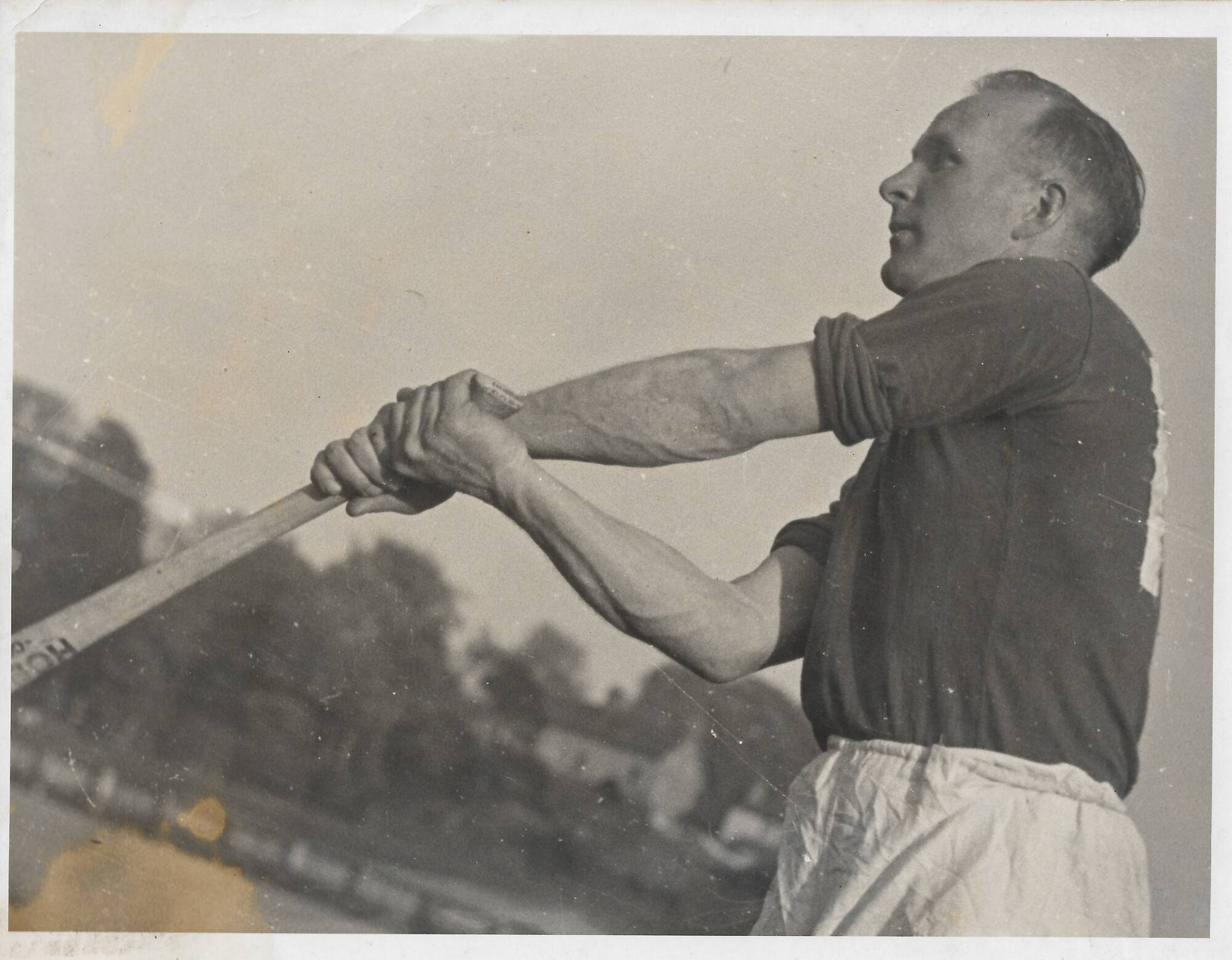
Christy Ring
You could say Christy Ring baptised Matt Hassett as a championship hurler.
“I suppose people were wondering where they found me,” Hassett laughs. “And I suppose after I marked Ring the first year, with not too much damage done, I was sort of accepted. I held my place, anyhow, for a couple of years. I wasn’t a Tipp star, or ever going to be a Tipp star. But I held on.”
Summer’s float of gossip... the build-up to 1960’s Munster final provided plenty of technicolour: Christy Ring versus some unknown quantity from Toomevara. The two Ridings held every kind of breath.
Hassett was 27 going on 28, rarely mentioned in dispatches, never an inter-county minor. The typical profile was absent. But now he is right corner-back on the game’s most vivid presence, 1959’s Texaco Hurler of the Year. The wizard, three months shy of 40, retained a glittering cloak.
Hard to exaggerate that sheen. Mickey ‘The Rattler’ Byrne had retired after the previous spring’s NHL final. Despite a four-point Tipperary triumph, his direct opponent’s sorcery delivered 3-4 of Cork’s 3-8.
That afternoon, Louis Marcus began filming his documentary on Ring. At half-time, two goals scored, the man himself deadpanned to the director: “I’m sorry. I couldn’t do any more.”
Byrne’s exit dictated a new defender’s entrance. Hassett is level in recollection: “It was the talk of the county, really, the risk involved for that Munster final. The Rattler had been there for 15 years. I knew about the talk, but the two things I did have going for me as a hurler were speed off the mark and a good temperament. I wasn’t a man for 70-yard clearances but I could do a job.
“The first few balls that came into our corner, I dashed out and cleared them, or gave the ball to someone who could clear it. The only way to play Ring was from the front. I got a fantastic lift from the crowd, and I travelled on from there.”
Tipperary seized a tremendous contest by two points, 4-13 to 4-11. Hassett tempers the moment: “We were a bit lucky. Cork got a 21-yard free just after half-time, and of course Ring went over to hit it. The ball crashed out off the crossbar and Paddy Barry, a great forward, pulled on the rebound. The ball hit the top of my boot and spun up over the bar. A Cork goal at that time would have meant fierce momentum for them.”
Tipperary advanced but fell to Wexford, one of the code’s weightiest shocks, in the All-Ireland final.
Next season, the same Munster final pairing. Seconds out, Matt Hassett and Christy Ring back in. The new guy even led out the team.
“1961 was a mad day, and a mad day to be captain,” he notes. “Toomevara had ambushed Thurles [Sarsfields] the year before, and I received the great honour. There was just this pure massive crowd there, like nothing seen before in Limerick. The Tipperary team didn’t actually get into the ground until about five minutes before throw in. Chaos... No speeches. Straight out onto the field.”
Hassett elaborates: “We had the worst possible send-in but the best possible start. Three goals quickly, and we led by 11 points at half-time. That was that.
“Ring wasn’t a big factor on that day, but it wasn’t a matter of who was marking him. Christy had just come to the end of his run, that wonderful run. He gave over 20 years hurling in Munster finals, won his famous eight All-Ireland medals. I wouldn’t claim for a second to have been up to holding him in anything like his pomp.”
Matt Hassett proceeded to lift the Liam MacCarthy Cup when Tipperary barely got over Dublin in 1961’s senior final. He reached the top. Yet that journey was a strange one. His success transpired because two moments, chance moments, spliced. Time, kind occasionally to the deserving, came with its silver buckle.
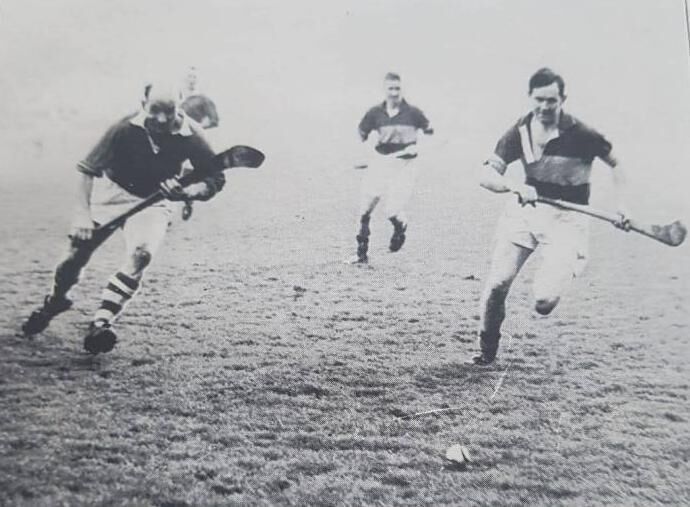
Watch the splice happen. Summer of 1958, Matt Hassett attends a tournament game in Roscrea. Toomevara possess only 16 players and he is 16th man, disconsolate on the line.
“At that stage, I was a poor corner forward,” he smiles. “I wouldn’t have scored if there had been a goalpost at both corner flags. I knew it.”
A Toomevara wing back went down. For want of option, Hassett was introduced in defence. To everyone’s surprise, the rejig suited him. His career tilted into an unexpected but upward curve. He fared well on the club scene at corner back over the next two seasons.
His story moved sideways before pushing forward. Summer of 1959, he dandered over to see an inter-county challenge match in Buttevant, Co Cork. “I thumbed there,” he states, old amazement flecking his voice. “Hadn’t a notion of how I was getting home afterwards. But still... Maybe something was drawing me.
“I did manage a lift to Buttevant and went down the town for a pot of tea. As I was coming back up towards the ground, I ran across Tommy Barrett and a few more of the County Board people. They recognised me and Tommy said: ‘Will you come in and tog off for us this evening? We’re really short, with so many club games on today in Tipp.’ So I did.”
Hassett glosses: “It must have started there. Maybe they thought of me, looking for a corner back at short notice the following year, because of that evening in Buttevant. I don’t know but I got a shout after The Rattler retired. And look what it led to...”
Three years later, that 16th man in Roscrea stood in the Hogan Stand, hefting the same silverware Christy Ring had lifted three times.
The men who marked him knew him best. Hence this centenary’s compelling nature. Ring is not yet gone. Some of his feats on the pitch, even at such remove, seem almost biblical for their intensity and wrath. His markers are one attempt at a wide-angle lens.
Extraordinary contests during the 1950s retain Cecil B DeMille colouring, blood and grass exchanged for blood and sand.
There is the celebrated photograph of Ring, muzzy with head bandaged, after the 1952 Munster final. There are so many images of him raked against summer sky, poised like a surgeon, hunched like an assassin.
Forget Bill Shankly in 1981, on soccer’s last importance. Christy Ring was long since hurling as higher than life and death. Extremity is the bed of achievement. And Ring remains our most extreme man, caught against the sky. His career ended before Ireland moved into television and Gay Byrne, into easy nostalgia. Ring is the past with teeth.
He never better articulated the gift’s cold fury than during the closing minutes of 1956’s Munster final. Limerick led by six points in the final quarter. Shackled until then by corner back Dónal Broderick, Ring crunched all chains with three goals and Cork escaped to victory.
Broderick’s deathless summation: “No matter what way you played on Ring, he’d make you famous.”
Matt Hassett attended that final: “I was on the bank for it, and it is one of the games most fresh in my mind, even now. In 1956, I had no thought of hurling corner back for Toomevara, let alone of hurling corner back for Tipperary. I’d as soon have thought of going to the moon. So there is no 20:20 hindsight vision.
“But I did feel that game showed exactly what to do and what not to do when marking Ring. For 50 minutes, Broderick got it spot on. He went hard to the ball and made Christy chase, and he stopped Christy using his body in the tight.”
Denouement awaited: “Then Broderick started being too defensive. He got jittery. He started watching his man rather than watching the ball. Christy manoeuvred a few tight situations where his power was the main thing, and along came the goals.
“Christy loved to trap you in his frenzy. I suppose I was storing up stuff for myself, even though I didn’t know it at the time.”
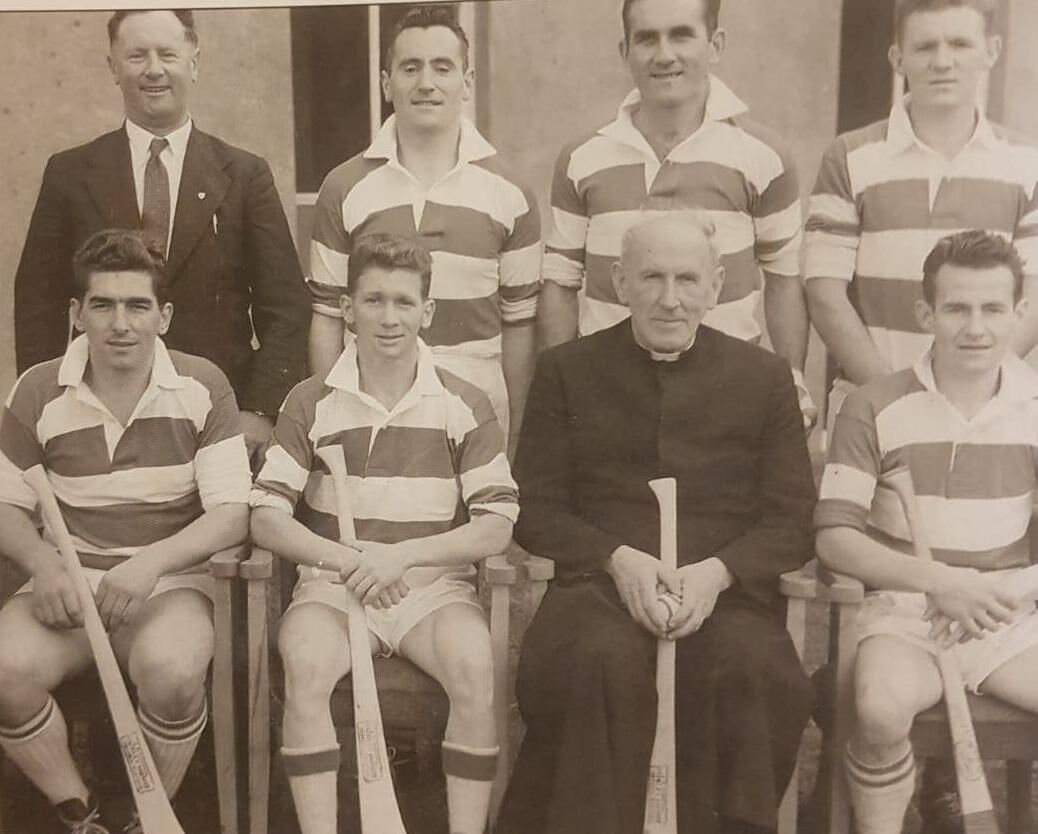
While Martin Óg Morrissey did not attend the 1956 Munster final, his perspective chimes with these observations.
“What you needed for Ring was first and foremost a ballplayer,” he emphasises. “Someone who went to the ball, attacked the ball. The ball, the ball.
“A lot of people didn’t get that. There was a view you needed someone to butcher him. I thought that stuff played into Ring’s hands because he was so strong and ferociously brave.”
Morrissey, 84 this year, became one of Ireland’s finest hurlers between the mid 1950s and the mid-1960s, star centre-back with Mount Sion and Waterford. The Déise, classy and attractive, were not flattered to win a single senior All-Ireland in 1959. Morrissey saw the best, competed against the best.
“I didn’t mark Christy that much at inter-county,” he outlines. “The odd spell on each other, in the course of a match, but we would rarely enough have started on each other. I’m not sure who that’s a compliment too!
“We marked each other far more in club games in Munster. There was a sort of unofficial Munster Club Championship, the Churches Tournament or something. All the big clubs participated. I remember a brilliant game in 1959, which Glen Rovers barely won. Christy was on me and we went at it. I never minded marking him because I was a ballplayer.
“Someone from his crowd came out to him and said to go in corner-forward. So I must have been doing alright. But then I was told by one of my own selectors to follow him.
“Ring had this pinpoint thing. He could always do that, magic this goal up out of nothing.”
Was he the greatest, the most indomitable? Morrissey pauses, gathering a serious reply: “I think he’d have to go down as the best all-rounder. Certainly in my time. But I always thought if you wanted the poetry of hurling, the unbelievable skill, you went to see Jim Langton of Kilkenny. I saw Langton, and he was unreal with a ball.”
The thought is developed: “You have to consider the sort of hurler Ring was. There are different types, and it can be hard to say one type of hurler is definitely better than another one. Ring wanted contact. He wanted always to be in the thick of things, and he wanted to make space for himself by going into contact, powering through.
“Christy had wonderful quick hands in tight circumstances. He could strike off-balance, had a powerful shot off either side. But he got a lot of goals with hand passes too, after working in near the goal through strength.”
Morrissey does not shy from supposedly impossible comparisons between 21st-century hurling and his era: “Then you have the sort of hurler who likes to ghost away into space, the man who avoids contact unless it’s vital. These lads get in on goal, without anyone copping them. They are hard to deal with because man-marking can fall down. The whole defence needs to work together.
“Jimmy Doyle of Tipp, in our time, was like that. He could turn up anywhere. And King Henry [Shefflin] in recent years. He is a much bigger man than Doyle was, but the same style, if you look at it. Ring was different.”
Both men echo reflection offered by Des ‘Snitchy’ Ferguson after the 1952 senior final. Cork won with ease but Dublin’s right half back was admired for doing well, cleanly, on Ring.
Stressing fitness and speed as best gambits, Ferguson remarked: “He was like an eel. Even when you were right there with him, he could somehow glide out of reach to send the ball soaring. If you didn’t mind getting a lesson in hurling, he was the ideal player to play on.”
Is the extreme man best countered by opposite measures?
Tommy Doyle of Tipperary managed Christy Ring, cleanly, for 150 Munster Championship minutes in 1949. Denied frenzy, Ring could be made merely brilliant. Is this lesson the widest possible angle of view?
Martin Óg Morrissey admired Christy Ring as a singular individual off the field. As he recalls: “We were up in Dublin for the 1959 Railway Cup. Stayed in Barry’s Hotel, as usual. We came down the next morning, Larry Guinan and myself, and went into the breakfast room. Christy was in there on his own. So we went over.
“It was all hurling talk. Nothing else. One of the reasons Ring was so hard to mark was because he thought so much about the game, about what various players had and hadn’t. I doubt anyone has ever thought as much about hurling as Ring did.”
Hassett never knew Christy Ring in a social sense. “I remember bumping into him at a Munster [GAA] Convention in the 1970s. Just a polite nod. Probably the clearest memory I have of Ring in his civvies was a funeral in north Tipp, ever before I came on the county scene. I think it was Donie Nealon’s mother, and he was up at it. We were introduced and chatted for a while.”
Fascination has never lessened. A lifetime later, 88 years old now, Hassett admits residual wonder. There is merriment in his voice, even as November steals the clock: “He was the most affable person you could ever meet, over a cup of tea. Would chat away, interested in everything, in what everyone had to say.
“But put a red jersey on him and he became a different client. I saw it.”
CONNECT WITH US TODAY



Be the first to know the latest news and updates