Paul Rouse: How do we measure Christy Ring's greatness?
It is impossible to discuss the greatest ever hurlers without Ring being central to the conversation, writes Paul Rouse. But there is another key intangible — how a sports person makes you feel
Paul Rouse: How do we measure Christy Ring's greatness?

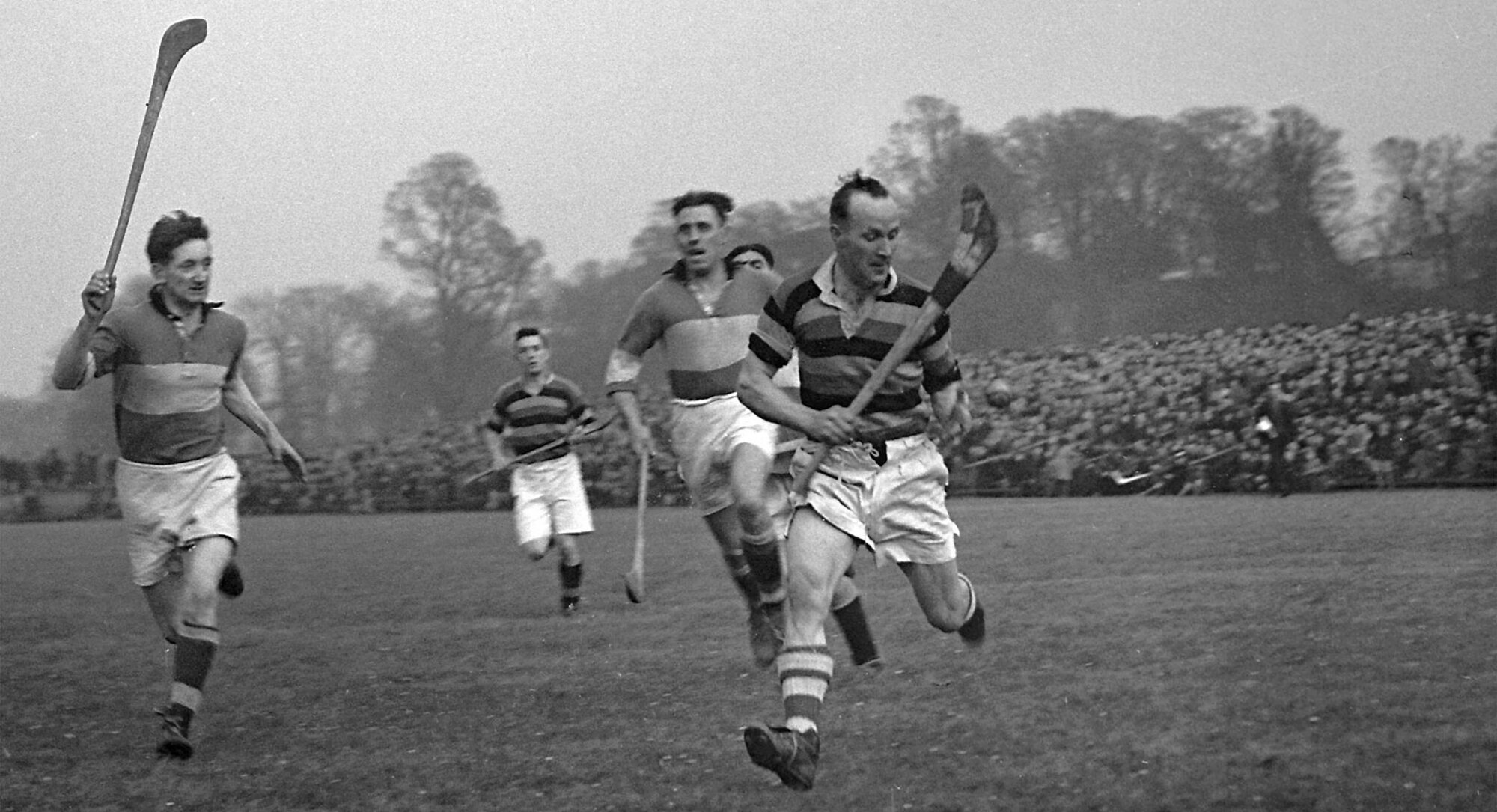
Christy Ring in action for Glen Rovers against Sarsfields in 1949 at the Athletic Grounds. Picture: Irish Examiner Archives/ Ref 601d

Through media — first in newspapers and magazines, and then on radio — the creation of heroes has played a fundamental part of the modern sporting world.

This is something that has been amplified since the mass televising of sporting events. Television brought national and then international recognition to sportspeople whose fame would have been much more local in any previous era.

But it has also served to limit the duration of much of that fame. There are sporting heroes who transcend time and place, but they are relatively few. And while the media (now including social media and other internet-based technologies) is instrumental in polishing the legend that affords a person greatness, the very nature of this media — and of the protean world of sport — is that the arena constantly demands new glories.

In this churn, only a select few truly survive beyond the immediacy of their triumphs. Most fade away into a nostalgia of yellowing newsprint, of sepia photographs, of old footage that sits out of shape and in blurred focus on modern screens.

Their sporting deeds are a matter of record, but they retreat in the public mind, shouldered to the margins by new stars, who themselves ultimately will follow the same path into the void of obscurity.

Christy Ring is one of the select few names in the history of Irish sport who truly transcends his own era.

It is impossible to discuss the greatest ever hurlers without Ring being central to the conversation.

Even those judges who do not agree that Christy Ring was the greatest hurler of all time must account for him in their reckoning.

This is, of course, a gloriously inexact science. The endless unseen incidents in every sporting event can make a mockery of any framework which pretends to rank greatness. And when these events are placed one after the next into the context of sporting lives, the challenge of assessing the relative merits of individual careers becomes all the more difficult.

So what are the measures of greatness that define a sporting life?

The recorded successes of a sports person obviously matter in any reckoning with greatness. This is particularly true of individual sports; there is a dent in the legend of any man or woman who does not achieve the ultimate accolade in their sport. That dent is not necessarily a defining one, but it must be considered.

The heroic loss should not be dismissed; a truly outstanding sporting career can play out in defeat in the face of opposition which turns out to be insurmountable.

Normally, though, success in sport — and, by extension, the inevitable failure of others — is essential to acclamations of greatness.

This is more complicated in team sports where rooting greatness in a medal collection, or in the number of caps won, or in the length of time played at the highest level, is a much more limiting practice.

Did a player make a team look great, or did the team make a player look great? How do you parse the collective greatness of a team? And does that greatness have to be measured on an international scale, as against one that is local or national?

There is no arguing with Christy Ring’s haul of medals — eight All-Ireland medals (three as captain), nine Munster championship medals, four National Hurling Leagues, and 18 Railway cup winners’ medals.

What matters, also, is the context of victory. The capacity of players to bend a game to their will, to forge a victory when all appeared lost, or at least uncertain, is an essential element.

This matter of context is always important. A key measure of sporting greatness lies not just in the sporting act, itself, but in the timing of that act.

The list of Ring’s key interventions is long, but here are just two — game-breaking scores against a brilliant Limerick team in the 1944 Munster Final, and against Kilkenny in the 1946 final.

In the making of a sporting hero, how you win can also be important. Most often this is a matter of aesthetics. The grace and skill of a brilliant sportsperson is singularly captivating.

In a lovely biography of Ring, published in the Dictionary of Irish Biography, John A Murphy writes of Christy Ring that he “made the game of hurling a living art form”.

It recalls how Bob Bishop (chief Northern Ireland scout for Manchester United) was so enchanted by a first sighting of George Best on a Belfast soccer field that he telegrammed Matt Busby, United’s manager, with words that have entered mythology: “I think I have found a genius.”

But skill is only one aspect of the aesthetic; power, courage, persistence, resilience, passion and much else are also relevant.

For example, there were more skillful players than Nicky Rackard but he was ‘powerfully built’, ‘tall and burly’, and he ‘fearlessly challenged defenders with his exceptional strength.’ He could hurl, but he was also a man. And the same was said of Ring.

And then there is the greatest intangible of all — how a sports person makes you feel. This is something that draws on dash and style and flair, and on unquenchable courage. Nobody who saw Christy Ring play doubted his bravery or his spirit.

But Ring was also beloved because — in his daily life — he walked among those who revered him.

Sport is a measure of dreams — dreams fulfilled and dreams dashed; you may not live them out yourself, but you can see them lived out by others and imagine how that feels. And this is particularly true when the hero is a man who spent much of his days in the cab of a lorry.

In all of this, the subjective is everywhere. But, in the making of an ordered list of heroes, who gets to decide the relative merits of one medal collection over another? Who says it is one particular individual in a particular team sport who is the catalyst for victory? Who judges the beauty of one person’s sporting prowess as being superior to another? How do you define courage? What can be more personal than a dream?

It is in this subjectivity that people find heroes. There is nothing new in the idea that sporting ability is a way to demonstrate and explain heroism. This is something that reaches back across history and into myth.

In Standish O’Grady’s Cuculain: An Epic (1882), Cú Chulainn was recast as a hero for the 1880s, his deeds as a hurler recreated for a new generation: when he played a match “the clash of the metal hurles [sic] resounded in the evening air” and those who watch were awed into silence. Only the very best hurlers attempted to compete with him as he rushed backwards and forwards “urging the ball in any direction that he pleased, as if in mockery.”

Ring stands in this tradition. As John A Murphy wrote: “Ring’s iconic place in Cork tradition is reflected in photographic and verse displays in private and public houses. Partly because of the antiquity of the game, he has the folk status of a pre-historic hurling gaiscíoch (warrior, champion), typified by the many legendary occasions when, in heroic Cú-Chulainn style, he would snatch victory in the face of defeat.”

- Paul Rouse is professor of history at University College Dublin.

- You can purchase the Irish Examiner's 20-page special publication to mark the centenary of Christy Ring's birth with your Friday edition of the Irish Examiner in stores or from our epaper site.

x

More in this section

Cookie Policy Privacy Policy Brand Safety FAQ Help Contact Us Terms and Conditions

© Examiner Echo Group Limited