Glen Rovers v Blackrock: What caused the pull of city hurling to diminish?
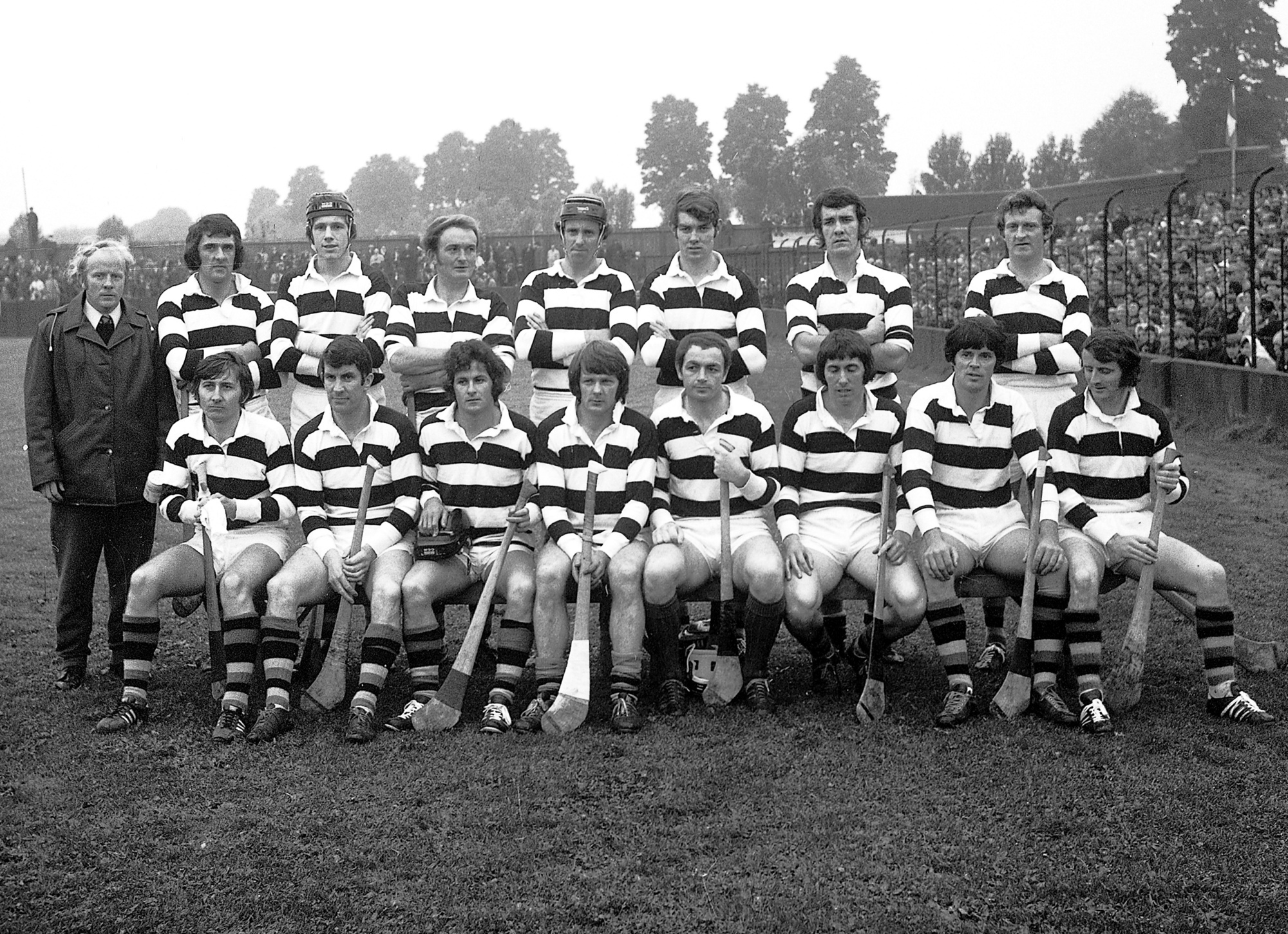
The Glen Rovers team who lost to Blackrock in the 1973 Cork County Senior Hurling Final at the Athletic Grounds
Baseball in New York city was never stronger than it was in the 1950’s. Between them, the Yankees, the Dodgers and the Giants won eight world series and there were five ‘Subway Series’ where the Yankees played one of the other two.
As ever, New York has nothing on Cork. The 1970’s was a golden era for hurling on Leeside as the Seán Óg Murphy cup never ventured beyond the city limits, and there were eight all-city deciders contested by a combination of Blackrock, St Finbarr’s and Glen Rovers.
One of the few certainties of life, however, is change and this Sunday’s showpiece between the Rockies and the Glen is the first all-city final since Na Piarsaigh beat the Barr’s in 1990.
Something else that has changed is the nature of the line-ups. Historically, the big city clubs would have attracted players from beyond their traditional boundaries for various reasons – work, migration, the occasional coercion.
A posting from the Garda Síochána brought Frank Cummins to Cork from Kilkenny where he made Blackrock his home and won five counties to go with his eight All-Ireland medals. Joe Salmon of Galway won five counties with the Glen.
The most famous import of them all will be on the pitch Sunday as the Glen, in a touch of real class, have celebrated the centenary of Christy Ring’s birth by having an image of him on their jersey. These players supplemented outstanding talent from within the clubs to create three hurling academies that helped make Cork what they were.
Sunday, however, sees the Glen and the Rockies take on one another with nobody but their own.
Cork city is expanding and regenerating but there are far less players from without making the big clubs their home, even if work brings them inside the city limits. Why is that?
Figuratively speaking, Cork and its environs has gotten much smaller since Ring made his first trip to Blackpool and that’s a point picked up upon by Diarmuid O’Donovan of Glen Rovers and St Nick’s.
“It got easier for lads to go home. The infrastructure of roads, transport became easier, fellas had their own car. So, from the early ‘70s on it was easier to move. If you were from Mallow, for instance, it became easier to play with Mallow rather than stay in the city, unless you wanted to. Another thing that was different from the 70s on is that underage play became much more organised outside of the city so there was more loyalty there.”
At times, the draw of the city clubs for players from outside may have been used as a stick to beat them with. However, to do so ignores one of the best things about the GAA; the ability to give people a home away from home quickly through a common interest.
Mick Kilcoyne arrived in Cork in September 1977 to take a teaching job in Coláiste an Spioraid Naoimh in Bishopstown. At first, he continued to hurl with his club, Ringtown, and his county, Westmeath.
He only intended to stay for a year but now, 35 years after winning a county with Blackrock, one of the things he missed most during lockdown was strolling down to Church Road to watch a league game on a fine evening to meet some old friend and to see some new faces.
So, what changed? “I played hurling and football in Thomond College in Limerick and I was very friendly with Timmy Murphy from Blackrock and John O’Halloran (uncle of Blackrock captain, Michael) was our coach and chemistry lecturer.
“Could you get two more passionate Blackrock men? When I decided to join a club, realistically there was no other option.”
But it was a Fitzgibbon campaign while doing a masters in UCC that saw Kilcoyne make the switch to the Rockies.
“I got a call from the Canon O’Brien asking if I’d play Fitzgibbon. I became very friendly with him as a result of that and we won the first of the eight-in-a-row in 1981. A year or two later, he became the coach of Blackrock so that was a huge help.
“But I had no adjustments to make in Blackrock. I’m from the country, but Blackrock was like a village despite the fact that it was in the middle of the city, and it oozes hurling. I think if I had come to Cork and not been interested in games, my life would be completely different.
"In all likelihood, I’d have stayed for a year and gone away again. Despite the fact that it looks like the city, the older guys like Jimmy Brohan couldn’t do enough for you. I injured my hamstring in my first game and it really hampered me and my first nine months went badly but never once did I feel out of place."
CONNECT WITH US TODAY



Be the first to know the latest news and updates