Hurling hands: Linda Mellerick — 'I got a hurley across the mouth and spent about €16,000 on it'
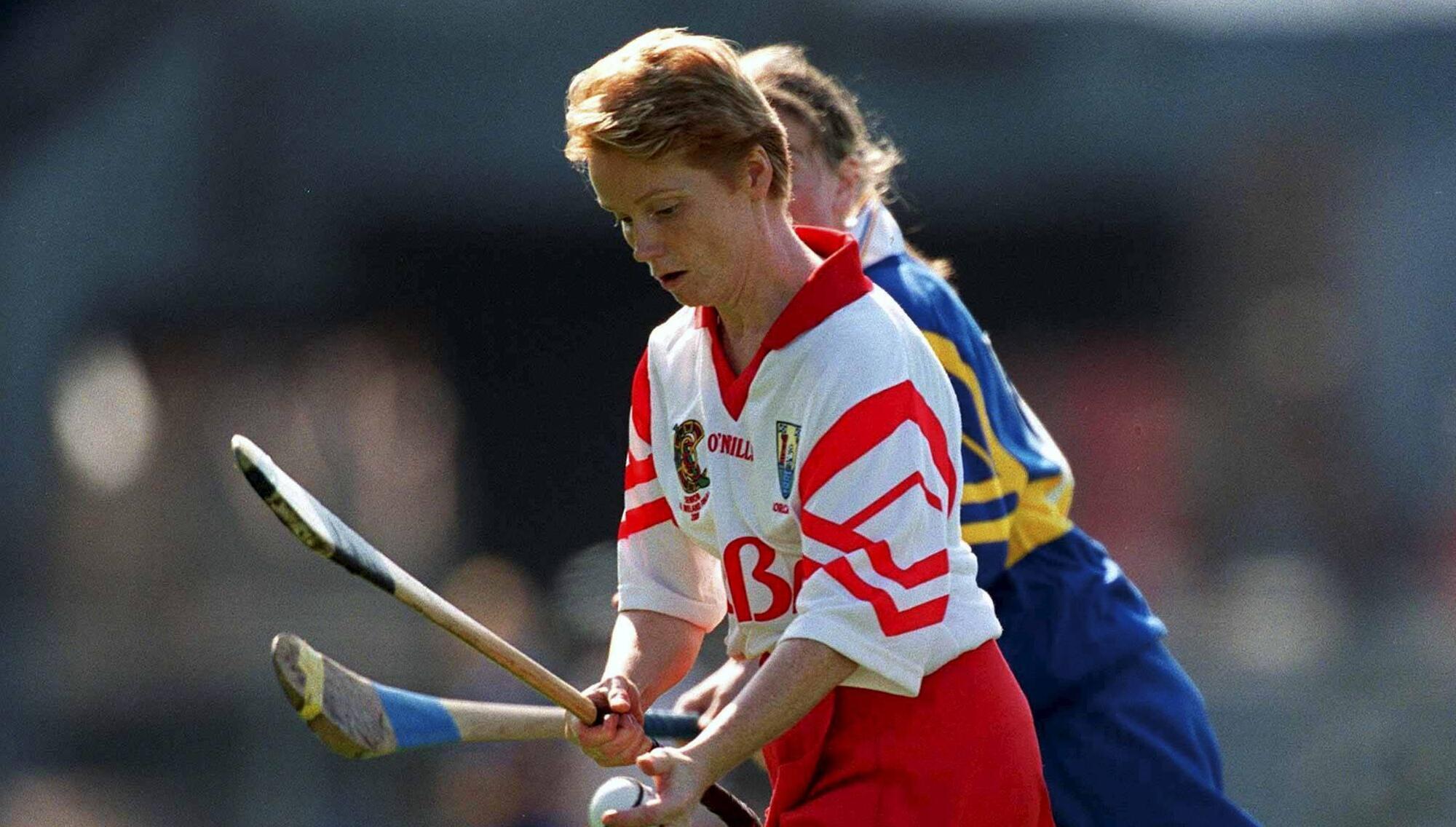
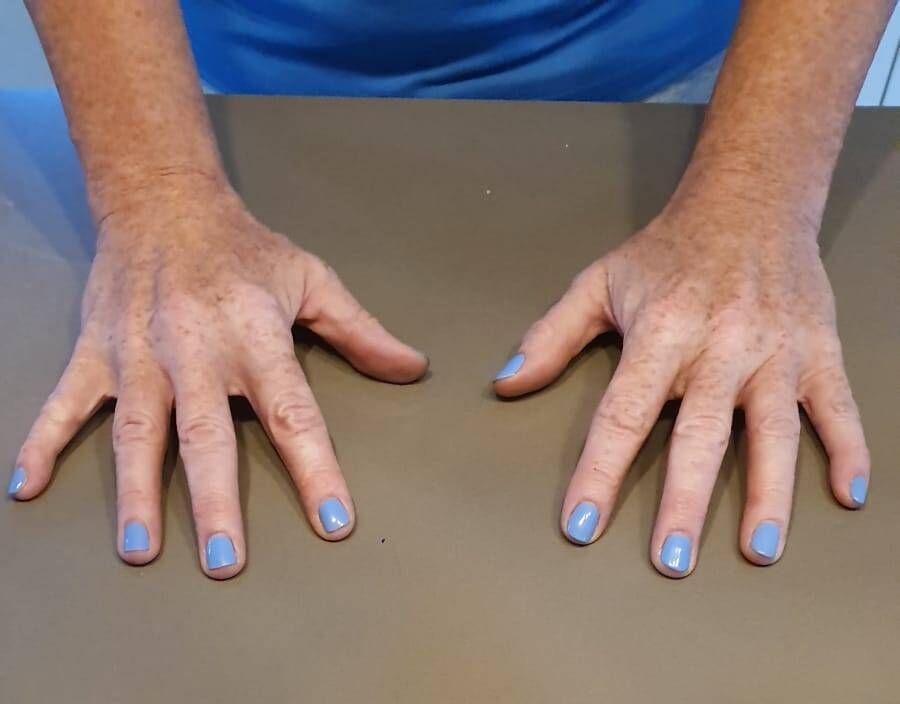
My hands are pretty good. I was lucky in terms of injuries — I did break one of my thumbs twice in my career but it’s held up pretty well so far. It doesn't give me any aches and pains in the winter: there’s no sign of arthritis yet anyway.
Which isn’t to say I didn’t pick up injuries. When I was playing junior, in particular, I seemed to get split all the time, but that stopped, really, when I started to play senior with the Glen.
I did get one bad wallop when I was about 16. I was playing junior with Brian Dillons against Killeagh, down in Killeagh. Helmets weren’t compulsory at that time — I never wore one in my career — and I got a hurley across the mouth during the game.
I got 17 stitches in my mouth and the tooth went dead. Between veneers and all sorts of procedures over the years I probably ended up spending about €16,000 on it, and eventually I got an implant about ten years ago.
That’s about the only serious injury. I was always getting split around the head in games, but you wouldn’t really take any notice of those while you’re playing.
In terms of making a breakthrough, I was very late starting to play. I didn't start until I was almost 13, when I went to St Patrick’s for secondary school, and even then I gave it up early on, to be honest. When I started first year there I went to a couple of training sessions but I just lost interest in the game.
But then the school won the All-Ireland final the following March. The excitement, the buzz in the school was fantastic, and it really made an impression on me.
I said to myself, ‘I’ve got to be part of this,’ so I went back playing.
I was useless for the first year and a half or so, to be honest, but when I got to third year it clicked. I just got the knack of it and it spiralled very quickly from there when I got the hang of it. You could say 18 months, two years into it, I got to grips with the game.
I was still casual enough with it for a while, but after I left school, like a lot of people I was unemployed for a while, and I remember going out every day to a car park near where we lived at the time in Passage West. I’d hit the ball off the gable wall every day, for 15-20 minutes at a time, for a year or two.
So that built up the touch and the wrists, even though you wouldn't really realise it at the time. There were no drills, just hitting the ball over and over and over, but it had to stand to you.
I was too casual with my hurleys, really. Looking back at the size of them, even — I’m 5'4'' 1/2, 5' 5'', but I was probably using a 36- or 37-inch hurley, and the weight of it was huge compared to the hurleys players use now.
I’d bring them up to Joe Crowley in the Glen and there were a lot of splints and repairs and fixing-up done, but in retrospect, I was very casual when it came to looking after them. But that was a fairly general attitude at the time, I think. Most players were like that, and someone who was obsessed with their sticks would have been seen as unusual.
Players I admired — in my time playing Angela Downey was someone you’d have to pick out, even though I hated her at the time in that sports context. She could turn on a sixpence and the power in her shot . . . I remember in one game I chased her down the field and I hooked her.
My God, the vibration from the contact was incredible, the power she had in her shot, even though she was probably smaller than me.
Sandy Fitzgibbon was another fabulous player. In terms of heart, putting her head in where she shouldn’t have, Therese O’Callaghan would get battered in games, but she didn’t care.
There are some very skilful players now. Gemma O’Connor has skill but she’s also got a commanding presence, power, everything. When Julia White is in full flight it’s like she’s floating, she’s so light on her feet. Jennifer O’Leary was another great player.
A stand-out moment? Gemma O’Connor hit an equaliser for Cork in the All-Ireland camogie final two years ago. It was an unbelievable point under pressure from over 70 yards out, to take the responsibility like that. A lot of players wouldn’t do that, which is the mark of how good she is.
Is camogie better now? It’s hard for me to answer that because as a former player I’m going to prefer the old days. But I think we are missing goalscorers now. Players are stronger now and are happy to take points from out the field, and there are great scores and scorers, but I think there’s nothing like goals in a game.
When we were playing we had great goalscorers, players who Lynn Dunlea, Irene O’Keeffe, Fiona O’Driscoll, and we don’t have that to the same extent nowadays — it’s a part of the game that I miss.
We trained as hard, though the training was different. Looking at the likes of Sandy (Fitzgibbon) and Therese (O’Callaghan), they’d walk onto a modern camogie team, but by the same token there are players now who’d walk onto a team in our era.
The modern player is very fit, and the level of striking could be better, particularly at inter-county level, but there are parts of the old game that I’d miss.


CONNECT WITH US TODAY



Be the first to know the latest news and updates