Remembering the GAA's Bloody Sunday, honouring Cahir's 'Mighty Mac'
Once again, this cursed Covid-19 has struck the Bloody Sunday centenary commemorations. Today was due to see a plaque unveiled in honour of Jimmy McNamara at Cahir GAA club.
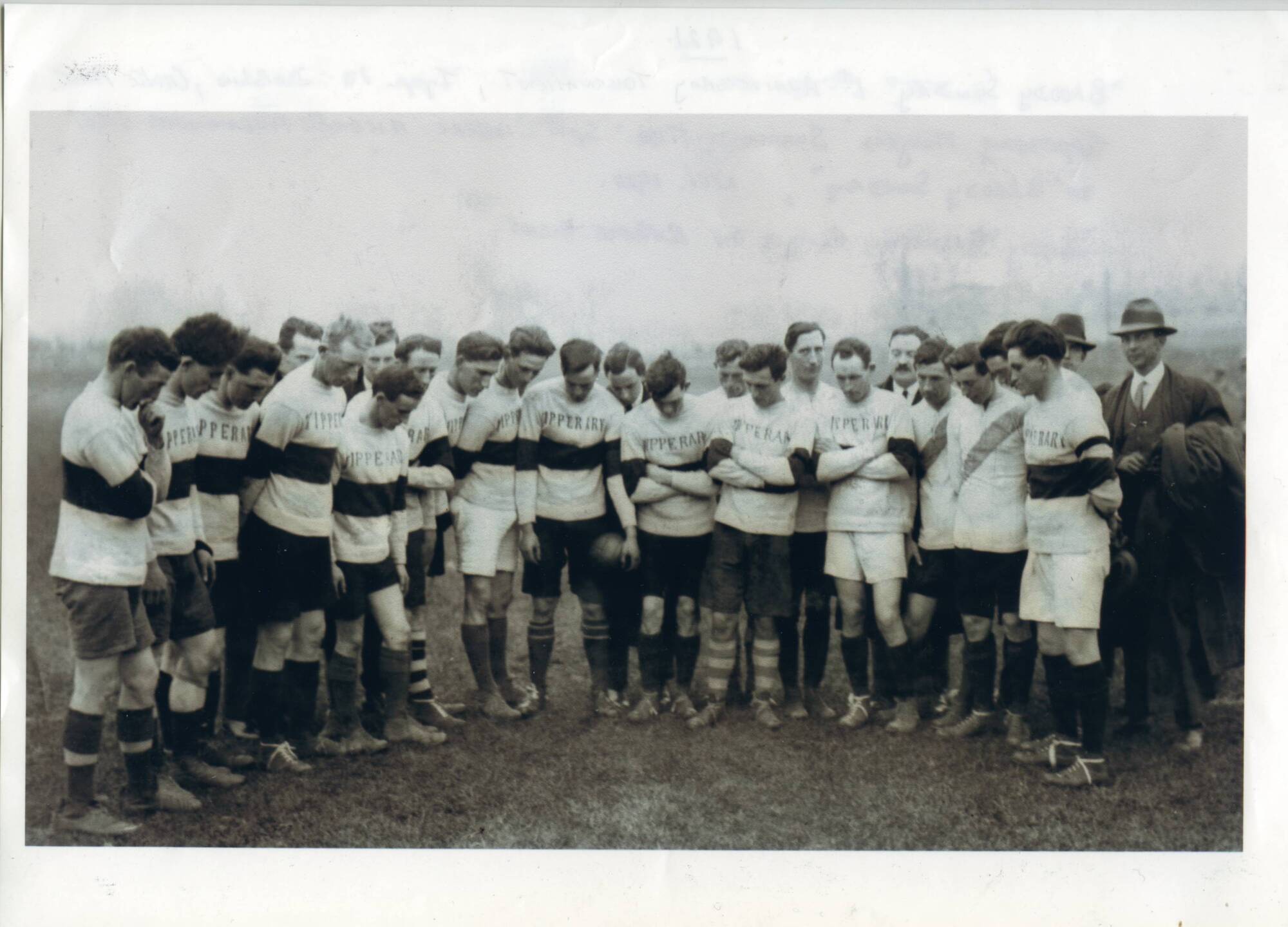
As part of the Tipperary committee’s plans to mark this important year, a wreath was to be laid at the grave of the 1920 All-Ireland SFC winner on the 91st anniversary of his death. It’s a ceremony the group intended on extending to Michael Hogan and all of his fellow team-mates that played against Dublin that fateful November 21 day in 1920.
The county's current senior teams were also due to replicate the challenge game in Croke Park in three months time but the GAA revised season put paid to that as have the latest restrictions on outdoor events to acknowledge McNamara.
A beautiful booklet has also been produced by former Tipperary football manager and Cahir club man Colm O’Flaherty to acknowledge “Mighty Mac” who died aged just 36. According to his family, the events of Bloody Sunday when he lost his team-mate Hogan and 13 others died had a lasting effect on McNamara.
McNamara, whose story features in Michael Foley’s 'The Bloodied Field' which has been reprinted and updated to mark this year’s centenary, was the youngest of four sons born to William and Anne McNamara of Barrack Street, Cahir and he worked in the family business that comprised bar and a general provisions shop.
McNamara excelled in soccer as well as Gaelic football and his success with Cahir Park AFC drew the attention of Glasgow Celtic. “He was offered a contract along with Tommy Ryan, who was also on the Bloody Sunday team,” says O’Flaherty, who is part of Tipp's commemoration committee led by another former Tipperary football manager Seamus McCarthy. “It was a contract of £8 a week, which in those days was incredible money.
“But he didn’t take it up and the GAA influence in his family probably ensured that. His uncle (Pierce senior) who lived with him was Cahir’s representative at the county convention in 1899. I got that from the local newspapers. Jimmy himself then played Gaelic football in 1914 along with his brother Willie who had also played soccer.”
In a golden era for Tipperary football, McNamara also claimed three Munster medals (1918, ‘20 and ‘22), the Munster and All-Ireland SFC not taking place until 1922 prior to that year’s own championships due to the War of Independence.
“He was on the team were unlucky to lose the All-Ireland final in 1918 too,” O’Flaherty states. “It might now be frowned upon, then again it might have come into vogue but Tipperary went down to Dungarvan for a training camp the fortnight before the All-Ireland. Some of them reckoned they trained too hard and lost the final to Wexford by five points to four.
“Jimmy continued playing with Tipp until 1926 and then he became selector with the last Tipp team to beat Kerry in the Championship in 1928. He died the following year a relatively young man at the age of 36 but his three brothers all died very young. I got the four mortuary cards of them and included them in the booklet as well.
“I came across Jimmy’s obituary from ‘The Nationalist’ at the time. It’s amazing that for a man so prominent and obviously an excellent footballer that there was so little in the papers about his death.”
A noted club official as well, McNamara didn’t play for Cahir again after 1925 following a dispute over the venue for the south Tipperary football final. It appeared both clubs agreed not to stage the game in Cashel only for Fethard to turn up on the day of the game and claim the win, which McNamara took badly.
Also featured in the booklet is a photograph of the medal McNamara and those who played in the Bloody Sunday Anniversary game between Tipperary and Dublin in 1921. “It’s a very unusual medal,” says O’Flaherty. “On the front of it, you have a player in his gear and in the background you can see the goalposts but what’s he holding in his hand? A rifle.
“Jack Kickham from Mullinahone, his medal went on sale there about seven or eight years ago and it was withdrawn at €12,000. You can imagine what those gold medals are worth now.”
Another wreath-laying ceremony due to take place in Clonmel this weekend has also been postponed, although there is an intention to commemorate Frank “Scout” Butler and Gus McCarthy in their native Fethard on Saturday. Butler and McCarthy were goalkeeper and corner-back, Butler’s life on the day saved by him showing policemen his World War I tattoo. Later this year, captain Ned O’Shea, who also hailed from Fethard, will be acknowledged in New York where he is buried.
CONNECT WITH US TODAY



Be the first to know the latest news and updates