'Babs Keating met a Tipperary policeman who got us in to pay our respects to Bobby Kennedy'
New York turned John Costigan into an unlikely barman.
Former Tipperary hurler, former Tipperary County Board chairman, he laughs at the memory, thumbs the Pioneer pin in his jacket lapel. “I’m sure it was a big gallery at home in Clonakenny,” Costigan reflects. “That lad a barman! Sure he never took a drink in his life… But I enjoyed the experience, five summers from 1969 to 1973 or ’74. Teaching in Templemore CBS, I had the summer off, obviously.”
He continues: “The whole thing was down to the 1968 trip to New York. I was a ferociously green young fella going out there. But I made lots of contacts and was asked back out to work in a bar the following summer. I found I enjoyed it. And I was later able to buy my first car, a green Chrysler Avenger, with the extra funds.”
The summer of 1968, near and far, reddened like a cauldron. You could say Tipperary flew from a storm into a maelstrom. American politics, American life, maybe the world at large, seemed a fire in heaven.
The Tet Offensive in Vietnam, marking a decisive shift, had begun in the year’s first month. March saw the Prague Spring unfold in Czechoslovakia. Martin Luther King was assassinated on April 4 by white supremacist James Earl Ray. May brought riots and lifted cobblestones in Paris. The world looked caught between a tremble and a shudder.
Journalists apportioned most blame to Premier actions. Following an official inquiry, Kilkenny’s Ollie Walsh and Tipperary’s John Flanagan were controversially suspended for six months. The latter county board, feeling victimised, refused to cooperate with the media. The NUJ responded by imposing a blackout on the county, an impasse that included 1968’s senior final, where Wexford overcame Tipperary, eight points ahead at halftime, in spectacular fashion. John Costigan ended up a searingly disappointed right corner back.
The previous May, John Costigan hurled that Home final against Kilkenny in the same position. “There was certainly plenty of bad blood between the two counties,” he notes. “There had been a tough All-Ireland final the year before, which Kilkenny took. On the day, though, most of the hour went off well enough. It was the stuff that happened before half-time, which was mainly over the other side of the field from me, under the Hogan Stand, with Kilkenny playing into the Railway End.
“It wasn’t pretty. But our county board probably overreacted to the criticism. It’s easy to say now, so many years later, but I know from my own experiences as an administrator you’re sometimes better off saying as little as possible.”
Back then, the secondary competition’s structure had been rejigged. Between 1963 and 1970, there was a ‘Home League Final’ followed by a League Final ‘Proper’ with New York (save in 1967 and 1969). The American team, on alternative years, travelled or hosted.
Costigan glosses the dynamic: “Whatever about other counties, Tipperary never messed around in the league. They wanted to win, and they wanted that trip. If, as a young player coming up the ranks, you weren’t putting it in a league match, you’d soon be told: ‘Cop on! What about New York?’
“In 1968, there were more or less three strands on the plane. You had the county board people and the selectors. You had the old hands, the experienced lads like Mick Burns, Jimmy Doyle, Seán McLoughlin and [Michael] ‘Babs’ Keating who were probably on their third or fourth trip. And there were the first timers, like myself, about 10 of us. Dublin City was the height of my travels before that.”
He elaborates: “You have to remember the older lads nearly had a second family in New York. There was a strong Tipperary influence out there, and Tipp players were treated like idols. They’d be brought around to steakhouses and to race meetings on days off. It was a feather in New York people’s cap to be on close terms with a Tipperary hurler.”
Their plane landed on May 30, with the final’s first leg down for three days later. Costigan recounts: “We were brought on a bus to Gaelic Park for the first game with New York. But it was obvious, once we got there, the game couldn’t go ahead. There were torrents of water in the stadium. That was that, and we had to go back.”
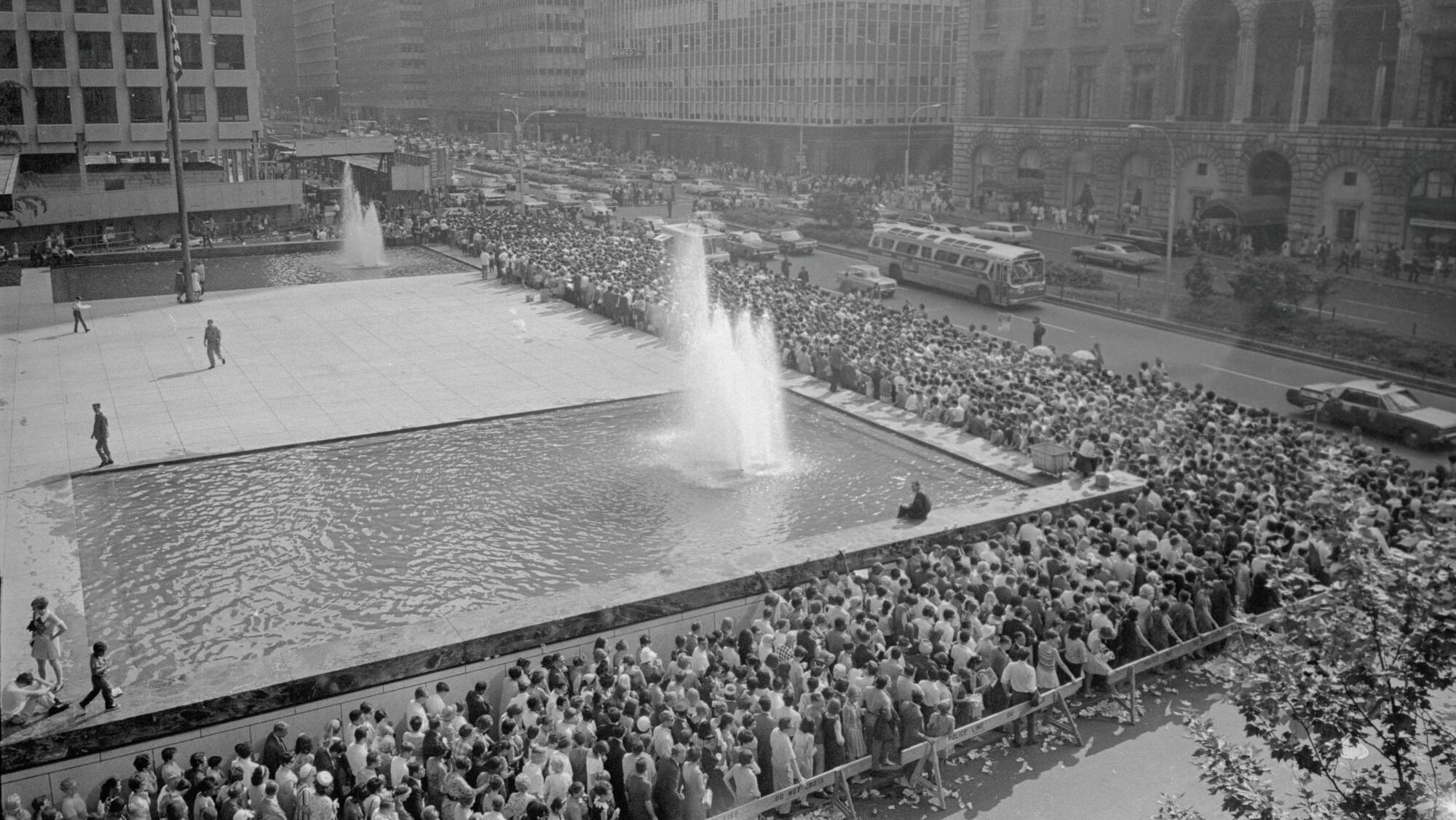
Two days later, Bobby Kennedy was shot by Sirhan Sirhan and died on June 6. This event necessitated another postponement, since the dead presidential candidate was lying in state at New York’s St Patrick’s Cathedral.
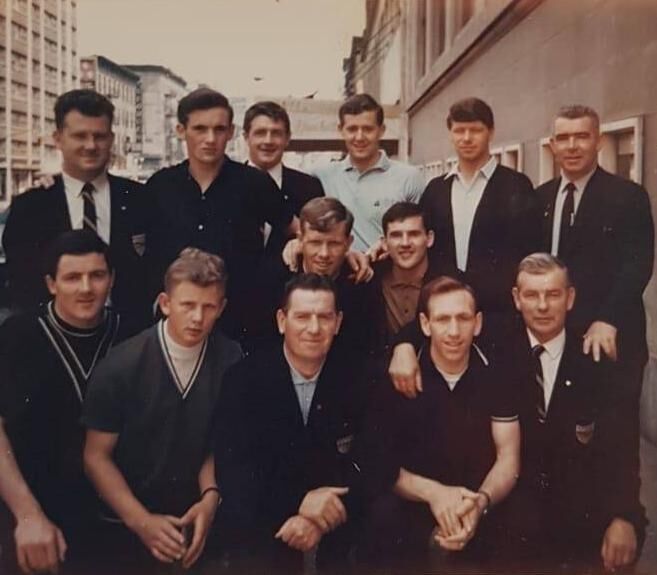
The two legs were eventually played over 24 hours on June 15 and 16. Tipperary lost the first by a point, 2-14 to 2-13, and then had 12 points to spare, 4-14 to 2-8.
John Costigan offers praise where praise was fully due: “The Tipperary contingent in New York really stepped into the breach, when we were out there for the extra week. They went out of their way even more to keep us occupied. I remember being brought to Yonkers to see trotter racing, which was a first.”
The political tensions? Costigan’s view is level: “I wouldn’t like to be making us, with the benefit of hindsight, more tuned in to everything than we actually were at the time. I’m not sure how much we appreciated the implications of Vietnam and Civil Rights. We do now. But at the time?
“You have to remember Ireland was very sheltered. There wasn’t necessarily a lot of coverage of world events. Television was very limited in comparison to what we have now.”
Yet one event did prove a jolt: “Bobby Kennedy being shot resonated, of course. We did feel it was massively important to pay our respects. There was the whole Irish American thing, and his brother [John F Kennedy] had been president and had made his trip to Ireland so recently before. It wasn’t hard to feel Bobby Kennedy’s tragedy.
“Babs famously met a policeman from South Tipperary outside the cathedral, and he got us in and out, through a side entrance, in fine time. We didn’t have to queue for ages. Then, if memory serves, we went to see the Aer Lingus office, which was dominated by a memorial to Bobby Kennedy.”
HAT summer, the New York side contained just one Tipperary native, Johnny Murphy of Cashel. He had emigrated in June 1959. “I settled down quickly,” he emphasises. “Hurling with Tipperary and New York was a big help to me. The GAA scene was like a home away from home. Work and the GAA were connected in all sorts of ways. You always had friends if you were hurling or kicking football.”
Murphy’s voice is strong on the telephone. 84 last April, he was a right prospect in his time, one who featured three years with the Tipperary minors, 1952 to 1954. An All-Ireland title came his way in 1953 and he hurled in the opening game of 1958’s Munster Championship but had departed the panel by the time Tipperary beat Galway in the All-Ireland final.
At this juncture, Murphy was working in a drapery store in Dublin and hurling with Faughs. His big move got made the following summer. Soon this recruit was a standout on the New York scene.
“It wasn’t easy to get on that team,” he clarifies. “There were plenty of fine hurlers in the city during the 1960s, lads like Austin English, Theo’s brother, and Mick Bermingham from Dublin. The standard was high. You couldn’t be messing around or not training.”
Murphy lined out for New York, mainly at left half back, in five league finals between 1963 and 1968. Most of these contests, even though his side never won, were closely fought.
“I marked Jimmy Doyle, a genius, in 1964,” he states. “I managed to hold him to a couple of points from play, which I thought was one of my best days, because Jimmy could do things with the ball no one else could do.”
As Murphy details, the mundane coexisted with the historic: “I was talking to the father on the phone, which wouldn’t have been common with us at the time, not long after Tipperary were out and back.
He says to me: ‘How did you enjoy the rashers and that?’
Says I: ‘How do you mean?’
“Turns out he had given a package of rashers and sausages and puddings to one of the players for me. That package came as far as New York, but it didn’t come as far as me. I heard later they got the chef in their hotel to fry it up. I suppose I’d have done the same myself…”
Murphy is philosophical about 1968’s swerve: “They made the right decision not to play the first leg. Gaelic Park was nearly like the Hudson with water. Then Bobby Kennedy got shot and everything had to shut down. There was nothing anyone could do.
“We were right there with Tipp the first day. Only a puck of a ball in it. But they were well ahead the day after. Might have been different if there’d been a week between the games, as was planned, but Tipp were probably a good bit fitter than us, and fitness really counts when games are close together.”
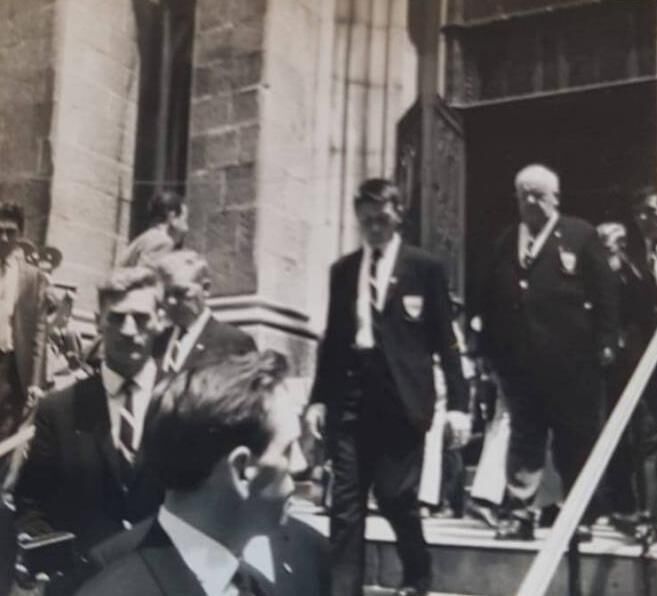
OHNNY MURPHY echoes a reluctance to apply hindsight: “I’m not sure I was that conscious of political stuff at the time. And maybe, as an emigrant, you don’t feel it’s your business the same way people born in America do. To be honest, a lot of the 1960s thing passed me by.
“Most of my life was centred on work and hurling. And New York is very different from the rest of America. Maybe if I’d lived in other parts of the country I’d have thought differently. But I’ve given all my time here, over 60 years, in New York.”
Still, Murphy appreciates the moment’s significance: “The New York panel went to pay our respects to Bobby Kennedy, same as the Tipperary panel did.
“Even when there was so much going on, his death stands out. I suppose it was a time in America when anything seemed possible, and not in a good way.”
John Costigan, a fresh 75-year-old man as of last June, now possesses the long view: “You could see New York as a turning point in my life. I was 22, going on 23. Not long before, I’d given over three years in the Seminary at Maynooth. I’d changed my mind about what I wanted to do, and had gone and done a H Dip in UCD, and had found that job in Templemore CBS.”
He summarises: “I suppose for us young lads in particular, the first timers, New York opened our eyes. Our hotel was in Manhattan and behind it was Times Square. We would take a walk around in the evenings, sticking together, and it was something else. It was wild, hectic. We’d never encountered that kind of energy.
“There were women at first storey windows, looking down at us. We were innocent enough, but not that innocent. Houses of ill repute, they were called at the time.”
New York in 1968 has stayed with him but Costigan is not a sentimentalist: “I went back to New York with the Tipperary panel after they won the 2010 All-Ireland final. It was well worth it, a really fantastic trip. But time had moved on. People are always passing.
“I was back to being a stranger in New York, but I still loved it.”


CONNECT WITH US TODAY



Be the first to know the latest news and updates