First step on ‘very long’ road for Beara GAA
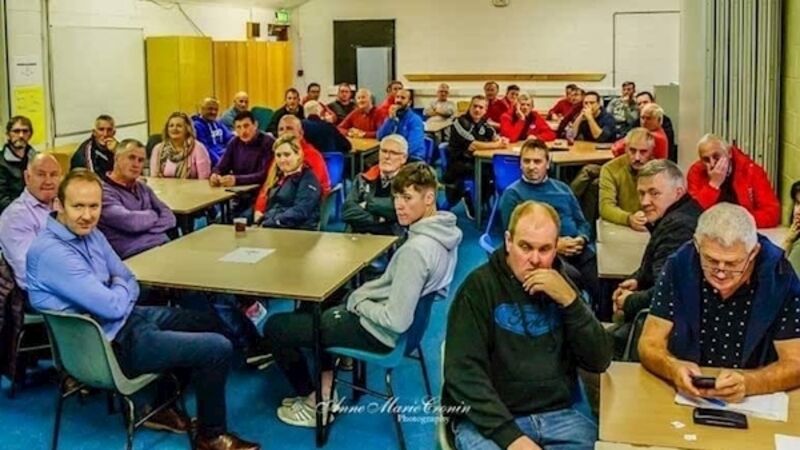
The Beara GAA Strategic Review Meeting to brainstorm ideas in the west Cork division was described by divisional board chairman Jim Hanley as “very positive” but he warned that it was the “first step in a very long road”, with hard work needed across the Beara region.
The meeting was held in Beara Community School last Saturday evening and Hanley said the turnout showed people were “engaged and willing” to get involved.
“It was very positive. We intended to be there for two hours, but we were still there after three hours because people had so much to say, which is a good thing. That wouldn’t have happened unless people were engaged and willing to roll up their sleeves.
“That’s the next step. Saturday night was just the first step in a very long road, and now we have to put together a strategic plan — and to have that ready for Christmas “What we need to do then is to carry out the recommendations in that plan, which may be the hard part.
There were some very good suggestions but they will cost money. We’re going to have to come together more and tap into a wider Beara diaspora, which is there, to get those dreams turned into reality.
“And that will require a lot of hard work on all fronts.” Hanley was happy with the meeting, though he said that there were no huge surprises arising out of the points made by those in attendance.
“It shows people care, which might be obvious enough, but these people cared enough to come out and to give their views.
“People want to play football and to watch football, but nobody wants to go to a meeting, let’s be honest:
“I don’t think anything came completely out of left field, because people know what’s going on and know what the issues are.
"Since I became chairman people have been coming up to me and saying ‘We’ll have to do something with this or with that’ but it’s about getting people to tackle those issues.
“That’s part of it, but in fairness people came out and made their points. One of those points was about getting good quality coaching throughout the division — in that regard some clubs are doing very well and some clubs oddly improve a little, but it’s about more than that.
“It’s about coaching the coaches — some of them would say themselves ‘we’re working hard but are we doing the right thing?’, so it’s about putting structures in place where coaches are comfortable going to train whatever team they have — an U10 team, a minor team, an adult team, whatever the case may be. Other issues were raised, about administration and administrative structures, but coaching was a big one.”
Was it worth taking the meeting out of the usual divisional board context?
“Absolutely, because it gave a different perspective to everybody,” said Hanley.
“Going to a regular meeting of the board you’re going in representing your club, and whether it’s a fixture you have a problem with or a game that’s gone off for some reason, that’s business that has to be done. That’s a given.
“But Saturday night was an opportunity for people to look to the horizon rather than just at the next step that needs to be taken. More to the point, they weren’t just representing their clubs either. We broke those in attendance into groups that sat at different tables, so there were four or five clubs represented at each table at the meeting.
“That meant people could be freer in giving their own opinions and views rather than the club’s, and we got a wider range of opinions as a result.”
The Beara clubs range from a large-scale outfit like Castletownbere to small units such as Bere Island.
“That’s another angle, there are different challenges for different clubs. Castletownbere is a big club, playing premier intermediate and holding their own there. Bere Island is a different kettle of fish in that it’s struggling to survive.
“There are other clubs who may be a bit ahead of Bere Island but there are problems coming.
We put up figures on Saturday night about the numbers of boys down for enrolment in the primary schools, and they don’t make for easy reading, to be honest.
“We have certain problems at the moment but in five years, in 10 years, there could be bigger problems. Unless we get our house in order now those problems will be more pronounced five or 10 years down the line.”
Those problems revolve around one specific challenge: Numbers. “If you don’t have 15 men in a parish you can’t put a team on the field,” says Hanley.
“It’s pure numbers. You have to look at other ideas in that situation because if you don’t have the bodies you’re going to be in trouble. And that is coming.”


CONNECT WITH US TODAY



Be the first to know the latest news and updates