Cathal McCarron: Back in control
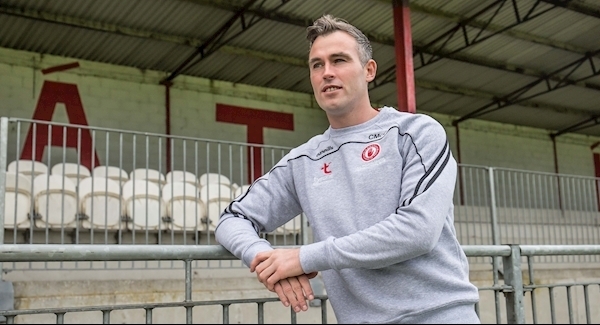
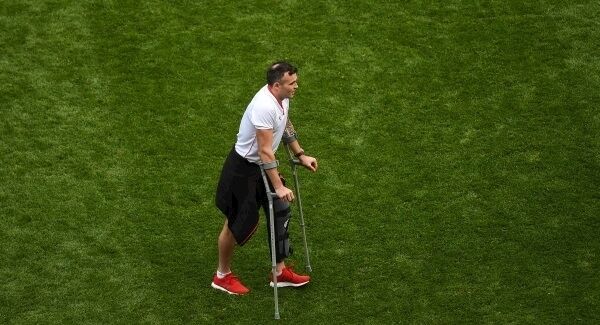
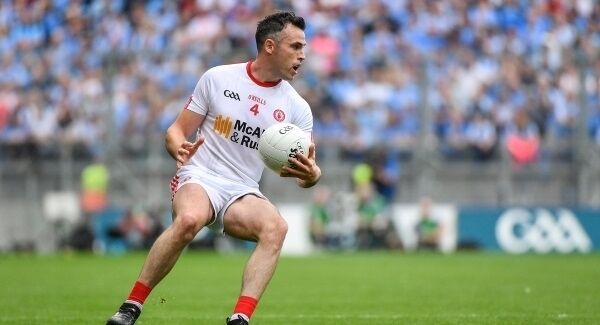
Cathal McCarron will tog out on Sunday. Less than a week off crutches, he mightn’t run all too quickly — in fact he mightn’t run at all — but he will emerge from Davin Stand side tunnel out through the Hogan Stand tunnel and onto to the Croke Park pitch with his teammates to be met by a whirlwind of sensations and, for a moment, he will believe he can fly, never mind play.
As he pulls on his socks, he might rub his left knee and curse the scars to the side and below the joint he dislocated against Roscommon in mid-July.
So excited about what is in store, though, he might then have to drag himself away off the field and to the stand.
Still, those moments will be precious.
McCarron is no John Terry. It’s a gesture of consolation; the same opportunity was afforded by Limerick to
cruciate injury victim Paul Browne for last Sunday week’s All-Ireland final. A thank you for the efforts, a gift so as not to feel left out.
Before he linked up with the panel in Garvaghey last week, McCarron admits that is how he has felt as he recovered from his knee operation in Belfast. Living in Athy now, as he has done for the last year, he’s been out of sight and out of mind.
He’s been on the periphery, figuratively as well as literally.
“Mickey [Harte] has been in contact a good few times. He’s devastated, as I am devastated about it. When you’re playing like a team, you’re more like a soldier and when you get wounded you look for the next man to fill in. Mickey has been very supportive and I was down for a while after the injury and it’s a lonely old place when you’re injured.
“You’re part of it, but you’re not. I hadn’t been in that place before and you see lads who have been through it and talked about it and it’s only now that you see where they were coming from. I’ve been a bit immobile and people around Athy couldn’t do enough for me.”
McCarron was there on the field at the final whistle against Monaghan as he walked his baby daughter Lily around Croke Park. He was on camera duty minutes later to capture the jubilant scenes in the Tyrone dressing room, as players broke into a rendition of DJ Makar’s ‘Opa Opa Opapa’.
Those were the public moments. Privately, coming to terms with an injury was a struggle, one which transformed from a season-ending one to an ailment that denied him an All-Ireland final.
As well as Athy, his partner Niamh Delahunt, Lily — “a glowing light, my wee world” — and her family have been sources of comfort for McCarron.
Given his demons, the injury put him in a precarious place, but he can say he is over the mental strain of it.
“I’m a positive person and it has got me through the bad times and it’s helped me get through this injury. You’re in a dark, old place when you get injured and you’re quickly forgotten about and you just have to get back to what you were. You, also realise what you have, because it can be taken from you and it’s made me look at things in a whole new light.”
Alongside Colm Cavanagh as the elder statesman of the group and the last playing links to 2008, he’s felt it necessary to make the five-hour-plus return drives this last week or so to simply be there, as well as to soak up the excitement.
Athy is not a place he intends swapping, even if he knows, looking from the outside, it seemed mad that a
30-year-old would travel from there to Tyrone to continue to play inter-county football.
It was in Athy, though, that he met Niamh, where he healed and where he intends building or buying a house in the not too distant future.
“When we played in Carlow in the qualifiers, it wasn’t until the lads got in the bus and made the journey that they realised the journey I was doing two or three times a week. It’s two hours, 40 minutes from here to Garvaghey, one way. Go there and come back the same night and go to work the next morning. There wasn’t much said about it, I just stuck the head down and I did it, because I enjoy playing for Tyrone and I enjoy football.
“I still felt I could give to the county. I was chatting to Justin McMahon, a good friend of mine, after the
Donegal game and he was saying to me that he regrets retiring a little early. It made me think too that, if you’re able to play and able to give something to the county, you do it. I’d pull the pin if I didn’t think I was able to do it, but I’m not there yet.
“The injury is obviously tough to take with the whole build-up and it’s bittersweet, although I’m over the moon for Tyrone.”
Like McCarron, Athy picked up a bad name as a town, but that would neglect the great and the good that it has produced, like Eric Donovan, Joey Carbery, Kevin Feely, Niall Kelly, and the band Picture This. It is where McCarron has convalesced.
“I hear people saying things about Athy, like it’s a rough area and things like that, but I’ve seen none of it. It’s like anything, if you’re in that way of thinking, you’ll see plenty of it.”
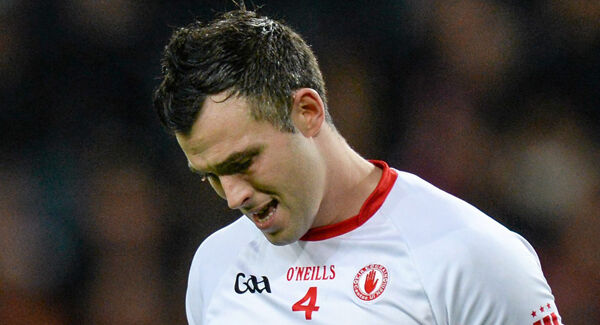
After entering Cuan Mhuire in Newry for his gambling addiction in 2014, McCarron worked in the drug unit of their addiction treatment centre in Athy.
For that, he is indebted to Liam McLoughlin, not just for the experience, but for the chance to start again, where it was easier, as the TS Eliot quote on his Twitter page reads, to be “what you might have been” than perhaps back home, where he had burned some bridges.
“It’s more relaxed,” he says of Athy, compared to Dromore. “I think the south of Ireland is more relaxed living. It seems to be a bit more uptight in the north. I loved my time in Dromore and couldn’t say enough about it, but it’s nice to change.
"I wouldn’t be a big man for routine. I see players stuck in routines and sitting in the same seats and stuff like that, but I like to change. You can get too comfortable in routines.
“Down here, it just felt right. The work was here, Niamh and her family were here and everything just fell into place. It wasn’t that I was saying to myself ‘I’m going to live down here’, because I love my club and it was the hardest decision ever to leave Dromore. I didn’t plan to do it. It just feels like home now.”
The experience working with drug users made McCarron appreciate one thing he had that they didn’t: A love, a passion, football. Desperate to pay off gambling debts, he featured in a gay pornographic movie. Two years later, he was picking up his third All-Star nomination.
As he mentioned in his book Out of Control, it was an experience he can never wash away, but he could move on and football was the vehicle.
Competitive sport being competitive sport, a direct opponent or two has attempted to bustle him by dredging it up.
“Don’t get me wrong, the odd thing would be brought up, but I’m glad after everything that happened I was able to come back to football again, because that is ultimately what I would be remembered for instead of being a footballer. "I’m glad I got back to normality. There has been a few things said to me, but very little. Any footballer wants to get
inside his opponent’s head, but there’s a way of doing it without going personal.
“Coming back after what happened, the peace of mind I had, you could probably see it on the field. I just went out and did what I had to do and enjoyed my football. I’d say this year is one of the worst I’ve had, because I missed the Meath game with bad flu and I was out for about two weeks, didn’t train and then injury.
"I just couldn’t get at it the way I wanted to get at it and it makes me want to come back a better player next year, not just a player coming back from injury.”
Having begged, borrowed, and stole to feed his habit, there will always be things McCarron is sorry for, but he doesn’t intend being a martyr all his life.
“You look back and you talk about things and you see things and I done things I didn’t want to do and, if I wasn’t gambling, I wouldn’t have done them. There would be remorse for things I’ve done, but I like to think I’ve turned my life around since.
"Not everyone is going to like you and, if you try and go around and try and please people, you’re in a worrying place. You just have to get on with life."
“One thing that I learned through counselling and what got me through gambling and those bad, bad days, was I would suffer from positivity.
“It can be good and it can be bad. If I went in and lost £500, I would be down for a bit of time, but quickly my thoughts would change to how I could get the money back. It would be the same on the football field — if my man won the first ball, I would brush it off and be determined to win the next one.
"It worked and it didn’t work for me and it’s getting that balance of it. The word you would throw in there as well is ‘consequences’ and I had to realise there were consequences to my actions and you just can’t turn some things into a positive situation.”
Keeping busy is manna for a recoverer, so this injury hasn’t helped. Laid up as he was for a few weeks, he was never as vulnerable to a relapse, but the mind is “good”, he says.
“Being idle wouldn’t be good for the likes of myself and thinking too much. I think if you’re aware and your awareness is good then you can stay away from the problems. You don’t really keep tunnel vision.
"You can’t hide from it, because it’s in your face, on TV, on your laptop. You click on something and the next thing a pop-up from some betting company appears.
“Over time, you build up a resistance from going to meetings. You’d always have thoughts. I will always have thoughts of putting on this amount and I could win this amount. That will never change, but you just get stronger and more resilient.
"For that, you have to go to your meetings. I haven’t seen many people in recovery just going around and doing their own thing. You need to have help. Meetings are like my tablets: I take it once every week or once every two weeks and I need to take them.
“I wouldn’t care if I was 10 years off it, I would be as close to betting then as I am now. Believe me, the day I getcomplacent is the day I am in trouble and that’s a fact.”
He looks at the ease with which former players like his old team-mate Owen Mulligan can associate themselves with a bookmaker and he doesn’t condemn them, but knows they are the more acceptable faces of gambling.
“I am around long enough to know what the bookies do and how they operate. They definitely thrive off compulsive gamblers. When they block you from websites, it’s too late.
"I don’t care what they say or who they put up in front of the microphone, they know, we know, the craic they’re at. I know the reason they’re in the GAA is because of money and that’s a sad thing to say, but that’s the way it is.
“I wouldn’t take any issue with any man earning a few bob. It’s the same with alcohol — people can drink and people can gamble and fair play to them; I can have a drink and it doesn’t bother me, but I can’t gamble and that’s the way it is.
"I wouldn’t have grievances that way and I don’t mind people having a bet, but when you’re in there in a bookies I could sit for a day and the next year and surely the person behind the counter realised that this man has a problem. I was never asked to leave. They mustn’t be trained or are turning a blind eye to it.
“It’s not that I have a problem with bookies, because it’s I who have the problem, but it’s what you expect bookies should be doing. They’re trading off people. It’s like alcoholics who keep being served and it’s sad, because it’s ultimately about money.”
Over the years, McCarron has noticed a culture change towards gambling in the Tyrone dressing room. Not that other players would openly discuss it with him much, but he detects betting isn’t as prevalent now as it would have been 10 years ago.
“The generation now, they’re not like ’08, where there was more gambling in the group. I know the lads do their bets and you’d hear them talking about it but it was nowhere near like it was back then. Some people wouldn’t talk about it in front of me, but it doesn’t bother me. It’s pretty much in your face and you have to live with it.”
Harte, McCarron feels, has had to adapt as well to the changing attitudes of footballers. With so much being put in preparing, the fun element to balance it has to be encouraged.
“There are a few characters in our team. It’s a testament to Harte, because he has had to change as well, because lads have changed. The whole way things are done now, it’s different to 2008 when I came in, when [Brian] Dooher and boys were much more serious. If Tyrone win on Sunday, the dressing room will be some place to be.”
There’s a slight sense of satisfaction for McCarron in not knowing what the odds are for a Tyrone win on Sunday, but he remembers they were 4/1 outsiders before obliterating Dublin in the 2008 quarter-final.
They were far from causing such an upset last year, but the defender is convinced Tyrone have moved on from that 12-point loss.
“Dublin last year, I was playing and they were awesome. At the same time, I think we were very poor. The early goal changed the game and I just think people are reading into it too much.
“They’re one of the best teams ever and we tested them in Omagh last month, but weren’t good enough, a few points shy. Look it, getting that game in Omagh might turn out to be the best thing for Tyrone, so we could see where we were at with them.
"If Dublin are going to win this All-Ireland, they’re going to have to earn it. You have to believe you’re going to win and sometimes you can have false belief, but this isn’t it. Dublin are well schooled, psychologically, and we know that, but it’s going to be intriguing.”
And if he is to say a few words before throw-in?
“I’ve nothing planned. If I say something, it will be off the bat and it will come from the heart. I’ve never met a better bunch of lads and I know they’ll give 100% in the final. They won’t be found wanting.
"A lot of them, you don’t have to talk to them. Much like Dublin, they’re born to train and born to play. They deserve an All-Ireland title and hopefully they’ll get it.”

CONNECT WITH US TODAY



Be the first to know the latest news and updates