Meyler: It’s critical Cork teams at every level are at the top table
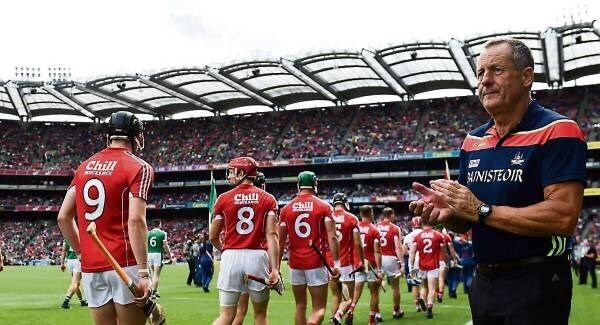
By last Wednesday, John Meyler needed to rinse away the weekend. Extra-time. Defeat to Limerick. The long hours on the motorway back from Croke Park.
The Cork hurling manager hit for Rathpeacon, where the county U16 side were playing Blarney’s minors in a challenge.
An umpire was needed, and Meyler was free, so three days after an afternoon in front of over 71,000 he was waving wides and flagging points in a downpour. Glamour.
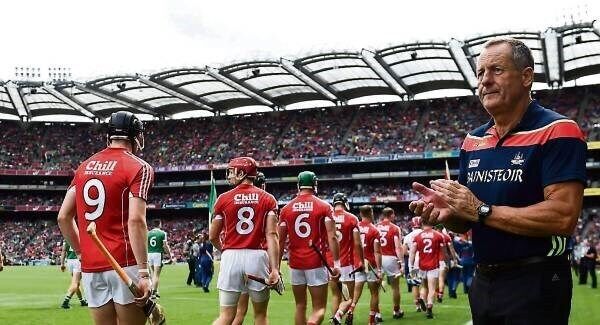
The enthusiasm is undimmed. Over a coffee he brings up the coming weekend’s action.
“Clare-Galway? I couldn’t call it. I said before last weekend that it wouldn’t be surprising to see two draws in the two games.
“If Gearóid McInerney can’t play that’s a problem for Galway, obviously enough. Clare showed great character last week to come back from eight points down to force extra-time.
“I’d prefer a replay, to be honest. I went into our dressing room after the game last Sunday and there were lads out for the count. A boxing referee would have stopped the fight.
“They showed great character to go out and empty the tank, but then, after the massive disappointment of losing, to get on a bus for a few hours to head back to Cork. . . That’s to the city, some of them probably had another hour to travel then.
"It’s tough on them in every way in terms of work, family, all of that. I’d have loved another shot at it. Sure we’d have filled Croke Park over again, but they’re the rules.”
He’s still shaking his head over the scoring rate last weekend.
“If you think about it, go back to 1999 when Cork beat Kilkenny in the All-Ireland final, 0-13 to 0-12. I was involved when the Cork minors won the All-Ireland in 2001, and that finished 2-10 to 1-8.
"Last weekend a team scored 2-30, admittedly over 90-plus minutes, but still couldn’t win the game.
It’s becoming more and more like basketball, where every team is getting into the opposition zone on every possession they have — and they have to score, they have to get into a shooting position, because you know the opposition will do the same when they get on the ball.
“The game is becoming more and more like that, and it makes it more and more critical to keep taking your scores.
"It’s back to the old cliche, isn’t it — taking your points so the scores will come?
“But the game is so fluid now, the ball is travelling so far so fast, that guys can score from 100 yards if they have a free possession. And in turn that makes decision-making even more critical than it has been.”
With the gunsmoke clearing after last Sunday’s loss, where are Cork at? At senior level, and beyond that, with the underage teams?
“I think it’s critical that Cork are at the top table with all of the teams — the U16, U17, U21, senior. The senior team have now been in two All-Ireland semi-finals in two years, the U21 team was in the Munster final last year and is now in an All-Ireland semi-final, the U17s won their All-Ireland.
“We’re now starting to see the results of progress made five, 10 years ago, and more, with the development squads, but that’s a constant evolution. We need to see the Harty Cup teams starting to win that competition, the U17, the U21s.
“But there’s also pressure on at club level, pressure for a Cork team to win a Munster club and an All-Ireland championship.
“You’ve seen the progress Na Piarsaigh made in Limerick, and the effect that has, not just on those players, but on all the players in a county panel.
“Take Shane Dowling, and the impact he had last weekend against Cork. He has two Harty Cup medals, four senior county championships with Na Piarsaigh, four Munster club titles and one All-Ireland club title.
“That’s not just about winning and medals. It’s about building a mental strength when it comes to winning tight games, knowing you can win tight games, and getting used to success.”
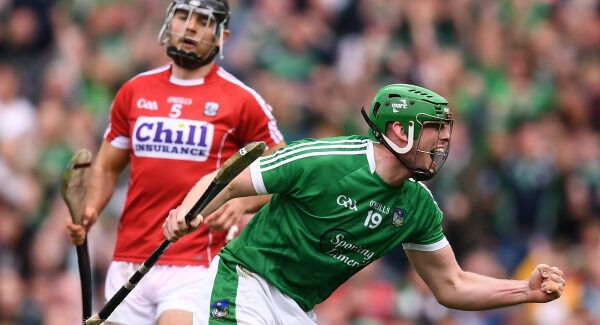
Dowling’s is the kind of CV which used to exist in Cork, of course.
“Absolutely. You look at the medals the likes of Tom Cashman and Dermot McCurtain, what they won with Blackrock and Cork, the medals that Jimmy Barry-Murphy, Ger Cunningham, Christy Ryan had with the Barrs.
“That’s the level of CV that was there in Cork at club level, and the fact Cork were winning at inter-county level as well built on that.
“Underage is definitely progressing when you see the U17s and U21s. I think the progression is there at senior level. The clubs must put their best foot forward now because that’s another strand.
"From that angle they would then add another couple of players to the county team.”
Meyler points to the different generations of players coming through for Cork: “This year we saw Robbie O’Flynn, Darren Browne, Sean O’Donoghue, Tim O’Mahony, Billy Hennessy, Jack O’Connor — they’re probably in year one in the progression, though they’ve made a big contribution.
“Sean came in, Tim did well in the league before getting injured, Jack had a cameo last Sunday . . . there are green shoots.
"But don’t forget, it’s romantic to look at (Darragh) Fitzgibbon, (Mark) Coleman, Shane Kingston, Luke Meade — they came in last year but other lads are at different levels. You must have constant evaluation of the players, and their progression.
“Going down again to last year’s minors, Daire Connery, the two Roches, Ger Mellerick — they’re players who’ll come through so you need to have them developing in the set-up, in the pipeline, even if you don’t expect them to come through next year.
“In two years’ time when they have two or three years work within the set-up, they know the requirement. And they’re in there.
The physical tuning of the players is so fine that the stakes are very high. It’s much more difficult for a 19-year-old to come through unless he’s naturally, freakishly strong.
The challenge of the championship casts a shadow over the league, he adds.
“You get one shot at this. You have to take it the time it’s there, and the opportunity arises because it’s ultra-competitive.
“All the teams are so level — there are nine teams there and those which weren’t involved at the semi-final stage are bursting to get back into it. The competitiveness is amazing.
“The games are so difficult. You need 20 players, so you need to go earlier than the championship, to look at the league earlier in the year and what the purpose of the league is.
"What’s it there for? The two teams which got to the league final this year (Kilkenny and Tipperary) didn’t make it to the shake-up at the end, the All-Ireland semi-finals.
“The Munster championship, two games at home and two away — you’ve got to win the home games, they’re critical to making the top three and progressing.
“I know it’s an old cliche, but you have to have the mindset of one game at a time.
The matches in the championship all revolve around recovery, so you have to have your physical training done before the Munster championship, because there’s no time while that’s going on to do anything. Your recovery strategy, for want of a better term, has to be perfect.
Does the system need changing? “I think so,” he says. “In the championship two games in a row, an away match and a home match, then a week off, then two more, then a week off.
“I look at last Sunday — as I say, we got home at midnight after an unbelievable contest, an unbelievable weekend — and they have to go to work on Monday morning, those of them who aren’t students and teachers.
"There’s a huge toll on those players — mentally, physically, socially — that goes for all players on all panels.”
All panels. There’s the U21 game in Kilkenny today, and he’ll head to Thurles tomorrow for that Clare-Galway replay.
And if there’s an U16 game needs another umpire, he’ll be around for that too.
CONNECT WITH US TODAY



Be the first to know the latest news and updates