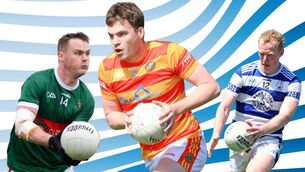
Dr Ed Coughlan: Despite the praise and the plaudits, all is not perfect in the world of hurling
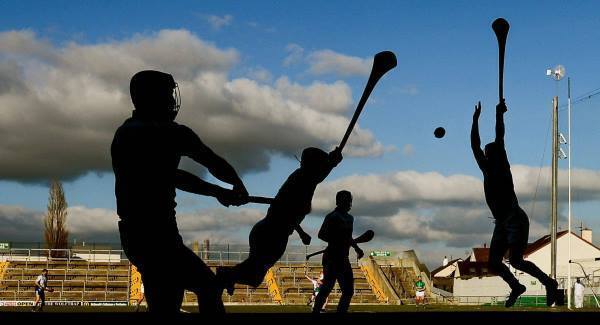
Last weekend’s exploits at Croke Park were spellbinding and on occasions, out of this world, says Dr Ed Coughlan.
Peter Duggan’s wonder point for Clare against Galway on Saturday evening to level the scores for the umpteenth time and Nicky Quaid’s inch-perfect block for Limerick on Cork’s Séamus Harnedy to keep them in the game on Sunday afternoon, were two standout moments among many.
Two 70-minute matches that ended up being played out over three hours between them.
The fact that there was extra-time at all appeared to be a bone of contention for many fans.
Peter Duggan with a lovely skilful point. pic.twitter.com/gOME4yoYJU
— The GAA (@officialgaa) July 28, 2018
This may have been compounded by the images of players from each team in both games, and in particular Cork and Clare, running out of gas almost as soon as the extra-time period commenced such was the energy expended on all sides in normal time.
It would be very easy to look at hurling through rose-tinted glasses at this moment in time and ignore some glaringly obvious points for examination. Such clinical scrutiny is made all the more difficult as quite serendipitously; RTÉ showed the first of three episodes of their new documentary series
Read More:
Hold onto your hats as hurling hyperbole is set to go into overdrive.
For such a great sport, it is quite astonishing to see so few counties give it the time of day in favour of the bigger ball. The divide between hurling and football appears to be getting wider, rather than closer. Clubs do not seem to be able to agree terms to manage the health and wellbeing of both codes equally.
All is fair and equal at the underage levels, but as soon as it gets serious and county championships appear on the horizon, battle lines are drawn and decisions are forced on players and management alike to side with one code over the other.
Clubs are often relieved when one code’s team is knocked out early so that they can now concentrate on the other for the remainder of the season. Incidentally, this lopsided support can change from one season to the next, depending on who is knocked out first.
There appears to be no formal strategy in place to give both codes the time of day to develop and progress over a number of seasons.
If the hurlers are knocked out early, it’s all football from then on with hardly a sliotar struck for the months that follow, and vice versa should the footballers make an early exit, hurling will enjoy a feast of attention.
Such conduct is accepted because when clubs look to the inter-county model they see much of the same behaviour. It is for this reason that what Galway are achieving should be applauded. Two senior inter-county teams in contention at the business end of the season is no mean feat in this day and age. The same may be said for Dublin, where a framework for equitable support across all codes, men and women, is breaking the mould.
But how many other counties can truthfully say that both codes are treated with the same support at the start of each season, regardless of whether they’ll be in contention or not? In addition, where is there evidence of a long-term plan to elevate both codes within each county equally? You can all but ignore the political speak that promises so much. The players in most counties know what’s what and in most cases, the code they’re in will determine whether they’re treated as first- or second-class citizens.
Absolutely, right now, hurling is enjoying a resurgence of interest thanks to the almost superhuman efforts of players from a handful of counties. But that’s all it is, a handful of counties.
How national can a sport be if it struggles to get people to commit to it within its own nation?
For all the noise about the elitism card that is often thrown at football, maybe it is more apparent in hurling. The top teams only ever play against each other, such is the structure of the league and even more so in the championship, where progression up through the levels is very difficult, almost impossible in some cases.
No doubt Dublin football are enjoying an incredible spell of dominance at the moment, but remove them from Leinster and no one could accurately predict, with confidence, who would win that province. Remove them from the All-Ireland series and any one of eight teams could rightfully walk away as champions. Yet, if you go beneath the surface of hurling’s elite the strength, depth and breadth of the game is not there.
Of course, it is somewhat fruitless to compare the two codes, as they are so different.
However, for all the glory and apparent skill on display last weekend and hopefully again this weekend, when Galway and Clare go at again to finally find a winner, there was a lot of damning statistics for the game of hurling that would not be so forgiving in a game of football.
For instance, across both games on Saturday evening and Sunday afternoon, there was a whopping 123 scores, but there was also 73 wides.
Considering how much time the ball was actually in-play across the three hours of hurling, having 196 shots on goal is bordering on the ludicrous.
Has hurling become its own worst enemy in following the mantra of ‘win your own battle’ to the point of crazy? However, if the numbers on hooking and blocking are anything to go by, the battles are not even being contested. Incredibly, Cork, with its six hooks had the same amount as the other three teams put together. Clare had only one hook and one block and made only 19 tackles last Saturday. Is this what hurling has become?
Minimal interplay within a team because the puck-outs are now so long and minimal interplay between teams because the aim of the game has become catch and shoot, taken in turns. The physical condition of players, especially where Limerick and Galway are concerned, has elevated their capacity far beyond the intricacies of the game of yesteryear.
But the intoxicating effects of any high scoring sport can mask cracks elsewhere. Hurling has long since been the sport that captures the imagination and interest of those who are new to it.
However, it needs to be more than just a high-scoring lottery.
Gaelic football is going through a transition right now as it sorts out its house in relation to the coaching and use of tactics, a word for many years that was seen as forbidden across our national games, however, it might well emerge the better for it.
The question now lies with the hurling fraternity. Are they prepared to move with the times and look to progress the sport beyond the traditions of times past? Drama counts for only so much before the unpredictable becomes predictable.
CONNECT WITH US TODAY



Be the first to know the latest news and updates