Four things we learned from the Allianz Leagues this weekend
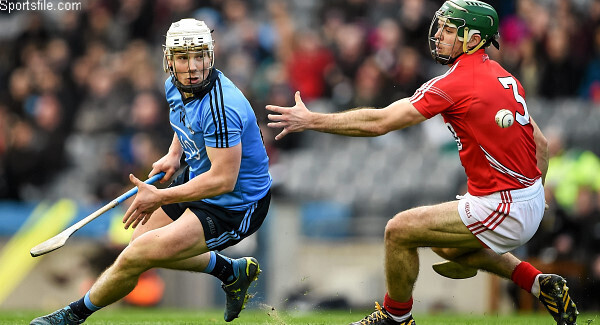
Peter McNamara looks at some of the key talking points from the weekend’s Allianz League action.
We were reminded, emphatically, on Saturday night that trying to implement a preferred gameplan with a team packed with cocksure operators can actually be easier at Croke Park than at provincial venues.
In the Allianz NHL Division 1A meeting between Dublin and Cork it was striking how ineffective the former unit were at locating their teammates with passes, both at close range and longer distances.
Under Ger Cunningham, Dublin’s passing accuracy was exceptional at both Parnell Park against Tipperary and while accounting for Kilkenny in Nowlan Park.
However, on the wider expanses of the turf at headquarters the Metropolitans seemed all at sea in terms of being able to deftly judge their scope for developing plays and shooting in to Anthony Nash’s goal.
This was especially true in the opening half.
In contrast, the athleticism – highlighted as a potential factor – of Cork ensured they utilised Croker’s dimensions effectively.
Related:
Read More:

Replacing Ciarán Kilkenny at half-time, Paul Flynn made a significant difference to Dublin against Tyrone.
And it is becoming increasingly obvious, despite all of the lines penned about how strong Jim Gavin’s panel is, that without Flynn and Michael Darragh Macauley, for instance, Dublin are actually nothing special.
Flynn scored a vital point as well as contributed to others when introduced and his calming influence around the middle-third was one of the primary reasons as to why Dublin got out of jail against the northerners.
Dean Rock’s proficiency and Niall Morgan’s substandard free-taking were, of course, the main ingredients in Dublin’s capacity to force a draw.
Yet, there existed a lot more substance to what they were trying to achieve in the second half with Flynn on the field.
Still, Tyrone’s massed defensive system should also be acknowledged.
Like it or not, it has the desired impact.
Related:
Read More:

Aside from the facts Kerry were afforded just nine scores in open play and that the All-Ireland champions managed a mere 0-3 in the second half, the first two of which were registered by substitute Alan Fitzgerald, it was arguably the post-match reaction of Cork that said more about their evolution than the performance itself had done.
While supporters were delighted with the display, following their warm-down, the players, selectors and manager himself were far from ecstatic about an 11-point trouncing of Éamonn Fitzmaurice’s side.
Boss Brian Cuthbert was keen to keep a lid on the excitement of it all despite the brilliance of their performance.
However, “the reality of the situation”, which Cuthbert referred to repeatedly afterwards, is that Kerry will be a completely different proposition should the sides meet again in Fitzgerald Stadium in the summer.
To take any other stance would be extremely naive.
Related:
Read More:
With the way both the hurling and football leagues are structured in relation to fixture-planning, form and momentum can be lost in the blink of an eye.
For instance, the three-week break recently in the football leagues can hinder a side brimming at the surface for this time of the year while, for other outfits it can represent a welcome opportunity to fill the lungs again with oxygen after a spell of on-field indifference.
Ditto the two-week siesta in the small-ball equivalent, albeit marginally less pronounced given the gap is one week shorter.
And in terms of specific form, few would have forecast a Monaghan triumph away to Donegal and Tyrone were said to struggle to contain Dublin, for examples.
It has probably come to the point whereby current form should be considered less than taking each contest on its merits from here on in.