The issues spicing hurling’s hors d’oeuvre
G
The opening weekend in Division 1A brought three goals, one of them in injury-time. The second weekend brought six goals. Even allowing for the time of year and the state of the pitches, a goal-and-a-half per game is not the stuff of which an exciting competition is made.
The reflex will be to blame the sweeper system, with all its works and empty promises, but don’t overlook the ramifications of the new championship structure, which has made the National League a mix of laboratory and nuisance. If winning games isn’t unduly important for the moment, not least given that four teams in each of the top two divisions will progress to the quarter-finals, then, by extension, the task of scoring the goals that will win them is commensurately less pressing. Given the lightness of the sliotar, potting one’s point from distance and leaving it at that is an altogether handier activity for everyone right now. Going through the motions on a grand scale.
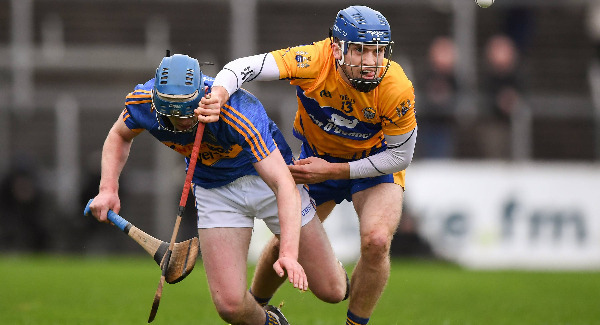
Shane O’Donnell went to war on Kilkenny in the first half at Nowlan Park last Sunday week. In the space of seven minutes, he scored a brilliant goal; came close with a second effort struck so hard that when deflected it went out for a lineball on the far side of the field; and set Podge Collins straight through for a chance that was averted only by an unorthodox save from Eoin Murphy. So, naturally, Clare starved him of ball in the second half, opting instead to shoot — and shoot badly — from distance. In injury-time, they forgot themselves and took the bizarre notion to pass the ball to O’Donnell again, upon which he set up Niall Deasy for the clinching point.
Donal Moloney bemoaned the long-range wides afterwards and he was right to. Clare’s men in the middle third have to learn to play the percentages. It’s not so much a case of let the ball do the work as let the full-forward line do the work.
Ronan Maher has started both outings to date there, accompanied by (surprisingly) Cathal Barrett against Clare and (less surprisingly) Brendan Maher against Waterford. On the face of it, Barrett ought to be a better option as a putative junior partner for Maher: zippy, nippy, low to the ground, expansive for a corner-back, but what Maher brings to the party is his long-range accuracy, as demonstrated by his three points from play versus Waterford.
Whether he might be a shade too statuesque for midfield on fast ground in summer is a concern for another day. With hindsight it’s clear that Michael Ryan’s decision to keep the foot on the gas in the 2017 league at the expense of experimenting was an error; Maher himself during the week went as far as to dub Tipp “very predictable” last season. It’s equally clear the error won’t be repeated.
The issue isn’t that Kilkenny are losing matches; two one-goal defeats constitute no cause for alarm. The issue isn’t that they’re playing badly, though for half an hour against Clare they were all over the shop. The issue is that even the remotest skeleton of a championship XV has yet to emerge. Of the eight men in stripes in the middle third at Nowlan Park last week, five were replaced, three of them by the 25th minute. Cody doesn’t have a centre-back and he won’t have a full-back if common sense prevails and Padraig Walsh is brought out the field.
With TJ Reid injured and no date set for Richie Hogan’s return, the manager’s current list of reliables starts with Walsh, Walter Walsh, Eoin Murphy, Cillian Buckley and Conor Fogarty, and ends there. It will not take a nation of millions to hold them back.
It was nip and tuck between John Meyler’s side and Kilkenny from start to finish at Páirc Uí Chaoimh on opening night. The fare was open, engaging, entertaining — and a little lightweight. That Kilkenny found it altogether harder to win ball against Clare the following week has implications for Cork, who while that was happening at Nowlan Park were themselves finding Wexford too physically strong. The logical extension of all of this is that Clare will beat Cork tomorrow, but the National League isn’t logical.
John Meyler declared himself delighted with the workrate of his charges in Wexford and, in any case, Cork’s need to discover new talent is less pronounced than that of most of their rivals, following the emergence of last season’s new red wave.
However, one wouldn’t like to see them having to try and cope with Galway’s power game any time soon.
Kilkenny will be giving it their all tomorrow. Will Waterford? They have, after all, been there and done that in the league under Derek McGrath, with 2017 demonstrating that an early springtime exit does not necessarily harm one’s prospects of reaching Croke Park in August. It may even enhance them. So why not experiment to your heart’s content during the regular phase of the competition — Waterford’s XV in Thurles a fortnight ago included the names Kenny, Kearney, O’Brien, Roche and Foran — and worry about a relegation playoff if and when it comes?
That one of these teams — if not both; a draw is hardly unlikely — will be off the mark by teatime tomorrow doesn’t mean the fixture is not a potential dry run for a relegation playoff. Maybe that’s the match McGrath is really targeting this side of the championship.
Having hit 2-2 for Wexford in Walsh Park on the opening weekend Dunne failed to trouble the umpires against Cork. These contrasting events are easily explicable. Dunne is fast and he’s unorthodox and he’s unduly left-sided and he’s raw and, as he comes from a junior club and has very little intercounty action under his belt and missed the 2017 championship, he’ll remain a work in progress for quite a while. So he’ll have his bad days, but hopefully he’ll continue to have his good days too.
Bottom line, Dunne is different to the other Wexford forwards and Wexford need to be different this year, as they will not continue to improve by sticking to the same formation and personnel. The return of Kevin Foley, a fluent under-21 a couple of years back, has similarly increased their scoring options. One-season wonders? Probably not.
Yes. Seriously. Please don’t laugh. And apologies in advance to John Kiely for possibly jinxing them against Dublin, but look, Limerick have home advantage and momentum and Kiely is 12 months further down the line than Pat Gilroy. No excuses at the Gaelic Grounds tonight.
Had he been allowed to arrange the Division 1B fixtures, Kiely would surely have chosen to face Galway first rather than last, as is the case, then followed Davy’s template from last year: be ludicrously fit, ludicrously early in order to upset your two biggest promotion rivals and take it from there. Still, Limerick had a nice spread of scorers in their defeat of Offaly, an impressive result in view of the latter’s hammering of Dublin, and a quarter-final berth awaits them next month. (In passing, Division 1B may offer Aaron Gillane the optimum introduction to the senior arena.) Last season, with Kiely feeling his way, Limerick reached the league semi-finals. That should be the minimum requirement again.