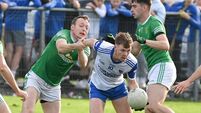
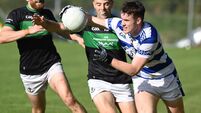
The Galway GAA officer helping to tackle lives lost to drink and drugs
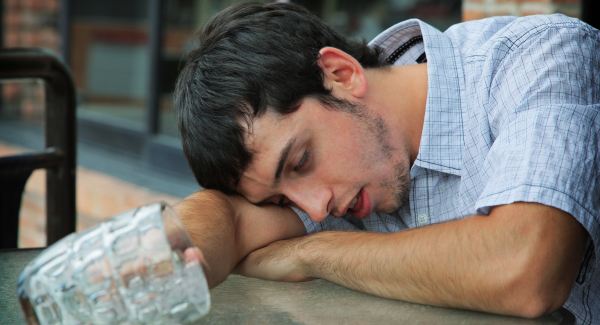
(Slate.com)
Like anyone who picks up the phone to a newspaper, Pat Monaghan had an itch he needed to scratch. When he heard a local councillor endorsing a suicide watch on the banks of the River Corrib in the city after a spate of drownings last summer, he had to speak out. The Connacht Tribune took his call.
Galway GAA’s Children’s Officer could hardly put a number on the amount of people who had taken their own lives in the river but he was fairly certain it was exaggerated.
“It’s not always suicide,” he says now. “So many of these deaths are caused by an over-indulgence in alcohol and drugs. It’s too easy to apportion these deaths to anything else. Mental health is a major issue but it’s wrong to stigmatise. If you do that, you’re detaching yourself from the reality of the situation. It’s not fair to the people who have lost their lives. These are people with families and it has a wider effect on their communities. I just wanted to stand up for those who can’t now stand up for themselves.”
In no way is Monaghan attempting to diminish the significance of suicide. Like in so many GAA fraternities, the tragic death of Galway hurler Niall Donohue in October 2013 hit the county hard. A clinical nurse specialist in children and adolescent mental health service, Monaghan knows only too well how suicide has reached excessive levels in Ireland.
However, he had facts to back up his case that the Corrib deaths couldn’t all be ascribed to acts of depression. The deadly cocktail of alcohol and the Corrib first came to his attention in 1998 when a teenager he had coached in an U16 Galway panel lost his life the following autumn.
Last spring, two girls told Monaghan how they watched a young, intoxicated man attempting to climb railings at the waterways close to the city’s Dominick Street. They became alarmed and asked him what he was doing? He replied he was “going to bed”.
They persuaded him to come back. “He did not know where he was,” recalls Monaghan of his conversation with the girls. “He did not know his whereabouts but he did say he was going to bed. They put him in a taxi and they took him home. They didn’t know him but they accompanied him home in the taxi. That was about two months ago.”
Almost two years ago, there was the case of Galway 17-year-old Patrick Halpin, who disappeared on a college trip night out in London. His body was found days later. An inquest found Halpin, an under-age hurler with Kilnadeema-Leitrim, had died accidentally having fallen off the roof of a fast-food restaurant.
“He became separated from his group in a foreign country and ended up losing his life,” says Monaghan.
Over the festive period, Monaghan was driving his son to a social event when he noticed a young man wearing a Christmas jumper on the side of the road. He couldn’t wait to drop off his son and get back to the inebriated man. “He was swaying. I said to myself I had to catch up with this man before he was knocked down. He was taking a chance. When he got into the car, he was hardly able to talk much, he was that intoxicated, but by the end he was able to appreciate the lift. I just told him I was afraid he was going to get knocked down.”
Earlier this month, the body of Ennis teenager Michael Bugler was found off the Galway coast after he had gone missing on a night out on December 17. Bugler was last seen trying to make his way home. “He couldn’t gain access to where he was staying and double-backed on himself to meet his friends.” His harrowing story emphasised once more what Monaghan has been conveying since his local newspaper interview last July.
“I call it a crisis,” Monaghan states. “When I did the (Connacht Tribune) article, nothing happened for six months, things became quiet and then there was the incident prior to Christmas. These things tend to happen in clusters. From a sporting context, I don’t want to be a killjoy. Galway is a socialising city but there needs to be stronger regulation of alcohol and stronger policing of drugs.
“Drinks are being spiked and there’s an overindulgence too. Young people are becoming isolated. They either go home alone or end up in the bay. That’s a stark way of putting it but it’s the reality of the situation.”
Monaghan has seen first-hand the irresponsibility of bar staff in serving drunk people. “If the ‘Fat Frog’ was the drink for young people in the 90s and Noughties, it has been now replaced by a shot. I’ve observed publicans, not deliberately, but carelessly giving shots to those who are intoxicated.”
He also understands the problem as being more of an urban one, particularly when it comes to drugs — “dealers are targeting big numbers and that’s where young people are getting caught up”.
The solution? There might not be one but he would hope the GAA can play some part in coming up with suggestions so that friends and team-mates could assist one another when socialising.
“I don’t have the technical savvy but I hope there are people out there who can help in establishing something like a ‘Mind Your Mates’ campaign.
“Perhaps a phone app could be developed which would help friends look out for one another on a night-out, to help make sure they don’t go home alone, make sure they’re not unaccompanied late at night and help curb the influence of overindulgence.
“I would just appeal for young people to talk about it a bit more. They go on a night-out without really thinking it through. Everybody is alarmed then when they hear about somebody going missing and a body being found but then things settle down until the next time.
“I don’t have a ready-made answer — this isn’t a solo run — but what I hope is what I say triggers people in saying ‘we can do something about that’. I know it’s not just a GAA thing but it’s affected the GAA enough to want to do something about it.”
CONNECT WITH US TODAY



Be the first to know the latest news and updates