Kilkenny inspired by passing of Old Guard
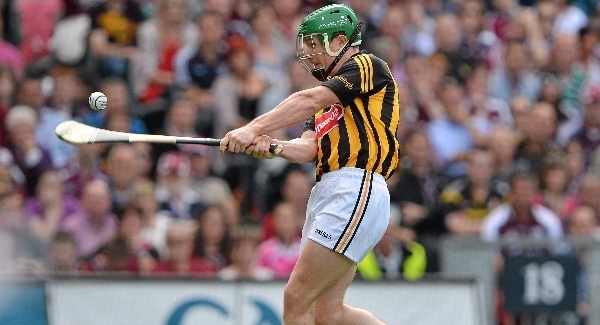
The players felt they had been written off having fallen into a relegation final against Clare. In the week of that game, Henry Shefflin announced his retirement following JJ Delaney, Tommy Walsh, Brian Hogan and David Herity. The prevailing sense that something had come to an end in Kilkenny wasn’t lost on Brian Cody’s panel even if they didn’t agree with it.
“We didn’t hurl overly bad in the league; we just didn’t get the results. We didn’t feel that there was any moment for real concern. The relegation final can take on a life of its own and in that game against Clare that day they could have gone ahead and beaten us but luckily we got the result.
“There were people really focusing in on us and how we would react with so many players gone. A lot of people thought they got the answer after seeing us in the league. They thought ‘this is exactly how they’re going to carry on for the year’. But we didn’t think that. We used the 10 or 12 weeks after the league to just take stock and we did it very effectively.
“There was no lad’s head down at all after the league performance. There was a great chance for new lads to step in and in fairness they nearly played better than some of the more experienced lads in the league so it was great from that point of view. The positives were massive for us coming out of the league. We were learning things about ourselves. You try and draw motivation from every angle and people writing us off was definitely one of them.”
He continues: “Where the All-Ireland sits now, there is huge satisfaction in answering the questions people had about us and, I suppose, the questions you had about yourself even because obviously JJ and the lads going was huge. But you still felt you could win an All-Ireland with the likes of Richie Hogan, TJ Reid and Cillian Buckley standing beside you.”
With Joey Holden otherwise engaged with Ballyhale Shamrocks, Murphy filled the full-back role for most of the league although he wasn’t disappointed when he was returned to the corner-back role he has mastered these last five seasons.
“When Joey came back, there was absolutely no begrudgery there. He had a brilliant year. As soon as he stepped in, for me it was a case of moving on to the next one. There was no real moment of saying I was disappointed that the lads took me out of there. As long as I was starting, I didn’t care.”
Not once did he feel Kilkenny’s litany of injuries would damage their prospects. As a friend to the likes of Jackie Tyrrell and Michael Fennelly, he was sorry that they missed games but when games came around he had to think about those who were playing.
“I always believed if Mick Fennelly wasn’t going to start there was somebody who would step in, be it Lester Ryan or whoever. The same anywhere around the pitch because we have experienced injuries in the past and managed to get over them. We still felt we could get over them. You have to be ruthless about it, that there is still a match to be won. There is no sympathy going to be given to us just because we have injuries. If you want to feel sorry for yourselves you can feel sorry for yourselves and lose an All-Ireland final or semi-final, whatever you want to do.”
In Murphy’s time, Kilkenny have found a new way of winning in contrast to their explosive starts in the late 2000s. That has as much to do with other teams as Kilkenny, he argues.
“I think the way the game has evolved now, not every team plays a sweeper but they are all more mindful in defence and drift back a small bit. The area around the goal is that bit more protected and every team has a system in place to protect it. It mightn’t necessarily be a sweeper but players will move back so I think over time that has been cancelled out.
“We still managed to find goals when we needed them. When we needed to find a goal against Galway in the All-Ireland final we found it exactly when we needed it. It was the same against Waterford when TJ got the goal and it gave us a bit of breathing space just halfway through the first half.
“We mightn’t be scoring as many goals as in the late 2000s but that’s because the playing field has levelled out that bit more and there so many teams of equal standard fighting for the All-Ireland.”
CONNECT WITH US TODAY



Be the first to know the latest news and updates