Tomás Quinn: Tom Cribbin and Westmeath deserve credit
On the sideline, manager Tom Cribbin tried to remain calm but inside he must have been esctatic, especially given how crucial his half-time positional and tactical switches were in the turnaround to finally break their Meath hoodoo.
The majority of the Westmeath panel had re-emerged from their post-match showers to take their place in the stand just as the ball was being thrown in for the semi between Dublin and Kildare. You’d have to wonder if their joy was tempered slightly by the manner in which the Dubs had decided the contest inside the first 20 minutes.
It certainly left Cribbin and his management team with plenty of food for thought on the bus trip back to Mullingar that evening.
It wasn’t just that Dublin were going for their 10th Leinster title in 11 years, it was how dominant and one- sided the last few Leinster Championships have become. In the last three years Dublin’s average margin of victory in the province has been 16 points.
One of the common themes in these games has been the fact nearly every team they’ve met in that spell have tried to play orthodox football and beat Dublin at their own game.
Already this summer Jack Sheedy and Longford said they wanted to stay true to the ideals of the game, Jason Ryan and Kildare did try to leave a sweeper at times but rarely did they have enough players back working to a system similar to that of Tyrone and Derry in this year’s league, both of whom made life very difficult for Dublin.
When word filtered out ahead of yesterday’s game that Westmeath had recently played Mayo in a challenge and lined up extremely defensively it was a sign that Cribbin and company were willing to tailor their approach to this game in an effort to keep it competitive for as long as possible and increase the possibility of an upset.
The first 20 minutes were going to be crucial, the longer they stayed in the game and in particular didn’t concede early goals, the more their own belief would grow.
It’s a very brave move trying to implement a drastic change to a game plan between championship games (and in this case just two weeks) which meant effectively just seven days of constructive pitch work. Would it be enough? The smart money said no but without question it was worth trying because if they went toe for toe, as they did in the second half against Meath, they would have had no chance of staying with Dublin for any period of time.
o their credit, the Westmeath players took to the task diligently, each of their back six looking to take responsibility for their direct opponent and then half-forwards and midfielders filtering back to fill space. For long periods corner-forward Shane Dempsey was the lone Westmeath presence in the Dublin half.
Cribbin did identify that Dempsey was being too isolated so with Dublin becoming more comfortable, without the scoreline reflecting it at the time, he pushed John Heslin and Kieran Martin forward to have a three-man forward line. The reasoning was two-fold - giving his defenders more options for their clearances but also making the Dublin defenders earn their crust.
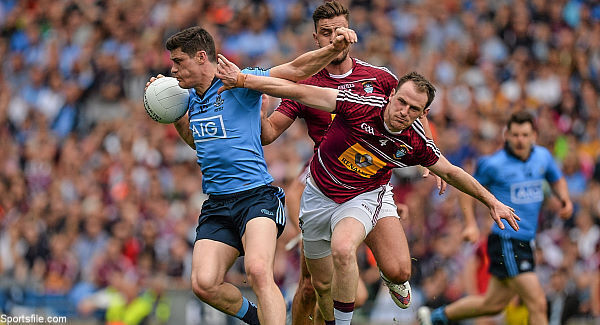
Most Westmeath pre-match target boxes were getting ticked; they had a number of early turnovers of Dublin players carrying ball into contact and they were forcing Dublin forwards to go lateral or backwards when in possession. Eight minutes elapsed before Dublin scored – through corner-back Philly McMahon - and it wasn’t until Diarmuid Connolly’s point in the 27th minute that a Dublin forward scored from play.
All were very positive signs for Westmeath.
A major challenge in using such a system is that by making yourself harder to break down, it obviously also limits your own attacking options and Westmeath were struggling to find the balance to link defence and attack. However when Heslin found the target a few times before half-time they would have retiurned to the dressing room very content with their 35 minutes work and the score of 0-8 to 0-4 was testament to their hard work.
Dublin started the second half in a different gear and the added pace and pressure soon began to find cracks in Westmeath’s fledgling system and following a sublime outside of the right foot point from distance by Connolly, Dublin scored two quickfire goals through Bernard Brogan and Jack McCaffrey to turn the game and drain the Westmeath challenge.
Both teams will take positives and lessons.
Westmeath may not need this system again this year but the fact they had the ability to implement the defensive part with success against such quality opposition will give them huge hope.
Dublin will be pleased to have gotten this different type of challenge in Leinster as the first 40 minutes will serve them as the year progresses and opposition systems vary. Another Leinster title for this group but very much another step on their journey.