Stephen Molumphy: Captain sensible
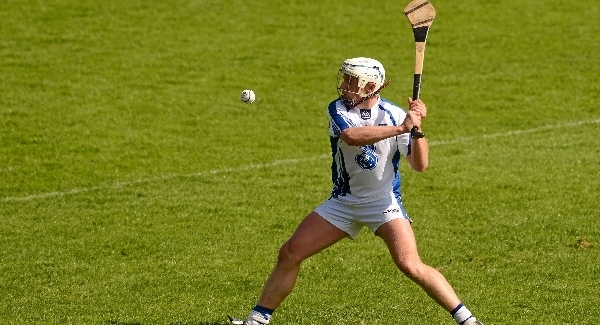
Captain Stephen Molumphy, once by honour of his county, now by rank of his occupation, tells a story. One that amuses him just as it swells him with pride. "The captain of Lismore is Philip O'Keeffe, a private. The captain of Cappoquin is Keith Landers, a trooper, and I'm the captain of Ballyduff. So in two towns and a village in west Waterford the captains are all army men."
Last week's Chaplain's Cup between the various barracks was a who's who of inter-county stars past and present. There was Kilkenny's Eoin Larkin, Paul Murphy and Colin Fennelly. Tipperary's Patrick "Bonnar" Maher. Wexford's Liam Ryan
Former Limerick forward Andrew O'Shaughnessy too. Men you'd bank on. But also men who have an incredible ability to multi-task.
It says much about modern day hurling than the army that Molumphy found Waterford just as demanding of him as his Defence Forces duties. In the run-up to the 2007 Division 1 semi-final against Cork, he had a German exam in NUI Galway when he asked Justin McCarthy for some clemency. Having only broken into the panel the previous year, it was his Oliver Twist moment but he just had to make the plea.
"We had training Thursday night, I had a German exam the following morning, a tough one. It was the old road as well and it was going be four hours there and again on the way back. I remember asking Justin was there any chance I could skip training and he said nothing for a second and then, I'll never forget it, said, 'No. Look, you'll be starting. Your team needs you and it's important you're there'.
"I was thinking 'that's going to be a long drive home'. I headed down anyway, did the training and was wrecked. I passed the German exam the next morning and then we won the following weekend and the league final and I realised it was all worth it. That kept me going."
If McCarthy sought a lot from him, Davy Fitzgerald demanded more. Training six nights a week at one stage, few inter-county players' cars ate more tarmac than Molumphy's. "I was then in the Curragh, Davy came along and it was so professional. I was leaving Ballyduff at 5.30am to get to work. I was training cadets and I had to be there for 7.30am/7.45am. I then went straight down to training after work.
"I was putting up crazy mileage. I was hitting 2,000km a week. It was all clocked in and the county board were always dreading me giving in my mileage expenses. I was wondering how I kept it going but I did it for a year and a half. We won Munster in 2010 and that was enough for me to say it was worth it. I remember speaking to U16s over the last year and telling them about what was ahead of them and that if they really gave it a go for five or six years it'd be worth it. But God do I remember those drives. I had audio books, things like Ulysses. It was 27-hour tape and I'd it done in a week! You'd go through so many stories. I'd all the classics. Moby Dick! Just to keep me going."
There was also that bizarre photograph of him togged out in March 2011 getting into a car outside Nowlan Park having played the first half of a league game against Kilkenny. Like Superman changing into Clark Kent. A tour of duty in Poland beckoned him. "There was just one flight to that part of Poland and I had to report in that night. But Davy was fantastic. He understood and asked me 'what could you give me?' I said I could go flat out for a half. It was only a few days later I found out about the photos because as soon as I was Poland I had to hand it my phone.
"The GAA has become so professional in preparation, it's great, but the mortgage has to be paid as well. In the past, some players would have prioritised hurling completely and found themselves packing in jobs. Nowadays, the GPA help a lot that way, they do some excellent work in making players financially aware of what they should be doing. I did a masters and the GPA helped paid towards that."
That degree in military history and strategic studies in NUI Maynooth last year but more importantly the arrival of baby Jack and the lack of time with his wife Niamh on top of his work more or less made up Molumphy's mind to quit last October. After skipping 2013, he returned last season having been inspired by the team's extra-time qualifier defeat to Kilkenny. "I was listening to it on a radio in Lebanon and I was hanging on every word. We were two points down and I was thinking if we got a goal and won I would be back but of course I hadn't a hope!"
But Jack was the deciding factor. Molumphy would leave home at 6.30am for Collins Barracks and not be back until 11.30pm. "You would only see him for the night feeds. Other days, we'd be exercising and that took up a lot of time. Inter-county, you can't miss training at all and there was one time when I missed two weeks. There was one exercise in Tralee and I drove back to Waterford city and headed back to Tralee and I did that twice in a week. You're wrecked. People were asking you then why are you missing training and I'm actually doing my job. I wasn't able to give the same effort to Waterford as I did in previous years."
(DROPCAP) He became so synonymous as their roving skipper in later years that it's easy to forget Molumphy was in the Waterford forward line in 2007. But every great band needs a roadie and manager McCarthy unearthed one in the then 23-year-old.
Only, Molumphy was the clean-living kind of roadie. His sober outlook gave him perspective. "Our forward line was phenomenal but we didn't defend well enough as a unit. We'd score 4-20 but they would do the same. We were losing games while scoring big. There was the 2007 All-Ireland semi-final. Limerick went seven points up, we brought them back to a point but their backs were coming out and picking out their forwards with such ease that our backs couldn't defend yet their backs were putting us under serious pressure the whole time.
"The following year, Kilkenny's wing forwards were dropping back and the next thing the work-rate had shifted up and everyone was making it tighter. They're brilliant at it, they crowd out the defence and create space for their forwards. They have it nailed down to a tee but individually they work brilliantly as well and win their own ball. They drop back a player but they all drop back in a line. And it's said that Kilkenny don't do tactics!"
Molumphy embraced Fitzgerald's management more than most. He could liken his attention to detail to the military precision he'd grown accustomed to in barracks, exercises at home or in the likes of Chad and Lebanon.
"I loved Davy's approach because everything was covered. In the background, he had this, this and this sorted. There were no grey areas, it was all black and white. Really, the only time we ever saw him shouting was when they showed him on the sideline on the TV. When he came down to training it was drill A, drill B, drill C. We only need to turn up to training with our boots, everything was laid out. It was brilliant, so professional.
"Nowadays, there's a lot more tactics at under-age than there was before so that when lads are coming into this level at least they know what to do in games. They take what is said to them on board and they'll do it as opposed to when Davy came in and there were lads who had never played any tactics and they had to implement a game-plan. It was a lot tougher. A lot of guys were coming towards the end of their careers and it was hard for them as Davy was looking to mix and match. Davy covered every scenario in the world with us.
"It's moved on now again under Derek (McGrath). The last day against Cork, Waterford were closing off the play in their own defence, they got a lead and opened up Cork more. There were three or four Cork backs, I was looking at them, and they were actually frustrated because they didn't know what to do with the ball and they'd no-one to mark. You could see the structure he had. Tactically, he was better but Waterford's work-rate was too."
Appointed joint-captain by Fitzgerald with Ken McGrath in 2009, Molumphy was the de facto main man as McGrath stepped in and out of the team before Molumphy lifted the Munster Cup the following year. Big names like Paul Flynn and Dave Bennett had by that time left but he was still asked to command some massive characters.
"I went into the cadets at 18 and you'd feel shy talking to anyone but that's taken out of you. You're put in scenarios when you have to do it and you learn the tune very quickly. The likes of (John) Mullane and Ken McGrath, they had won Munsters and were fabulous players but the only way you could stand behind what you wanted to say is your honesty of effort. If you're there putting it in and making the runs and working hard if not the hardest of all of them they will listen to what you say."
He was relieved he wasn't party to the player revolt that precipitated Michael Ryan's departure as manager two years ago. Only shortly prior to it, he had agreed to come back on board having spoken with Ryan. "I was glad I wasn't there because it was just done wrong. They had come back so well against Kilkenny and were unlucky. He was fair, he was honest and the way it happened was all wrong."
(DROPCAP) At the time, the joke around Ballyduff Upper was that they were going to sue AIB for a breach of copyright. Long before the bank's popular All-Ireland club championship marketing campaign, Molumphy's club had coined the phrase.
"We've a sign in our club 'club is family'. We put it up after we won a county (2007). It was a year or two later when I saw it in AIB ad and I was saying, 'They robbed us!' Anyone who comes to the club think it's an AIB thing but we had it up well before then."
For the Molumphy family especially Stephen and his four brothers, the club provided solace and sustenance after the tragic death of father Patrick in 1999. He passed away having attempted to break up a dispute. Tightening their ties with what he loved so much just made sense. "It helped a lot after dad passing and we gravitated more towards the club. Every week the club was there. I never had ambitions to play with Waterford but it was because of my club that I played and captained my county. I captained Waterford for three years which for me was mad because it was all club, club, club. Even when we had trials (with Waterford), we'd go down to get the drills and to find out who was going to be a threat to the club this year. We were small fish but what could we do?
"I remember Nicky Cashin came into me in the dressing room after a trial match. I had been on the 'B' team and he came in and said 'we want you to be on the panel'. It was a kind of a shock. I was thinking 'this wasn't supposed to happen'. I was already planning to get in my car and go home but it all built from there. I was going to give it everything the following year because I was thinking I'd have to go overseas the year after that. I put it in year by year by year, never long term."
Molumphy recognises a self-sufficiency in Waterford now. The outside manager may be turned to again but when so much good is being done at every level it takes local know-how at the top as much as the bottom. "Last year was a bit of a disaster but you look at how Waterford are at under-age and they're strong. The lads coming through have had success. There are a lot better than what was there 10 years previous. They're better, they're quicker. They've been better trained.
"I came back last year, saw it and it was fantastic. All of these guys wanted to win, they wanted to do well and hurling was first and everything else was second. The first indication of the promise coming to fruition was beating Tipperary this year and then the last day against Cork. Cork just capitulated but the talent there now is unbelievable."
He harbours no regrets in not staying on. His infantry pragmatism taught him all about humility but he was surprised to see some of the slightly younger players cut from the panel last winter. "It needed a period to break in things and it took Derek a year to work out who could work here, here and here. You've pride and honour in wearing the jersey but I was a cog in the wheel. You're just passing through. Seamie Prender(gast) retired a week before or after me. Then I got a text from my brother about Richie Foley and Jamie Nagle (being dropped from the panel). I couldn't believe it. I was wondering if I didn't say what I said to Derek would I gone the same way? But you have to respect what Derek's way of doing things, the results he's achieved this year."
He's noticed a change of attitude towards Waterford as well. Once the great showmen who gave their opponents as much space to express themselves as they too expected, Fitzgerald and now McGrath have made them less likeable almost as less beatable. No bad thing. "Teams aren't fond of the way we are playing. You'd much prefer to win something yourself than entertain a crowd. I don't care how it looks as long as you win. You don't care about the standard as long as you get the silverware. I like the way we're playing because it's structured and you're going to win more game that way."
From the popularity contest-winning team of individuals Brian Corcoran dubbed Waterford to the unit that now commands respect, is it any wonder Molumphy abides?
CONNECT WITH US TODAY



Be the first to know the latest news and updates