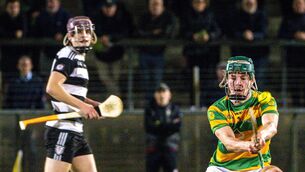
Club admits concussion sub proposal may be open to abuse
One of the clubs behind the new concussion substitution proposal for Gaelic football and hurling admits it’s open to abuse.
However, John Farrell, chairman of Boston club Aidan McAnespies, says the concussion issue has reached a critical point for player welfare.
The American club, along with Tyrone’s Pomeroy Plunketts and Fermanagh’s St Molaise’s of Irvinestown, recommend a player who receives a serious blow to the head shall, on the instruction of the referee, immediately leave the field to receive medical attention.
A temporary substitute would replace the injured player until a concussion test had been performed.
“Concussions are becoming very frequent and more players seem to be playing through them,” said Farrell, former chairman of the Boston board.
“I’m not sure if the proper attention is being applied.
“Years ago in the GAA world, you had a situation where fellas with a bottle of water would run into a player with a broken leg, hoping all of a sudden he would be cured miraculously.
“That was the stereotype but things have to become more sophisticated now with the severity of head injuries. A player concussed might tell you he’s not, even though it’s against the better judgement of a team doctor or physio. It’s dangerous.”
In the first three weekends of national league action, Mayo’s Evan Regan and Tipperary’s Shane McGrath have suffered concussions.
It had been reported that SeanCavanagh suffered a mild form of the condition in Tyrone’s opener against Monaghan but it was later confirmed he hadn’t and was fine to play on.
The GAA’s concussion management guidelines state “a player with a diagnosed concussion should never be allowed to return to play on the day of injury”.
However, Rory O’Carroll continued on playing despite picking up the injury in the 2013 All-Ireland final.
Last year, Mayo’s Aidan O’Shea admitted he played on with concussion in the Connacht final and All-Ireland semi-final replay.
Farrell would like teams to at least get time to make a more informed decision.
“Most club teams might not have a doctor but they’d have a physio or somebody half-knowledgeable in first aid but that’s really the extent of it.
“It’s tough to make a judgement call on whether a player is concussed, but that player should be given the time to be brought to the sideline and assessed properly.” Farrell readily admits teams could take advantage of the rule as the substitution follows the same protocol as the blood replacement.
“It’s open-ended. You could see the opposing management saying ‘there’s nothing wrong with that fella, they’re just trying to replace him’.
“You would like to see a medical professional on the line.
“He or she wouldn’t care less what way the game was going and that player welfare would come first.”