Costello hits out at Dublin funding cut suggestions
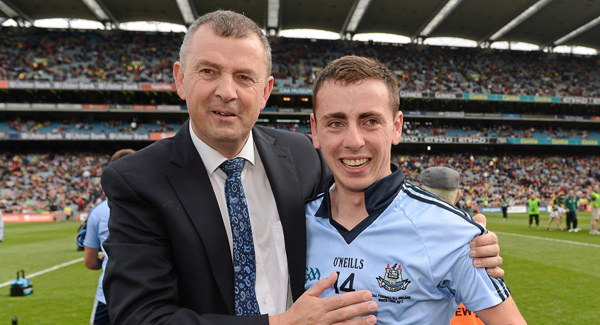
County chairman Andy Kettle stated in August that Dublin would oppose any reduction in central level funding following proposals contained in a GAA report.
The report came on the back of suggestions by top GAA officials that financial ‘equalisation’ may be required to give weaker counties a leg up.
But, writing in his secretary’s report to the county’s annual convention on Monday, Costello was heavily critical of the suggestions and backed Kettle’s strong stance.
“Let me set the record straight: the Dublin county committee has no issue with Croke Park offering additional financial support to help so-called weaker counties in their quest to keep pace with the stronger units,” writes Costello. “But let me be equally blunt: this should not come at a direct monetary cost to Dublin.”
Costello suggests the funding cut idea ties into a general public mood that there is a need to “halt the Dublin juggernaut”.
Dublin football and hurling teams have made huge strides in recent seasons though the public response has frustrated Costello.
“During the summer it was like a national focus group had been formed in order to, as it was termed on radio, ‘halt the Dublin juggernaut’,” adds Costello.
“All sorts of measures to ‘hamstring’ Dublin were suggested with contributors just stopping short of suggesting the ‘King Herod Solution’ which would put a cap on the number of young males allowed in any household.”
Meanwhile, the long-serving Dublin official claims it may be time to bring the black card in for hurling too.
The new sanction was available to football referees for the first time this year to curb cynical play.
Hurling players and managers have been virtually unanimous so far in rejecting the idea for their game.
But Costello claimed it would have been the perfect sanction for one high profile Championship incident, believed to be Donal O’Grady’s cynical trip of Kilkenny’s Richie Power in the All-Ireland semi-finals.
Aside from conceding a free in, that challenge by the Limerick captain, who was already on a yellow card, went unpunished.
“I’m not saying hurling definitely needs a black card but the notion shouldn’t be completely laughed out of court either,” writes Costello. “Games evolve and the rule book needs to keep pace with change, especially where cynicism lurks, unimpeded.
“And don’t tell me the mindset of a hurler is intrinsically different to that of a footballer. The elite are, by instinct, winners. They hate losing and will do what it takes to avoid such a fate, especially if there is no proper deterrent.”
Costello argues that, in football, referees were too lenient with the black card this year.
“The fear among sceptics was that some referees would brandish black like it was going out of fashion...this hasn’t happened,” he says. “What has transpired, however, is that some referees have gone the other way, erring on the side of caution (every pun intended!) by flashing yellow when players have committed blatant black card offences. Or, in some cases, by issuing no cards at all.”
Costello hits out at the ‘manufactured’ hurlers jibe which was levelled at Anthony Daly’s team this year.
He also encourages a move to one-on-one penalty taking in hurling which is currently under consideration. And he reveals his concerns about the plans to introduce a ‘calendar year’ schedule for club activity in 2016.

CONNECT WITH US TODAY



Be the first to know the latest news and updates