Mickey needs to weave wand to save this team
All of the Dutch managerâs training sessions are done with the ball â and all that pitch work is tailored towards coaching his players how to execute those key components of the game.
Anyone who has tried to coach a gameplan will be able to testify that some aspects of the game are harder to instil than others.
A defensive system is relatively easy, hence their overwhelming popularity. An established counter-attacking style of play, which creates space for a playmaker, is much more complicated. An engrained style of play that repeatedly gets the ball to your best forwards (in the scoring zone) is unquestionably the toughest job of all.
Watching county football teams throughout the year, itâs still rare to see a side that has a clearly defined and expertly-coached system for each phase of play.
When Armagh beat Cavan in the Athletic Grounds they ticked two of the three boxes. Armaghâs blanket defence was a bog standard affair. It wasnât revolutionary, but it didnât need to be as it still brought Cavan to a standstill.
Armaghâs counter-attacking strategy was undoubtedly the most impressive aspect of their game. With the wing-forwards often in defence, Kevin Dyas was used as the outlet. Exploiting the space vacated by their wing-forwards, Armagh kicked a succession of crossfield passes to Dyas. It was a fast and effective way of turning defence into attack.
It was the last part of Armaghâs gameplan which malfunctioned. From 35 shots on goal, they scored 1-12, which is a conversion rate of just 37%. Some of this inaccuracy was poor shooting (13 wides), but there were a lot of random efforts which were always going to be missed. There was also no evidence of a clearly determined system of play that was going to isolate Jamie Clarke.
The best managers have the ability to devise a system which extracts the optimum return from the teamâs match-winners. (Robin van Persie and Arjen Robben scored two goals apiece against Spain).
The two best-coached teams in Ulster are Donegal and Monaghan. Even the talented Jim McGuinness needed a second season before he honed Donegalâs attacking system.
Now in his fourth season, McGuinness has Donegal running like a clock. Not only have his players been programmed how to defend and attack, they can operate into different modes.
In Celtic Park, Donegal shifted from containment to attack to control. In the first half, they soaked up the pressure and took the sting out of a confident Derry team. As they absorbed Derryâs attacks, Frank McGlynn and Leo McLoone never crossed the halfway line. Playing around midfield Michael Murphy offered further assistance to the defence.
After half-time, everything changed. Murphy moved to full-forward and McGlynn and McLoone started charging up the pitch. The new dynamic surprised Derry and caught them off guard. McLoone bagged a goal. In the space of 12 minutes, Donegal opened up a six-point lead. Once Donegal got that cushion, they switched into control mode. Confident in their defensive system, they knew they could keep Derry at armâs length until the final whistle.
Monaghan also bear all the hallmarks of a team that knows exactly what it is doing. Defensively, they are superb. When attacking, they are multi-dimensional. When faced with a packed defence, they stretch the blanket at the seams by shifting the play to the other side of the pitch. They do this quickly with long kick passes. Monaghanâs goal on Sunday was a textbook example. Dick Clerkin changed the direction of their attack by picking out Darren Hughes with a crossfield pass.
Monaghan arenât one-trick-ponies. They also know how to run the ball from defence, and when the space is available theyâll target Kieran Hughes on the edge of the square.
Watching teams like Donegal and Monaghan, itâs clear they have established patterns of play which suit their players.
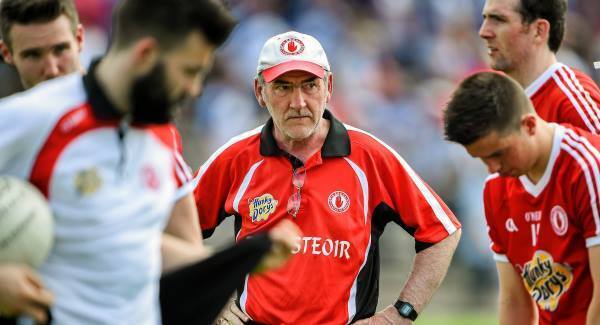
The same cannot be said of Tyrone. Admittedly, Mickey Harte has legitimate grievances about the two minutes and 20 seconds of injury time that was played in the second half. In his weekly column, former referee John Bannon totted up all the second half stoppages that were accrued by injuries to Dick Clerkin, Dessie Mone and Drew Wylie.
âFour minutes of added time should have been given,â stated the former referee.
However, the GAAâs farcical time-keeping procedures shouldnât overshadow Tyroneâs deep-seated problems.
Even before the Championship got underway, it was obvious that Mickey Harte still hadnât settled on his best team. While an early exit from Ulster was always a possibility, there was still a feeling that Harte might hit on the right mix during the Qualifiers.
On the evidence of Sundayâs performance, that optimism is rapidly diminishing. Tyrone have so many flaws, it seems implausible that a remedy will be found in the back door.
If we forget about tactics and strategies, basic defensive errors are crippling Tyrone. They were extremely lucky not to concede two goals in the first half. Their defending for Monaghanâs goal was also very shoddy. A mass of white jerseys encroached on Darren Hughes leaving Dermot Malone completely unmarked. Schoolboys wouldnât do it.
The accepted wisdom before Sundayâs game was Tyrone had too much stardust in their line-up. Without a fully fit Conor McManus, it was difficult to see how Monaghan could match Tyroneâs scoring power.
That theory made a lot of sense. But the game told a different story. Ronan OâNeill and Stephen OâNeill failed to score. With 0-2 from play, Darren McCurry was Tyroneâs most prolific forward.
Naturally, the players must accept some responsibility for their performances. But itâs also worth considering Tyroneâs approach play. Ronan OâNeill isnât particularly fast and Darren McCurry isnât particularly big. Yet, Tyrone made no allowances for them. On repeated occasions the ball going intoMcCurry had snow on it.
In years gone by, Tyrone could rely on playmakers like Brian McGuigan and Colm McCullagh. Bereft of players in that mould, the Red Hand now prefer a running game. But their reluctance to kick the ball is making it easy for defenders to crowd out Tyroneâs full forward line.
And there was a distinct lack of chemistry about the Tyrone team. Deployed at centre half-forward, no ball was kicked to Sean Cavanagh. He didnât get into the game until he moved to midfield.
In terms of defence, Tyrone conceded 1-12 to a Monaghan side that was playing with a half-fit Conor McManus. Despite the absence of Eoin Lennon, they were out-muscled at midfield.
As an attacking force, itâs just not happening for Tyrone. They didnât create a single goal chance. Their build-up play was too slow while the standard of kick passing to the full forwards was often atrocious.
But in sport, there is always hope.
Having lost the services of his defensive midfielder Kevin Stroosman, Louis van Gaal decided to completely overhaul Hollandâs system of play. Instead of playing the traditional 4-3-3, he opted for 5-3-2. Former great Arnie Haan accused van Gaal of âkilling Dutch footballâ.
Van Gaal only had a few weeks to work on the system which was tested in challenge games against Ecuador, Ghana and Wales. Holland beat Wales 2-0. In their next game, they defeated Spain 5-1.
After Hollandâs stunning display, Robin Van Persie revealed: âVan Gaal showed us the way to score. Some of the goals we scored were exactly what we practiced in training.
âThe crosses and passes I received from Daley Blind were fantastic, but it was exactly a copy of how we worked in training.â
Tyrone fans will have to hope that Mickey Harte can perform a similar miracle at Garvaghey.
Because at this stage, it will take a miracle.