Who are the GAA’s powerbrokers?
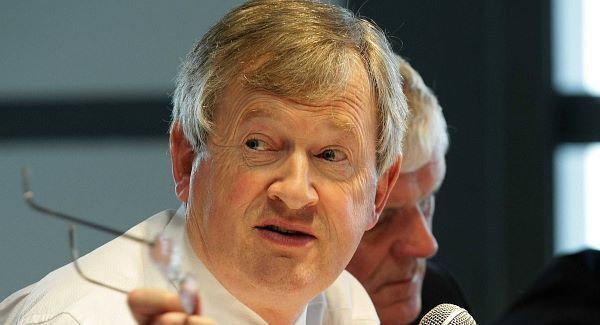
It goes without saying that he’s the big kahuna as he is the most powerful sports leader in the country. He mightn’t have as much executive power as he would like but Duffy has been excellent since taking over from Liam Mulvihill in February 2008 (his seven-year terms ends in February 2015). He’s had to clear up some messes, mind. He saw the confusion and anger created by the original hurling league structure in 2011 and came to the rescue for the Football Review Committee with the black card. Like Mulvihill, Duffy is a gentleman but isn’t afraid to crack the whip when needed.

The office or the holder? Recent presidents have been more proactive than simply going around the country on the chicken dinner circuit, a trend that began with Peter Quinn’s dynamic leadership. The man in the hotseat now, Liam O’Neill, stirred up a hornet’s nest when championing the sideline regulations, which shows a willingness to get involved in hot-button issues.
If delegates are swayed when Frank Murphy gets up to speak at Congress, then a wealth of hurling people take their lead from Cody. As the greatest hurling manager in the history of the game, the James Stephens man’s words have plenty of weight although he is at odds with how officials see the game being played. The Kilkenny ethic, or spirit as he likes to call it, which he has created is the template for everyone in both codes.
McGill’s brief is a broad one — can you think of anything you’re interested in GAA-wise which isn’t covered by games administration or player welfare? — and he deals with many significant stakeholders, from county boards to managers to the media. One of most impressive figures in the GAA bureaucracy.
The bane of some hurling folk in light of his directive for referees to take a more literal interpretation of the rulebook. Yet the general impression in football is McEnaney’s arrival as referees chief last year has heralded a more common-sense approach to officiating. Not afraid to criticise his team of referees, McEnaney has made the sort of impressive impact as an administrator as he did as a man in black.
McKenna’s stewardship of Croke Park as a venue has been one of the great successes for the Association in recent years. His involvement in the commercial side of the GAA’s operations may have coincided with the economic downturn but he shares much of the credit for the relative robustness of the GAA’s bottom line.
He hasn’t gone away, you know. Did we ever expect he would? Cork’s secretary emeritus is still in the big seat in the county and certainly sees the redevelopment of Páirc Uí Chaoimh as his baby. As the most powerful man in the biggest GAA county, his influence is unquestioned and he came through the strikes relatively unscathed. But it’s his deep knowledge of the rulebook that makes him a man to be respected as much as feared in the GAA.
Harte’s tactical innovations have helped revolutionise Gaelic football, while he has driven a county from also-rans to the dominant force of the first decade of the 21st century. In that sense his influence is felt on every football field in Ireland, while his dignity since the murder of his daughter Michaela on her honeymoon has also been inspirational to many.
We didn’t think anybody was going to compare to DJ Carey but Shefflin has gone beyond what his former team-mate has achieved, never mind produced, in Championship performances. The 10th All-Ireland title is still within his reach next year but his place as the greatest hurler of this generation, perhaps ever, has already been confirmed. Thirty four next month, he dragged a Kilkenny team playing within themselves for large parts of the 2012 season to a famous All-Ireland title. King he certainly is.
Brolly’s recasting as a secular saint since he began driving the organ donation campaign has been remarkable. A caustic pundit on The Sunday Game for many years, his selflessness in donating one of his kidneys to Shane Finnegan has inspired thousands of people to row in behind the optforlife campaign.
Cusack himself would agree he lived and died by the sword but he was given a raw deal when axed from the Cork panel this year. Along with Dessie Farrell, he has guided the GPA to a happy medium with the GAA.
Personally, the path he has taken in recent years can only be admired. His insights on the game are thought-provoking and he is a pundit to heed.
Daly was recently seen on TV making the case for Hawk-Eye as an aid to decision-making in Croke Park, but his shadow falls over thousands of GAA fields atop the GAA’s coaching and games development tree. As the GAA fights for the hearts and minds of kids, his role in devising coaching strategies will become even more significant.
If benchmarks can be set for GAA committees then McGee’s Football Review Committee lifted it to a exorbitant level this year. The amount of research done by the group was breathtaking and would have reflected well on McGee’s leadership, regardless of whether the black card was voted in by Congress in March. But its success in principle should be seen as one for football. The recent Championship structure proposals have also created debate.
As de facto chief executive of the GAA in the country’s largest urban area, Costello is a hugely powerful individual within the Association. Dublin’s football ascendancy and hurling renaissance can be traced directly to the county’s willingness to invest heavily in coaching, and the credit for that goes in large measure to Costello.
Twenty seven months separated Donegal’s abysmal round one qualifier defeat to Armagh and their All-Ireland triumph over Mayo in September 2012. That phenomenal transformation is down to McGuinness and his ability to lift a group of players up off their knees. They drew derisive comments in 2011 but changed many opinions last year when they simply dominated games. Is it any wonder the man’s skills are demanded elsewhere?
Honoured in America earlier this year with an award for leadership, Farrell has been synonymous with the player association for years and was centrally involved in the negotiations which led to the GPA being brought ‘inside the tent’ of the GAA. Hundreds of the most recognisable sportspeople in the country are members of his organisation, so his potential impact on the GAA and how it functions is obvious.
The assuredness of Murphy makes him one of the finest officials in the GAA. His diplomacy in arguably the most challenging province is unrivalled and he has led commendable efforts to strengthen bonds between the GAA and the unionist community in Northern Ireland. Ulster counties naturally form a tight bond but Murphy has ensured they remain a unit.
An outstanding footballer and obvious poster boy for Dublin GAA, Brogan has created his own company Legacy Consultants, a new firm providing “talent representation, sponsorship consultancy and event creation and management”. Time will tell if his influence will go beyond the playing field, which was rubberstamped with a second All-Ireland title and another All Star this year, and whether he’ll become the first Jerry Maguire of the GAA world.
He’s back in a position he last filled in early 2008 and there’s no denying the value of the Clare native to the GAA. Prior to returning to the provincial role, he was appointed chairman of the Central Competitions Control Committee by Liam O’Neill and before that Christy Cooney made him head of the Central Appeals Committee. Moroney’s style is quiet but effective.
It’s all about the bottom line and Ryan is the man who tots the figures up every year. As he says himself it’s the kind of job that only comes into focus if something goes wrong, but the money man in every organisation is always important.
His role in recycling over 80% of GAA revenues back into the Association is crucial.