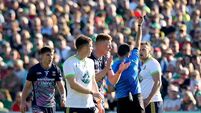
McQuillan consistent and refereed game as he saw it
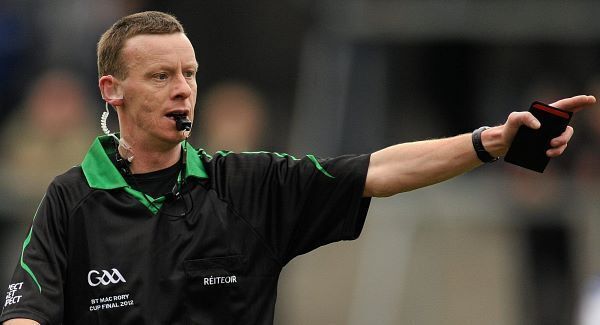
However, Joe McQuillan was consistent in a game played with fierce pace and no lack of intensity.
The vast majority of the mistakes were made by both sets of players whereas in the first minute Hawk-Eye was called on by McQuillan only to confirm his umpires’ decision that Keith Higgins’ kick had gone wide.
It was an unusual sunny, hot day for late September and it cause a lot of difficulty for McQuillan, who had to put his hand on his forehead on several occasions as the sun was in his eyes. It was also hard to hear the referee’s whistle, which was very frustrating for supporters and players. I know it was an All-Ireland final but there is always better communication and understanding when the referee is heard. It was a physical game but by no means a dirty one. There were a lot of big hits and I felt some players in possession, especially Bernard Brogan, Kevin McLoughlin and Alan Dillon, seemed to be fouled without any reward.
On the other hand, McQuillan was giving frees for small pushes on the backs of players in possession or trying to pick up the ball.
I’m not sure why Cillian O’Connor approached the referee at full-time when four additional minutes were announced and he did take some considerable time in kicking over the free.
Dublin committed a couple of cynical fouls towards the end of the game but the rules simply aren’t strong enough to deal with what is happening as teams try to kill the clock.
The free count was 32-12 in Mayo’s favour at the end but there should be no huge significance placed on that. McQuillan refereed the game as he saw it and while there were a few contentious ones there was nothing to suggest he was any harder on Dublin than Mayo.
In the minor game, Conor Lane’s decision in the 38th minute to allow advantage for Darragh Doherty’s goal was key and it was a brilliant example of giving the benefit to the attacking team.
He was also correct to go back and yellow card Christopher Morris for the foul.
Looking ahead to Saturday’s All-Ireland hurling final, I believe either the referees or management committee should issue a directive on health and safety grounds to ensure penalties are taken before the 20-metre line.
Rule 2.3 states: “A penalty puck shall be taken at the centre point of the 20m line and the semi-circular arc, and only three defending players may stand on the goal-line. All other players, with the exception of the player taking the puck, shall be outside the 20m line, and shall not cross the 20m line or the arc until the ball has been struck.”
We had a penalty in the drawn game earlier this month but with hurleys coming in bigger sizes and the sliotar remaining the same size it’s become easier for penalty takers to put more power on the ball.
One of the best rules that has come into Gaelic football in recent years is that sidelines should be taken outside the boundary line. A similar one as far as close-range frees should be vigilantly enforced in hurling.