How Clare’s in-betweeners held Banner aloft
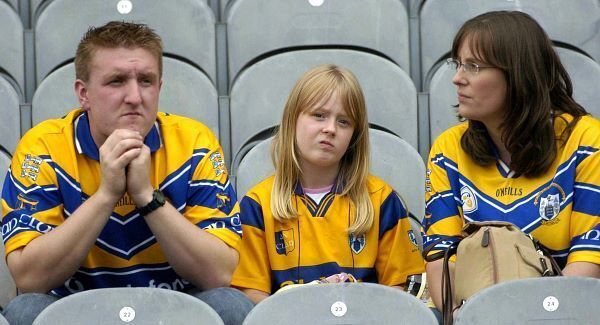
Some of the Clare players who soldiered after the ‘97 All-Ireland final victory recall the ‘famine years’.

How Clare’s in-betweeners held Banner aloft

Between the Munster final of 1998 — the last time Clare won championship silverware at senior level — and tomorrow, the following players have lined out for Clare: Phillip Brennan; Pat Vaughan, James McInerney, Gerry O’Grady; Alan Markham, Conor Plunkett, Gerry Quinn; Brian O’Connell, Daithí O’Connell; Diarmuid McMahon, Tony Carmody, Tony Griffin; Declan O’Rourke, Barry Nugent, Andrew Quinn.

One thing they have in common – none were there in ‘98, none will be there tomorrow.

They are the guys who carried the torch through those barren years, who spanned the generation between the heroes of 1995 and ‘97 and the coming heroes of today.

They are the in-betweeners.

Conor Plunkett was one of the early draftees, came on the team in 2002 when the bulk of those who had already won All-Ireland titles were still on the scene. That year, under the guidance of new manager Cyril Lyons, Clare reached another All-Ireland final but lost to Kilkenny, goals by DJ Carey and Henry Shefflin – the old master and the new – the difference as they went down by seven points, 2-20 to 0-19.

At that stage then, things were still looking good for Clare. “Cyril did a very good job, got us to that All-Ireland final, was very unlucky then against Galway in the Park in 2003 (Cusack Park, Ennis, All-Ireland qualifier).

The GAA fixed that game for a Saturday evening — a day later and Seánie McMahon would have been eligible again, having been sent off against Tipp in Páirc Uí Chaoimh. That was a huge injustice to Clare and to Seánie himself, to miss such a big game in his home ground. Clare lost by only a point and Cyril left after that.”

Next to take charge of Clare was their All-Ireland captain of 1995 and 1997, Anthony Daly. Too soon perhaps but Anthony still did a super job, reckons Plunkett – if anything he left too soon, finished up after three good years. “When Dalo came in there was still great optimism in the camp, a great bond. Just a pity that our first day out, against Waterford, was such a trouncing (3-21 to 1-8), an annihilation – I’ll never forget it anyway! Into the qualifiers, we recovered and made it to the All-Ireland quarter-final and drew with Kilkenny before losing the replay. In 2005 we came close again, lost to Tipperary in Munster but again had a good run in the qualifiers. Then lost by a point against Cork in the semi-final – they went on to win the All-Ireland.”

2006 followed a similar pattern, Clare beaten again in their opening game in Munster but enjoying a four-game winning streak in the qualifiers to reach another All-Ireland semi-final where they were again beaten by the eventual All-Ireland champions, this time Kilkenny. After that Anthony Daly bowed out but he wasn’t alone. “A few of the boys were still there when I came on, the Lohans, Seánie McMahon, Lynch, Jamesie and those, but from about ‘06 on it began to change. Every time you go training you feel you have a chance and that was still there very strongly while the lads were there. When you were losing them year by year though it was becoming tougher and tougher. We had a few players too who finished before their time, the likes of Tony Carmody, Tony Griffin — they were huge losses, when you saw the two of those going. Then you had Gerry Quinn as well – he never had a bad day in the Clare jersey and if he lined out on Sunday he’d still do a job for you. The training under Dalo was very good, a real bond in the team. He was only just finished playing himself when he took on the job and that’s tough, managing fellas with whom you played for so many years, but he took to it straight away. His man-management skills are outstanding, that’s what other managers probably lacked. But he did three years, probably felt his time was up — Dublin have now reaped the benefit of that experience.”

Nevertheless even in 2007, now under Tony Considine, there was still a feeling of optimism, as recounted by new goalkeeper Phillip Brennan. “My first couple of years wasn’t too bad, we still felt competitive, but then in 2009, ‘10 and ‘11 we really fell away, failed to win any game which was very deflating. We were putting in the same effort as any other team, I think we had the same belief but the more the years went on, the more that belief was knocked out of us.”

Oddly enough though, the first of those three bad years, 2009, was also the year the wheel began to turn once more, says Brennan.

“The All-Ireland U21 win, there was new hope again though people were still wary – there have been a lot of false dawns in counties after an All-Ireland U-21 win. No-one was getting carried away just yet, we needed to see them building on that, two or three years of underage success – they’ve done that. There are four or five really special players after coming through now, total belief in themselves but the advantage they have is that there is a full team around them where in other years you had a few marquee players but not the full 15 to back them up. Right through the team now you have great leaders who are great hurlers in their own right. A few years ago it was all about John Conlon up front, now he’s just one of six or seven top-class forwards.”

Almost full circle then – almost. It’s going to take another All-Ireland senior title to complete the cycle. In the meantime, however, credit to those who kept Clare competitive for all those years, “Famine years” as Conor calls them.

More in this section

Cookie Policy Privacy Policy Brand Safety FAQ Help Contact Us Terms and Conditions

© Examiner Echo Group Limited