By any criteria, it has to be Dublin’s day
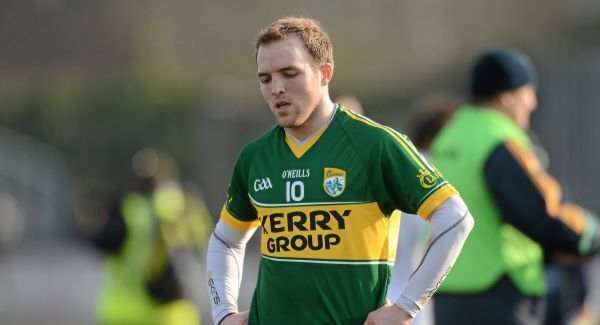
It is easy to get romantic about the history between these two great counties and the potential for a classic semi-final similar to those from the ’70s and ’80s. However, logic and reasoning must come into play — we must justify statements instead of sweeping generalisations and embellishing phrases which relate to teams from yesteryear. Don’t be fooled, neither Kerry nor Dublin are at the height of their powers.
Dublin are rejuvenated and playing with a flair not seen from a Dublin team in years. While Kerry are plodding through the championship a la their stop-start league form. We must trust the form book and therefore there can be only one winner — Dublin. The reasons are as follows:
September 2011 witnessed Kerry throw away an All-Ireland final in bizarre circumstances. Leading comfortably they got casual and started playing ‘keep ball’ in the middle third of the field. The record books painfully illustrate the consequences. Since, only Marc and Tomás Ó Sé remain from that Kerry defence. The additions — Fionn Fitzgerald, Mark Griffin, Shane Enright and Peter Crowley — are individually good footballers but they are of similar stature and lack the physical presence of Aidan O’Mahony and Eoin Brosnan in their prime. Pace alone will not suffice against the Dublin onslaught; you need bulk and power and the means to deploy it.
Dublin, however, boast riches aplenty where new talent is concerned. Jack McCaffrey, Ciarán Kilkenny and Paul Mannion have been a revelation, not just to the Dublin team but the championship in general. McCaffrey and Mannion have blistering pace while Kilkenny provides the brains.
Fionn Fitzgerald will be given the unenviable task of stifling Kilkenny. Problem number one. Corner-backs don’t make good centre half-backs. They are typically fast, aggressive and programmed to function. The No 6 plays it tight when required, reads the game when in danger and, most importantly, stops the channels of attack coming through the middle. Think Kieran McGeeney, Henry Downey or Eamonn Fitzmaurice in his prime. Should Fitzgerald manage to complete his primary role, Kilkenny is smart enough to sacrifice his typical game and leave the space for the onslaught. Job well done Ciarán, will be Jim Gavin’s assessment.
McCaffrey won’t be marked by Donnchadh Walsh or Paul Galvin. Walsh was given a free role against Cork for 30 minutes and caused havoc without scoring. His work rate is easily the highest in the Kerry attack but he lacks what is necessary to temper McCaffrey. They need a player who can get inside your mind, one who is strong enough to hurt you in the tackle and time it perfectly when you’re receiving possession. Plus someone who can score freely when counter-attacking.
Unfortunately Kerry do not have this player.
The old adage goes that forwards win matches, but in Armagh we always said defenders made it easy for forwards to win matches. Nowadays No 5 to No 12 are the most important positions on any field. This is the engine room and platform for most tackling and indeed forward momentum. Dublin do not have the strongest traditional midfield partnership and may play second fiddle to Anthony Maher and Johnny Buckley.
However, Dublin don’t do traditional midfielders. MD MacAuley has a superb engine and attacks directly at goal.
He is ably assisted by Cian O’Sullivan as a holding midfielder, which provides additional support to the Dublin defence. Paul Flynn, Kilkenny and Diarmuid Connolly will track down every ball and convert possessions to scores at a high ratio.
They can all pass and score. Opposing them is the most consistent half-back of his generation — and possibly past generations — Tomás Ó Sé.
But Tomás is not the player he once was. This was epitomised by the display of irrational decision-making and shooting in the Munster final. A display which forced Fitzmaurice to substitute him. Galvin and Johnny Buckley still have lots to offer and can certainly tackle and convert possession to scoring opportunities, but they do this from too far out the field to be effective. Both have concerns over duration of effort and sustainability on the field so may be forced to pace themselves, a luxury they may not be able to afford.
Colm Cooper has enjoyed the freedom at centre half-forward to date but he will not be afforded the courtesy tomorrow. Contrary to some opinion Ger Brennan will be assigned marking duties and he will excel at this. Brennan is small and tenacious. He is strong and welcomes physical aspects of the game. Far from the potential weak link in this Dublin defence, his inclusion and selection to mark Cooper may be the winning of this match. Cooper at centre-forward plays like Cooper in corner-forward. He has a preference for secondary possession, i.e. he prefers to be fed possession rather than win it. Ball in hand, he remains a significant threat and his inclusion in the latter part of the league transformed the season for Kerry. Brennan has the luxury of knowing O’Sullivan will also be in support if needed.
The intensity in the middle third is what Dublin now pride themselves on. Once they deploy some brains to the hard graft a ready platform for success awaits them
Dublin have a defensive system. Let’s not kid ourselves. The speed at which they counter-attack creates the illusion that they play the traditional style, mano-a-mano. Against Meath in the Leinster final, Dublin always had at least one extra defender sweeping back. The support from this came primarily from their midfield partnership and also from Paul Flynn. He has a fascinating ability to operate at a high intensity level for prolonged periods. Jim Gavin has clearly worked on communication amongst his defenders and rarely are they out of shape.
Kerry have placed all their aces in the full-forward line. The strategy will be for Cooper to thread passes into space for the inside forwards to rush on to and carve openings in the Dublin rearguard. This might work if Brennan permits Cooper the space, if Dublin lose their shape and if the Kerry inside line works as a unit to create opportunity. Therein lies another problem for Kerry.
All three inside forwards are individuals. Once Darran O’Sullivan gets ball in hand, he has only one thing on his mind, a score.
But to do so he will take on as many players as are in front of him and repeatedly solo the ball until space runs out or he takes a shot. Although he is a difficult opponent for many defenders, he has been unable to change his style and has become predictable. As stated before, predictability means he can be contained. Declan O’Sullivan likewise. The frustration between Declan O’Sullivan and Colm Cooper was visible for all to see in the quarter-final match against Cavan.
On this particular occasion it was the lack of work rate from O’Sullivan which irked Cooper.
James Donoghue aside (as he is a relative newcomer), the remaining forwards have been unable to work out how to beat organised defensive systems deployed in recent years by many teams, including Tyrone, Armagh and Donegal.
There is nothing to suggest the cohesion amongst players is there to overcome Dublin.

CONNECT WITH US TODAY



Be the first to know the latest news and updates