Study to address GAA’s cruciate ‘curse’
An eight-week pilot study of freshers (first year) footballers and hurlers in UCD will see a proportion of the players use a 15-minute GAA-specific prehab routine devised by the Association’s medical research sub-committee aimed at reducing such knee injuries.
The research will compare and contrast half the players who perform the programme instead of their regular warm-up exercises against the other half who will carry out their usual pre-training routine.
The programme is a Gaelic games-specific adaptation of one used in women’s soccer in the US which was found to have help reduce cruciate damage by 80%.
“The group has worked over the last six months in putting together a 15-minute GAA-specific prehab programme,” explained sub-committee chairman Dr Pat Duggan. “This programme was put together using international best practice in other sports but substantially modified for the purpose of Gaelic games.”
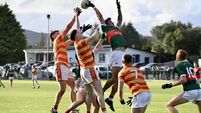
The routine revolves around the theory that in Gaelic football and hurling the player is landing on one leg and attempting to turn it at the same time.
The sub-committee, a branch of the medical, scientific and welfare committee, comprises Duggan, Dr Pat O’Neill, physio John Murphy, Professor Niall Moyna (DCU), Dr Catherine Blake (UCD) and Dr Kieran Moran (DCU). Duggan also highlighted the importance of making the routine as enjoyable as possible.
“In the prehab programme, we have been very cognisant of the demands of Gaelic football and hurling. It has to be manager and player-friendly. It’s important we have the input of people involved in the game. The GPA’s Dessie Farrell, who is on the medical, scientific and welfare committee and is also the Dublin minor football manager, is very supportive.”
Providing the research delivers compelling results, further study could be done on senior club teams next year before possibly unveiling a protocol for all players.
Cruciate injuries, described by Limerick footballer John Galvin, who fell foul to one this year, as “the curse of the GAA”, have dogged the inter-county scene this year.
Kildare and Derry’s footballers were worst hit with both Bradley brothers, Paddy and Eoin, sidelined by the setback for this year’s Ulster finalists.
However, Duggan stresses the full extent of cruciate injuries is not being realised by players or their teams right now but will be by the players later in their lives.
“What has to be underlined about cruciate injuries is that they age the knee by 20 years. A player may be back after missing a season but this is a long-term quality of life issue.
“The arthritis will mean a knee replacement for most of these players in their 40s. The long-term implications of these injuries are that scary.”
CONNECT WITH US TODAY



Be the first to know the latest news and updates