Greener pastures on horizon
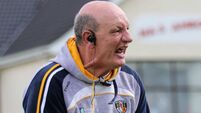
For the 2009 Limerick hurlers’ lengthy stand-off with their county board, read the Cork hurlers’ brief strike in late 2002. Donal O’Grady was the coach the Cork County Board turned to back then, and now he’s in charge of Limerick.
When you meet O’Grady for a coffee before he heads to training on Shannonside you say that at this rate he’ll get a reputation.
“As a Red Adair? Or a green Adair?” laughs O’Grady. “Look, I’m coming in to work away, and we’re trying to make a little progress. I don’t look back, really, only to make a few changes here and there to improve things. The manager’s job is to improve things as best they can.”
He stepped down after Cork’s All-Ireland success in 2004. Is it enjoyable to be back on the merry-go-round?
“It’s something I always liked doing. I don’t know if ‘enjoyable’ would be too strong a word, but if you’re with a group that is enthusiastic and trying hard, which the lads are, it’s good. And everyone in Limerick has been very supportive. I don’t think there are any negatives. It’s enjoyable enough, but as you know, enjoyment comes from results.”
Tomorrow’s result is crucial in that regard. There’s a school of thought which holds that the league clash with Clare may be one of the most significant Limerick games all year, as many see it as a dress rehearsal for the Division 2 league decider.
“Teams in Division Two aren’t usually trying to avoid relegation,” says O’Grady. “That was usually the case in Division One, where teams would think ‘win our home games and we won’t get relegated anyway’.
“Division Two teams are different; they’re all trying to get promoted and at most they can afford to drop two points if they want to get to Division One.
“That’s the challenge. Clare were in the Division Two league final last year and lost to Wexford but they have that experience to draw from, as well as two or three years of very good underage teams. With a pundit’s hat on you’d say they’re hot favourites to make the final. They were good against Cork recently in a challenge, and if you look at the quotes from their manager, Ger O’Loughlin, he’s been saying that he feels the Clare team is coming together nicely. I’m a big fan of players like John Conlon, and any team playing Clare will find them a tough proposition.
“That’s our first game — away — and it’s against possibly the best team in it. Our last game is against Antrim, who were very impressive last year, beating Dublin and performing creditably against Cork.”
His opinions on the game haven’t changed much since his time with Cork.
“My view was always that there are two crucial times in a game, when you have the ball and when you don’t.
“You can break any game into those two periods: you work as hard as you can when you don’t have it, then use it properly when you do. A coach’s challenge is to introduce his ideas. There may have been a different culture to what he’s introducing, or the preceding coaches may have had different ideas. But that’s true of all sports. You see that happening all the time in the Premiership. It’s no huge secret.”
The training ban wasn’t a help as O’Grady tried to introduce his particular culture to Limerick.
“We had a few trials in October, there were about 80 players to be seen and we wanted to give everyone a fair crack.
“There was a group involved last year, a group involved in 2009 and a third group involved in neither year that people felt we should look at. To be fair, there doesn’t seem to be any animosity between lads, but that process was time-consuming. The training ban was another issue. When players are out for a year the fitness levels are down and Limerick had lost that edge, as most of the panel would be made up of the 2009 players.
“I was at a meeting recently in Dublin where Christy Cooney said the training ban didn’t necessarily have to be in December, which I thought was common sense. I wouldn’t mind if it was for three months if it started as soon as you’re out of the championship; even if you make it to the All-Ireland final you won’t really train until the following January anyway, and if a team goes out of the championship in July you could stop them doing collective training until October or so. We withdrew from the Waterford Crystal because we felt our fitness levels wouldn’t be up to scratch, and we may find the same during the League, but we’re working on that.”
“Training has changed, anyway. It’s no longer running up mountains and cross-country runs. It is far more scientific now, you can’t train teams too long because they get fed up of you. And you get fed up of them.”
The talk drifts on. O’Grady doesn’t have a hard-and-fast policy on dual players (“We’ll see how it evolves”) while he’s left the door open for veterans Ollie Moran and Mark Foley. He’s definite about his one-year term (‘Absolutely’) and realistic about Limerick’s prospects.
“Success can be measured in different ways – for me success would be, say, a player who’d been doing things in a way that wasn’t producing results for the team — and if you managed to change his play to add value, using the corporate term, to the team’s performance. To me that’s success.
“I’d never get hung up on results. The performance is the thing – you’re in a situation here where you haven’t played, really, in a year, and you’re coming from a low base.
“You play a challenge game and you do well, then you’re hammered in the next one, so you’re not sure what level you’re at. We won’t know where we’re at quality- or fitness-wise until tomorrow, really.
“So success is going to be reaching a position at the end of the season where you feel you’ve put together structures which will work, standards which will be adhered to. That would be success. You can only go where your performance takes you; to the people on the terrace it’s about results, but for me it’s about improving the team’s performance.”