Lessons from the League

Donal O’Grady picks over the bones of the Allianz Hurling League for summer indicators

Lessons from the League

1 THE League is never the main priority for any team. Every year at the competition launch the questions put to the various managers turn to their championship prospects. Of the teams in Division One — and leaving Limerick aside — only Offaly and Dublin would have loved to be involved in next month’s final.

Brian Cody’s demeanour on the sidelines this season told us all we needed to know about Kilkenny. It was obvious that his side would compete but would not go not flat out in search of results.


It suited Kilkenny not to make the final as Cody knows that the media spotlight will be shining brightly on them all summer as they pursue the five-in-a-row. He’ll point to their failed league campaign as evidence of where they are hurling-wise in an attempt to divert favouritism onto the other contenders.

Waterford made their intentions known early on by resting their more seasoned campaigners; Galway, Tipp and Cork set out to win their games if possible but the main priority is building a team for the championship.

Why else would Tipp withdraw Paul Kelly, who had just shot 1-2, and Cork ensure that Aisake Ó hAilpín spent little time at full forward in the recent league game between the counties?

2 THE league shows that Kilkenny, Galway, Tipperary, Cork and Waterford are the five teams in contention for All-Ireland glory, with the Cats as favourites.

Question marks remain about the other contenders: Galway are still looking for a forceful balance, though the league form of Aidan Harte, Iarlaith Tannian and the returning David Collins are plus points.

The fighting qualities displayed against Kilkenny are also positive but the jury won’t deliver a verdict until later in the summer.

Waterford’s defence remains suspect while Tipp’s Liam Sheedy is seeking a partner for Shane McGrath at midfield and another effective attacker after Paul Kelly’s unfortunate injury in a club game last weekend.

Cork have shown impressive fitness and a settled defence.

John Gardiner’s display against Kilkenny and his subsequent below-par display at midfield against Waterford settles the half back /midfield debate.

Full back Eoin Cadogan’s leg injury is unfortunate for himself and Cork — and he may have to revisit his decision to play both codes. Cadogan is a player with presence and no readymade replacement is available to Denis Walsh.

Aisake Ó hAilpín has won the battle for the 14 jersey but Cork’s main requirements centre on their half forward line.

3 THE compulsory helmet rule is now law. Players who hadn’t worn helmets previously have accepted its introduction, with some goalkeepers admitting it hasn’t impacted as negatively as they first feared.

The League can’t compare in terms of pace and intensity to the championship so it will be interesting to see if this opinion prevails when the ball flies at full pace unimpeded vision is a necessity for netminders.

On the plus side head injuries may have been prevented, while on the minus side recognising iconic players like Cork’s Sean Óg Ó hAilpín and Waterford’s John Mullane is a lot more difficult.

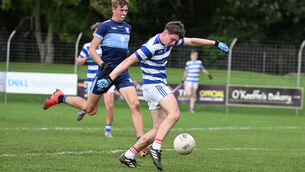
Player recognition builds a connection with young fans and inspires them to play the game to emulate their role models and heroes, but looking through the photos of the last round of league action on these pages only referee Barry Kelly is recognisable.

Hurlers move towards anonymity while rugby players and gaelic footballers remain highly visible. Enough said. Match programmes, and county websites should carry player photos and squad numbers, as hurling requires all the recognition and marketing help it can.

4 ‘SECOND season syndrome’ is a term often used is sports. Seldom is the term used in hurling circles but it can certainly be applied to Dublin’s performance in this campaign. 2009 saw them make significant progress from 2008 as they operated under Anthony Daly for the first time. They had a very good season in league and championship; they reached the Leinster final and acquitted themselves well against Kilkenny. They now find themselves hosting Limerick tomorrow with the loser dropping to Division Two.

For Dublin the struggle to improve on last season’s progress is a massive challenge. Daly did a great job last season. His team were much fitter than before and employed good tactical awareness, but judging on their league displays it will take the men from the capital a little longer to reach the next level and really challenge the big boys.

Self-belief made a difference between Dublin 2008 and 2009. That self belief will be severely tested in the weeks and months ahead.

5 THIS league action showed, once more, the inconsistent application of the playing rules. I saw various examples of hurleys coming into contact with opponents: a full strike across a Galway forward during their Kilkenny game resulted in a free but no card.

A Cork forward in the Tipp game could have got red but got yellow, having sunk his hurley into the abdominal area of a defender. In other ‘physical group encounters’ a thump or two (one could hardly call the contact ‘striking’) was dished out and returned. At times there was no card at all. Sometimes it was a yellow where it might have been red and sometimes a red where it might have been yellow.

Referees and advisors meet together regularly, and surely consistent application could be achieved. This type of offence is not really defined in the rule book. It should be and it would make life a little easier for the ref.

And while I’s at it...

What would be so wrong with Bank Holiday Monday, May 3, for the NHL finals?

x

More in this section

Cookie Policy Privacy Policy Brand Safety FAQ Help Contact Us Terms and Conditions

© Examiner Echo Group Limited