Amnesty out of the question in helmet issue
The association yesterday refused to entertain talk of an amnesty for veteran players on mandatory helmet use from January 1.
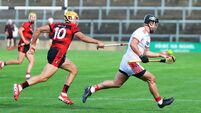
Following on from the decision to make helmets mandatory, firstly, at minor and then U21 levels, protective headgear will now have to be worn by seniors too from the new year.
The new rule will come as a shock to the likes of Cork duo Séan Óg O hAilpín and Donal Óg Cusack who don’t wear helmets, while Waterford’s Ken McGrath will find it a big change too.
The trio all play in defence and GAA medical welfare committee chairman Dr Danny Mulvihill accepted it’s more difficult for them as helmets can inhibit vision of high balls in.
Intriguingly, the long-serving Kildare team doctor didn’t rule out specialist helmets and faceguards for defenders and goalkeepers being introduced.
But as regards the suggestion of an amnesty for such players or for veteran hurlers who simply never wore helmets before this was ruled out entirely.
If an amnesty was brought in Mulvihill noted pointedly “they might finish their careers in their next game (through injury)”.
Fellow committee member Dr Cliff Beirne, a consultant oral and maxillofacial surgeon, explained that a hard-line approach to making the game safer is the only way.
“There will always be issues and reaction to this, there always is with new legislation but in fairness to the GAA the only way that they can bring this forward is to adopt, basically, a zero tolerance attitude,” said Beirne.
GAA director general Paraic Duffy backed the new rule and insisted “there is no turning back on this”.
The argument for mandatory safety helmet use is backed by shocking data collected by the GAA on injuries sustained by hurlers.
In the 12 months before safety helmets were made mandatory for minors, in 2005, 11 serious eye injuries were officially recorded compared to just two in the 12 months after.
The injuries can be gruesome with pictures of disfigured facial features as a result of hurling injuries presented at yesterday’s press briefing.
Over the last eight years a total of 310 players, from clubs and counties nationwide, made insurance claims against serious eye injuries sustained in hurling, 52 were hospitalised and six were permanently blinded.
“When you see the reduction of injuries since 2005 I don’t think there’s any argument that this should be done,” said Dr Mulvihill. “I mean, what’s the price of one injury or one blind eye?”
In practice, referees will scan the field before each game next season to ensure all 30 players have protective headgear that meets safety standards.
“Match officials at all levels will be obliged to stop play if any player is on the field of play without the standard of equipment outlined,” noted Dr Mulvihill. “Likewise, any player who throws off the helmet during the game, the referee will stop it too.”
Safety helmets will be mandatory in training too, though the committee members accepted this may be difficult to police. It also remains to be seen what referees will do if a player attempts to play with a helmet that doesn’t meet the safety standard.
For example, some players like to alter their faceguards or parts of their helmet for better fitting and vision.
“There may be difficulties and it may be difficult for some but we have signalled this change from a long way back and nobody can say they weren’t given adequate notice of it,” said Duffy.

CONNECT WITH US TODAY



Be the first to know the latest news and updates