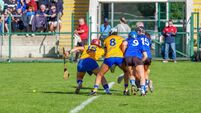
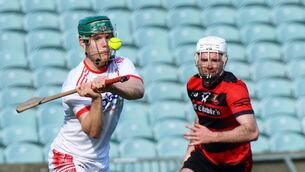
Leading Question: Is the relative inexperience of the Tipperary players a help or a hindrance?
In 2007 Limerick had a survivor in Mark Foley from their mid-nineties trips to September; last year the Waterford players who’d lined out in an All-Ireland final were Tony Browne and Paul Flynn, who had played in the U21 decider in 1992, with Flynn also playing in that season’s minor final.
Tipperary have a terrifically young team, with 11 panellists Under-21 and one teenage starter, Noel McGrath, only a few days away from this season’s minor grade.
By contrast, some of the Kilkenny players have appeared in so many finals that they must have personalised parking spaces in Jones Road.
However, the parallels between Tipperary this year and Waterford in 2008 and Limerick ‘07 only go so far.
Tipperary have survivors from their 2001 All-Ireland win in their ranks, and the location of men who have played in and won a senior All-Ireland final on the field of play may be a help in the inferno tomorrow.
Brendan Cummins in goal should be an asset to the newcomers, Pádraic Maher and Paddy Stapleton in the full-back line, while Eoin Kelly and Lar Corbett may be able to keep an eye on star forward McGrath at the far end of the stadium.
They’ll need the help acclimatising. In a casual conversation some weeks ago, a Waterford hurler made the point that there’s a bit of a difference between the atmosphere generated by a three-quarters full Croke Park and the same stadium filled to capacity: over 20,000 larynxes of a difference, to be precise.
The Waterford man acknowledged that he and his team-mates weren’t prepared for the volume of noise, adding that nothing could really prepare a player for that apart from experience.
In that Kilkenny have a clear advantage, but Tipperary have the fearlessness of youth, which is more than a cliché.
When Wexford made it to the All-Ireland final of 1996 with a team of seasoned players, manager Liam Griffin hit upon the brainwave of showing the squad the Mel Gibson movie ‘Braveheart’ on the way to games, though he was careful to end the show before the grisly climax, in which Gibson is hung, drawn and quartered.
Tipp’s on-field freedom has been mirrored in their choice of pre-game viewing, which has included comedy DVDs such as The Hangover. At least none of their players are likely to ring up their manager after the season ends with the immortal words, “He gets killed in the end,” as happened in Wexford.
One of the great GAA proverbs when it comes to senior All-Irelands is that you have to lose one to win one.
When Tipperary came through for their last All-Ireland final they’d built slowly and incrementally under manager Nicky English, learning from narrow Munster semi-final and final defeats in 1999 and 2000 respectively before breaking through in 2001.
This team has advanced in stages as well. Last year’s Munster final win was put together with the lessons absorbed from the narrow defeat to a more seasoned Waterford at the All-Ireland semi-final stage, and in this season’s semi-final they crushed Limerick when they got a scent of blood.
If you were to combine the lose-one-to-win-one school of thought with the incremental building philosophy, Tipp should really lose on Sunday in order to build a dynasty for the next few seasons.
Kilkenny’s millennial success was rooted in two All-Ireland final defeats after all, in 1998 and 1999; even their most optimistic supporter would hardly have been expecting the latter-day reign of black and amber presaged by the 2000 All-Ireland final win.
Will the occasion get to Tipp? It hardly matters. With 11 panellists under 21, the future belongs to Knocknagow.

CONNECT WITH US TODAY



Be the first to know the latest news and updates