GAA on the up in land Down Under

GERARD ROE is one of the few who can unearth the positives from Ireland’s economic doom and gloom.

GAA on the up in land Down Under

Roe, the secretary of the ‘Gaelic Football & Hurling Association of Australasia’ since 1984, believes the slowdown on these shores will result in an exodus to the southern hemisphere.

More Irish means more hurlers and footballers to join one of the GAA’s fastest developing playing regions in the world — and more work for him.

Belfast-born Roe remembers how significant numbers of young people employed here returned home when the Celtic Tiger took off about twelve years ago. Now he expects to see a reverse of that trend.

“We had so many of them here at the time, but about half of them went back. Australia is in a better position to beat this global recession and we’re expecting an exodus from Ireland,’’ he said.

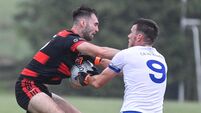
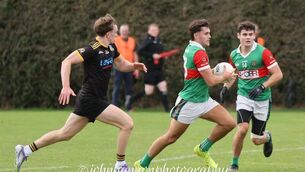
Gaelic football is increasing in popularity Down Under, attracting growing numbers of Australians and players of other nationalities. Notably the New South Wales selection which met the Irish team in an exhibition game here on Sunday included six Australians.

Hurling, understandably, does not enjoy the same level of support, but it is promoted actively by some clubs, while camogie and ladies football (especially) are quite popular also.

The five mainland Australian states, in addition to Auckland in New Zealand have their own committee set-up and organise their own competitions.

They are governed by the Australasian Board (made up of a President, Secretary and Treasurer), which provides ancillary facilities and practical help. They also organise the Australasian Games – which are held every year.

63 clubs are affiliated to the Board which has ‘county’ status and sends a representative to Congress every year.

“If you go back to 2000, we had roughly 900 people playing Gaelic games and now it’s up to 2,800. Apart from Adelaide, Perth, Melbourne, Sydney and Brisbane, we’re into Wellington as well as Auckland.

“And, now we are starting to fire up in Hobart in Tasmania as well as Dunedin and Christchurch in New Zealand.”

He admitted: “Hobart will be the final jewel in the crown. They are the last Australian state to come on board. We helped them over the last two years to develop and next year they will become affiliated.”

“There are some good people down there — Australian and Irish — and we help them out by paying for their goalposts and nets, footballs and coaching material and things like that.

“Later in the month we have teams going down from New South Wales and Victoria to play exhibition games. They have been successful in getting three TV stations on board and there have been stories in the newspapers. It’s all new to them.

“I’d say that about 25% of the population would be Irish or Irish descent. But, I think you will find it will be a bit like the Adelaides and Perths of the world — 80% of the players would be Australians and 20% Irish.

“That is where the future of the games is down here. You have to go to the locals.’’

The promotion of the games, according to Roe, is driven by the Australians. A survey this year revealed that 80% of the people playing in Perth are non-Irish, the figure is 99% in Adelaide, 50% in Melbourne 50%, only 20% in Sydney and 70% in both Queensland and New Zealand.

WHAT THE ‘non-Irish’ find attractive about the game is that it’s a less physical sport. And encouraged by Roe and his fellow officers, units are starting to move away from winter football and attracting players from other codes (Aussie Rules. Rugby league and Soccer) who want to stay fit during their off season. Roe revealed they will be approaching the Department of Foreign Affairs and Croke Park about funding for a Development Officer to help develop GAA in south-eastern Australia.

“That person would look after Adelaide and Melbourne and some of Tasmania as well. It could possibly be the first step towards getting development officers within the community in each of the states in Australia and New Zealand.’’

Coaches have to be accredited with the Australian Sports Commission, requiring the Board to develop a course which meets their requirements. All coaches have to put in 30 hours coaching before they can be considered for accreditation and once approved they have access to the schools.

“We’re talking about schools in general. They’ll be dealing with every child whether they are Irish, Australian, Lebanese, Croatian or whatever nationality they are. They are just going into the Australian schools full stop!’’

Interestingly, he pointed out that the International Rules Series does, indirectly’ contribute to their promotional work.

“When people see the game they say they want to play it and they come to us. We tell them we play the ‘pure Gaelic’ and we say to them, ‘if you love the International Rules, you’ll love the proper Gaelic even more. Definitely, the tour has a positive spin-off.

“We have got this blend of Irishness and the blend of the local people. But, at the end of the day it’s still an Irish game. They know it and they are happy playing it!’’

x

More in this section

Cookie Policy Privacy Policy Brand Safety FAQ Help Contact Us Terms and Conditions

© Examiner Echo Group Limited