Gaelic girls could swing it for Aussies
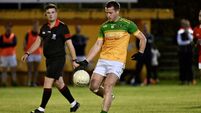
Puzzling, right? Yet her situation is no way unique. Six of the squad that will play the first test against Ireland at Breffni Park this afternoon (TG4, 4pm) are here because of their prowess at the “Gah” and not the “footy”.
Joanne Butland spent four years between the posts for the “Matildas”, the Australian national women’s soccer side. Her Victoria colleague, Kathy Zacharopoulos, ran out for the girls’ youth side.
Another Victorian, Belinda Blay, represented Australia at a World Junior Athletics Championships. Michelle Dench is a former ABA basketballer. Sarah Hammond played Olympic handball for her country and Daisy Pearce was a member of the youth volleyball team.
Prowess with the round ball should be no problem then but the GAA girls are still the Trojan horses the tourists hope will bring about the defeat of Jarlath Burns’ team in Cavan and again Saturday in Parnell Park.
“Obviously the rules of the international game favour Gaelic without the tackle,” Campbell explains. “The AFL girls have probably had to adapt the most and they’ve looked to the Gaelic girls quite a lot with how to cope with the tackle, among other things.
“Hopefully fitness will favour us. Carrying the ball — it’s a possession game and our handball backgrounds will be an important factor for a lot of us. That’s probably the best way we can retain possession — through the handpass because it’s a big shift from kicking a round and an oval ball.”
With this being the first international series for both female codes, there are no DVDs, no text books and no past exponents of the art that can be called on for some first-hand advice.
With so many players approaching the hybrid game from such different backgrounds, the last week spent together here in Ireland will have been crucial to the Australians’ ability to read off the one page.
Campbell counters with a moot point. The GAA girls may be playing a foreign game down under, but their particular brand of Gaelic football has inevitably been coloured by the native influence.
“Probably because the AFL is such a big game in Australia, maybe some of that influence has rubbed off on the Gaelic game there,” she pointed out. “So, the way that we play Gaelic is quite similar (to AFL) in some respects. In terms of there being a disparity, we probably come together quite well.”
Strongest in Victoria and Queensland, women’s AFL is rising in popularity but it still has some way to go to match the Irish game’s recent successes.
The latest figures estimate approximately 40,000 women play AFL in Australia which, while encouraging, lags far behind the numbers for ladies’ football in Ireland, where the population is significantly smaller.
Campbell never got around to kicking an oval ball but soccer, netball and basketball have all held her interest at one time or another. The big question is: how did a Aussie with no obvious Irish heritage discover Gaelic football?
“It’s kind of through who you know. People will say ‘come and have a look at this’. I got into it after playing other sports like netball and soccer.”
Campbell’s club is Greenwood in Perth, Western Australia and her late conversion to the Irish sport has been no hindrance to success. She has already been to Ireland three times as part of the Australasian team that competes in the International Cup in Portmarnock every few years.
“The sport has actually been around probably 25 to 30 years in Australia. It may be longer, I can only talk about my own club. It’s been around but it’s probably not growing as much as it could. Funding is always an issue.”

CONNECT WITH US TODAY



Be the first to know the latest news and updates