International Rules: now there’s a real game
I lived here for a year in the mid-1990s but the rugby scene revolves around Donnybrook and Lansdowne, the heartbeat of the worst excesses of Dublin 4. Unfortunately, I rarely had occasion to cross the river into what strikes me as a more genuine part of the city.
“Bleedin traffic, ‘tis terrible wha’?” said the taxi driver. I nodded my assent and tssked sympathetically.
“And the bleedin weather,” he continued, “look at it, spitting down again.” “Well,” I ventured, “it was lovely in Cork this morning.” “Ah,” he said knowledgeably, “the sunny south-east wha?”
It has been my general experience that Dublin people have little knowledge of, or concern for, happenings beyond the Pale. The Dubs are proud of their place at the centre of things and live happily in their self-contained world with little regard for outside influence. A bit like the GAA.
The occasion was my first visit to Croke Park, that citadel of Irish sport and long-time object of desire for the Irish rugby and soccer fraternities.
It would have been entirely acceptable to have come here over the years as a Cork supporter but, not being a GAA man, it would also have felt a bit bandwagony. However, I had finally decided to break my Croker duck due to a recently-conceived fascination with the sport of International Rules football.
Last year, while in Australia for the Rugby World Cup, I happened to watch the second test between the Aussies and Irish in Melbourne and found it a thrilling spectacle, with the key components of skill, speed and aggression amply catered for.
Before I go on, I accept these are the views of a rugby man who has never carried a camán or passed a peil, and one who never got to grips with the life of Peig Sayers and her strange relationship with Cáit Jim. With that on the record, I have to say I would not cross the road to watch Gaelic football.
The Munster Final this year between Kerry and Limerick was a perfect example of all that is wrong with the sport. There were more than 70 frees that day. It was an afternoon of pulling, dragging, diving and slapping. A disgrace.
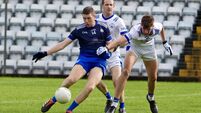
International Rules is how Gaelic football should be played. Granted, last Sunday was not as exciting as the match in Melbourne due to the lopsided nature of the contest, but it was still compelling viewing.
The game really flowed with only an occasional tweet from the referee’s whistle, compared to the dawn chorus that we hear at Gaelic football matches. How refreshing it was to see a player wrestled to the ground and play carrying on.
The Irish players seem to have mastered the art of the tackle and, in this game, if a player runs at them they have a legitimate course of action to follow and do not have to resort to football’s normal slap-happy messiness.
Gaelic football will never be a good spectacle until the tackle issue is addressed. Traditionalists argue that the tackle in football is fine, it is just not implemented or refereed correctly. I disagree. It is incredibly frustrating for defenders to be faced by a man charging towards them, ball tucked under his arm, knowing they cannot bring him down legally.
It is this frustration that leads powerful, fit young men into the numerous scraps and melees that decorate Gaelic football and one wonders if an International Rules-style tackle had been in place, would Down’s James McCartan now be in court in relation to a broken jaw incident.
The drawback to this hybrid sport was the mark, which carried potential for slowing up the game. It was not a problem last Sunday. The referee gave the player catching the ball the option of taking the mark or carrying on, and he generally carried on.
Introducing the mark would solve football’s problem with high-fielding from kick-outs, where it is often a better option to deflect the ball as catching it invariably leads to a free for the opposition.
Watch a video of the Munster final, or any of Tyrone’s games from last season, and compare it the fare on display tomorrow. The evidence for change is staring the GAA in the face.
“It was our intention to try and play the game as similar to Gaelic football as we could,” said Ireland manager Pete McGrath after last Sunday’s victory. Substitute the word could for should and you would have a sport worth talking about.
And the ground itself? Well, I didn’t think Croke Park was as impressive as Cardiff’s Millennium Stadium, but we’d take it.
CONNECT WITH US TODAY



Be the first to know the latest news and updates