Farewell to braveheart Jerry Murray, a true giant of Munster rugby

The thing that resonates with me most about O’Connell is not the amazing consistency and continual standards of excellence he displays at the very top level but his grounded nature and the close association he still maintains with the grassroots of the game in the province.
It is well over a decade since O’Connell lined out with any degree of regularity for Young Munster but he has never forgotten the role the club played in his early development, and how it helped shape the characteristics that forge his, at times, old stage approach to all matters rugby.
He is one of the last of a dying breed to sample the remnants of the amateur game and recognise that characteristics common to that time such as loyalty, honesty, pride in the jersey and the history of the club you represent, remain as important as ever.
While I have no hankering for living in the past and have watched our game go through a metamorphosis over the last 20 years, there are elements unique to rugby in Munster and specific reasons why we, as a collective, could rise against the might of New Zealand or Australia but struggle to beat Leinster, Ulster and at times Connacht.
In an era where so many of our young professionals are shaped and nurtured by provincial academies, it is not a case of one size fits all. The vast majority of the academy programme sits well with me.
In terms of strength and conditioning, nutrition, mental and unit skill sets, individual game analysis and understanding of the principals of rugby, all of our provincial academies deliver in spades.
The problem for me is that players are not exposed to enough competitive rugby in the key years after they finish school. In Munster especially, players need to be performing for their clubs in the top divisions of the All-Ireland league every week.
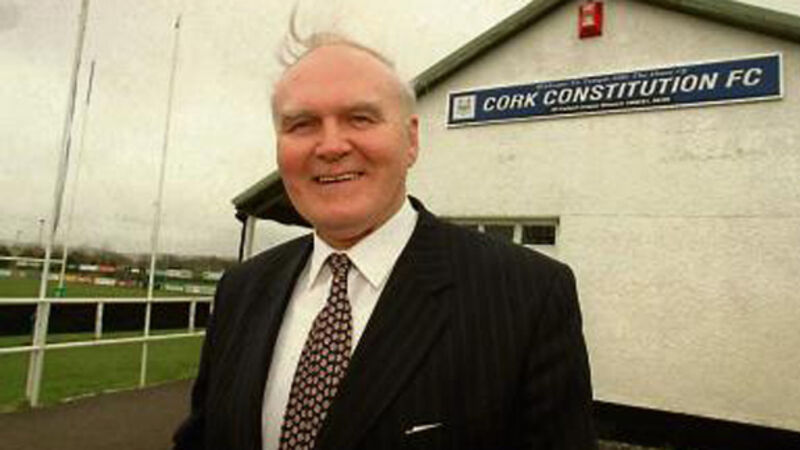
Cork Constitution lost an iconic figure last week with the passing of Jerry Murray. When club rugby really mattered in this province, Murray was one of its kingpins.
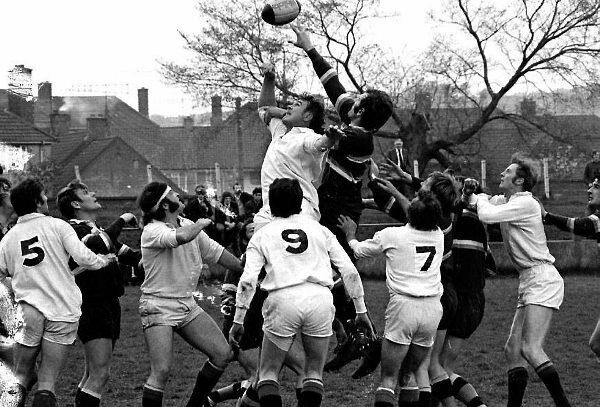
When a Munster Senior Cup medal was seen as a badge of honour, Murray bagged seven, along with an incredible haul of nine consecutive Munster Senior league medals between 1964 and 1972. He won 13 in total, his last in 1979.
He also enjoyed a great career in the second row for Munster. On the first Munster side to beat southern hemisphere opposition, when Australia were defeated in Musgrave Park in 1967, he also went within a whisker of beating New Zealand when the All Blacks escaped with a 6-3 victory in Thomond Park in 1963.
He was often labelled as one of those best ever forwards never to win an Irish cap. The presence of Willie John McBride was one of the chief reasons for that.
Murray is unique in the history of Munster Cup rugby in that he adorned that once great tournament for four decades playing for Con straight out of school in 1959 and he was still going strong in 1980.
I know, because I marked him. Well thinking about it, I should say, he marked me. I had the bruises to prove it.
I learned more the first time I played against him than you would in six months in an academy. I wasn’t born when he made his Munster Cup debut and the first time we clashed in a Munster Cup match, I was 19. He was twice my age.
He had a reputation as an uncompromising barrel of strength and athleticism, even if the latter quality had begun to wane at that stage.
I remember the early clashes well. Playing for UCC, I had been advised to take no crap from the seasoned veteran in the Con second row. The early lineout exchanges were characterised by plenty of sharp elbow work.
I stood my ground to the extent that he turned at one stage and said “okay young fellow, this can go one of two ways”.
Great! There were no academies when I was attempting to make the breakthrough to the Munster team from a student base but when you faced a Shannon pack with the likes of Brendan Foley, Colm Tucker and Gerry McLoughlin on board, a Garryowen unit with Pat Whelan, Eddie Molloy, Shay Deering and Billy Cronin or any collection of Young Munster forwards in Greenfields, you tended to learn quickly.
Murray was the powerhouse in the Con pack that saw them dominate against the very best Limerick rugby could throw at them throughout the 1960s and 70s.
He was Constitution to his toenails and became an unrelenting and passionate force in so many of the management teams in the club in my time at Temple Hill.
I smile when I hear of the, no-nonsense, video review sessions conducted by Joe Schmidt on a Monday morning after a big game. Murray didn’t need a video and didn’t waste any time in delivering his post-match verdict.
It was full-on in the dressing room. Old school yes, but it had the desired effect. We didn’t lose too often when he was involved.
In my early days with Munster and Ireland, Moss Keane would entertain me with many a story about his time coming up against Murray when he was learning the game at UCC after making the transition from Gaelic football.
So quick was his progression after the lifting of “The Ban” in 1971 that he lined out for Munster against New Zealand in 1973 and 1974 and made his Irish debut in the same year. He always said his most difficult opponent throughout that transitional period was Murray.
With all the modern aids and assistance available to the prospective professional rugby player working hard in the provincial academy set up and striving to make the breakthrough, I still believe that a lack of regular game time against a more experienced opponent stalls their progress.
My development as a player was forged on the club grounds in Munster, pitched against the best in class of their time, many of whom may well have featured for Munster or Ireland in the previous week.
I was thrown in at the deep end by UCC into a Munster Cup semi-final against Garryowen in Thomond Park at 18 years of age and had to learn how to survive. As a consequence I was ready when the call came to play for Munster at 21.
Murray was past his best when I first locked horns with him but that didn’t matter one bit. You still learned. I was fortunate to have him in close proximity in a club that meant everything to him. He was typical of the type of player and person that make Munster rugby that bit different.
O’Connell is special but so too, in his own unique way, was Murray. Munster rugby has lost one of its favourite sons.
My sincere condolences extend to his devoted wife Lulu, his daughters Ann Louise and Jean and his sons Niall and Jerry, both of whom followed in the proud tradition of their father, playing on many a successful club side over the years. He was so proud of their achievements in Con colours.
He will be missed, especially on the sidelines of Temple Hill.