Business of Sport: The reality is that Russia remains one of the most powerful forces in European football
Uefa’s refusal to give Russia the red card
Business of Sport: The reality is that Russia remains one of the most powerful forces in European football

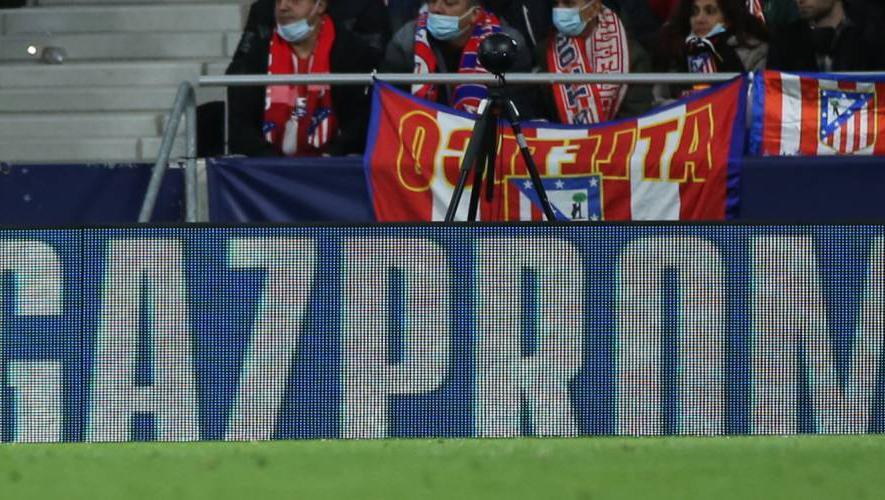
Advertisement of the Russian state-owned gas company Gazprom displayed on an advertising during the UEFA Champions League round of sixteen first leg match at Wanda Metropolitano, Madrid. Picture date: Wednesday February 23, 2022. See PA story SOCCER Man Utd. Photo credit should read: Isabel Infantes/PA Wire. RESTRICTIONS: Use subject to restrictions. Editorial use only, no commercial use without prior consent from rights holder.

BY terminating one of the largest sponsorships in European sport, stripping the Champions League final from St Petersburg, and throwing Russian teams out of European competition, you might expect that Uefa has washed itself of Russia.

On the contrary. 

The reality is that Russia remains one of the most powerful forces in European football, with Moscow-backed operatives at the centre of power across 17 of Uefa’s 19 ruling committees and panels.

That influence runs from Uefa’s supreme leadership board, or executive committee (ExCo) — where the supposedly terminated Gazprom remains a force — right across the panels which rule over all European (and Ukrainian) football.

In fact, Russians and Belarussians combined hold more influence that any other of Uefa’s 53 other national association members, making their ongoing presence and influence a most intolerable situation, which Uefa continues to endorse.

In response to questions from The Pitch about the ongoing presence of Russian Football Union (RFU) president and Gazprom CEO and chairman Aleksandr Dyukov, Uefa was trenchant.

“The decision taken by the Uefa executive committee on February 28, 2022, to suspend Russian clubs and national teams does not affect Russian officials in the Uefa executive committee and Uefa committees or panels,” Uefa said in a statement.

Having spent up to four years working for Uefa, this trenchant stance stems from the paranoid loyalty that the organisation has for a large and wealthy member.

What’s almost as incredible is the lack of concern across the UK and Ireland Euro 2028 bidding partnership team.

All ‘home nations’ FAs were contacted by The Pitch about the ongoing presence of Dyukov and ongoing Russian influence across Uefa, and asked whether each one supported Uefa’s “determination” to hold onto Russian powerbrokers.

The English FA said the issue was not its concern and was a Uefa matter — a disingenuous position at best — adding that the FA is a central executive member of Uefa and Uefa is simply a membership body democratically constructed by all 55 stakeholder and national associations, equally.

In other words the English, Irish (x2), Scottish, Welsh, Ukranian, Russian, Belarussian, and all 55 national associations are not only members of Uefa, they are Uefa.

The FAI said it would continue to work with Uefa through the wider issues in European football when asked about its position on Dyukov’s ongoing presence on the Uefa ExCo.

However, it didn’t disagree with his ongoing influence or presence.

The Welsh declined to comment, and the Scottish and Northern Irish associations did not respond formally to the question.

Uefa has indicated the issue of Dyukov’s ongoing influence at Uefa, despite the ending of Gazprom’s €40m-a-season partnership with the Champions League, is something that “may” be discussed.

In its statement to The Pitch, it said: “Please note that Uefa continues to assess the development of the situation [Dyukov and other Russians] from a factual and legal point of view. In this sense, the Uefa executive committee may
convene extraordinary meetings, as soon as required, in order to and adopt further decisions as deemed necessary.”

So who is Alexandr Dyukov? Until Russia started pulverising Ukraine two weeks ago, he was the second most influential mover in Uefa, with president Alexander Ceferin occupying the top seat of influence, Dyukov and his bountiful benevolence was the ExCo’s largest financial contributor.

Dyukov’s Gazprom enrichment of Uefa and his presidency of Europe’s largest football organisation (RFU) has put him and his Russian
rule-makers in Uefa in an immovable position.

While much criticism about international football’s hand-sitting has been focused on Fifa and its connections to Vladimir Putin through its president, Gianni Infantino, expect the focus now to turn on Uefa and the running of European football by Russian agents.

Just don’t expect any responsible actions from the football federations in this now peaceful corner of the world. After all, the five Irish and UK football associations have far more ‘important’ things to think, such as impressing Uefa with a bid for Euro 2028, on March 23. 

Viewers turned off by lack of crowds in 2021

For many GAA fans, TG4 and its GAA BEO coverage of the National League is a weekend staple. The Sunday roast in many houses is incomplete without the gravy on top — live action from TG4, as Gaeilge — as competitive inter-county GAA is beamed into homes, often from wind and rainswept venues across the country.

This year’s coverage is
expected to bring in record numbers of viewers as fans finally enjoy watching live games where atmosphere can once again be experienced through TV screens along with a sense of ‘normality’ returning to the GAA calendar.

Last year was a different ball game due to myriad reasons, and figures shared with The Pitch for TG4’s overall
Allianz National League coverage in 2021 show a year of great challenge.

For last season’s National League coverage on TG4, 1.6m viewers tuned into GAA BEO’s coverage throughout the entire campaign, a 34-programme season.

This number across all GAA BEO league fixtures works out at just north of 47,000 viewers tuning into each programme — which very often is made up of more than one match.

Nielsen, which crunched the numbers, hasn’t indicated a breakdown per programme or outlined the matches which captured the imagination, but based on these numbers some games will have been lucky to draw an audience of 30,000.

Understandably, TG4 didn’t want to discuss these numbers given their low bar for what was a challenging season for the league as stands and terraces remained empty.

To put into some perspective, 1.6m viewers for an entire league campaign is about 50% more than will tune into an All Ireland football final.

So why were the numbers so low for 2021?

According to GAA broadcast sources, the appetite to watch a game where no fans were present, with no atmosphere sizzling through the screen, was a major turn-off.

The main camera position is deliberately and rightly focused on the main stand in most grounds, so a large empty edifice with no supporters is a tough watch for what effectively looks like a training game.

The commercial value for such small numbers will certainly not equate to any meaningful return of investment for headline sponsor Allianz. However, for many big brands, association with a quality product is sometimes the overriding objective, even over audience.

While the numbers of those watching GAA coverage on RTÉ — which has a contract to broadcast less than 10 matches each league season — will be higher, TG4 will say it’s unconcerned by last year’s figures. The real value comes now, and a league season that has already captured the
entire GAA public imagination — expect a significant rise when the numbers are pulled together at the end of this league season.
Game, set, and match for Fahey

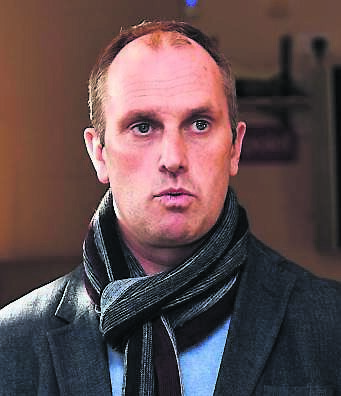
Richard Fahey has departed Tennis Ireland after a successful period at the helm of an organisation which is, let’s just say, challenging.

The Irish Examiner revealed last year how the organisation was rocked by allegations of mis-governance and false invoicing.

All of the various shenanigans at the organisation stem from a body where there are geographical factions and disunity.

All of which was out of Fahey’s control, and whose own high point came in achieving €5.4m in sports capital grants as he exited.

The funds equate to the greatest financial return for any sports organisation, based on the size of that organisation and the funding achieved.

Ladies Tour returns to Ireland

‘Sports strategy’ is a well-worn excuse to delay key decision-making without any clear objectives short-term objectives.

The recent announcement that the Ladies European Tour will return to Ireland with an Irish Open at Dromoland Castle next September — after being absent from the Tour for a decade — is a strategic development worth shouting about for Golf Ireland CEO Mark Kennelly, who has been consistent in the promotion of female participation in the sport.

More on golf numbers in The Pitch soon.

Arsenal top of ticket price table

Arsenal has launched a strong bid to beat Tottenham in the battle for the Premier League title… for football’s most expensive tickets.

Gooners will have to fork out an extra 4% for season tickets next season, bringing the average price to €1,515, according to News Tank Football.

At the start of the current campaign a survey by Reach found that the highest priced season tickets (Cat A) were for Tottenham (€2,691), then Arsenal (€2,437), with Manchester City in third (€1,707).

Taking fourth and fifth slots comes West Ham, and Southampton.

Yes, you read right.

GAA pilot study into NFTs gets under way

The Pitch recently revealed that the GAA is entering the world of NFTs with big plans in the area of crypto content.

A pilot study is under way, being managed by Richie Hogan of the GAA and GPA, with an official launch expected by the end of the month.

Further details of the GAA’s plans and what it will mean for commercial interests and supporters will be revealed in coming weeks.


More in this section

Sport

Newsletter

Latest news from the world of sport, along with the best in opinion from our outstanding team of sports writers. and reporters

Cookie Policy Privacy Policy Brand Safety FAQ Help Contact Us Terms and Conditions

© Examiner Echo Group Limited