The Pitch: GAA looks for a big slice of the €40bn NFT pie
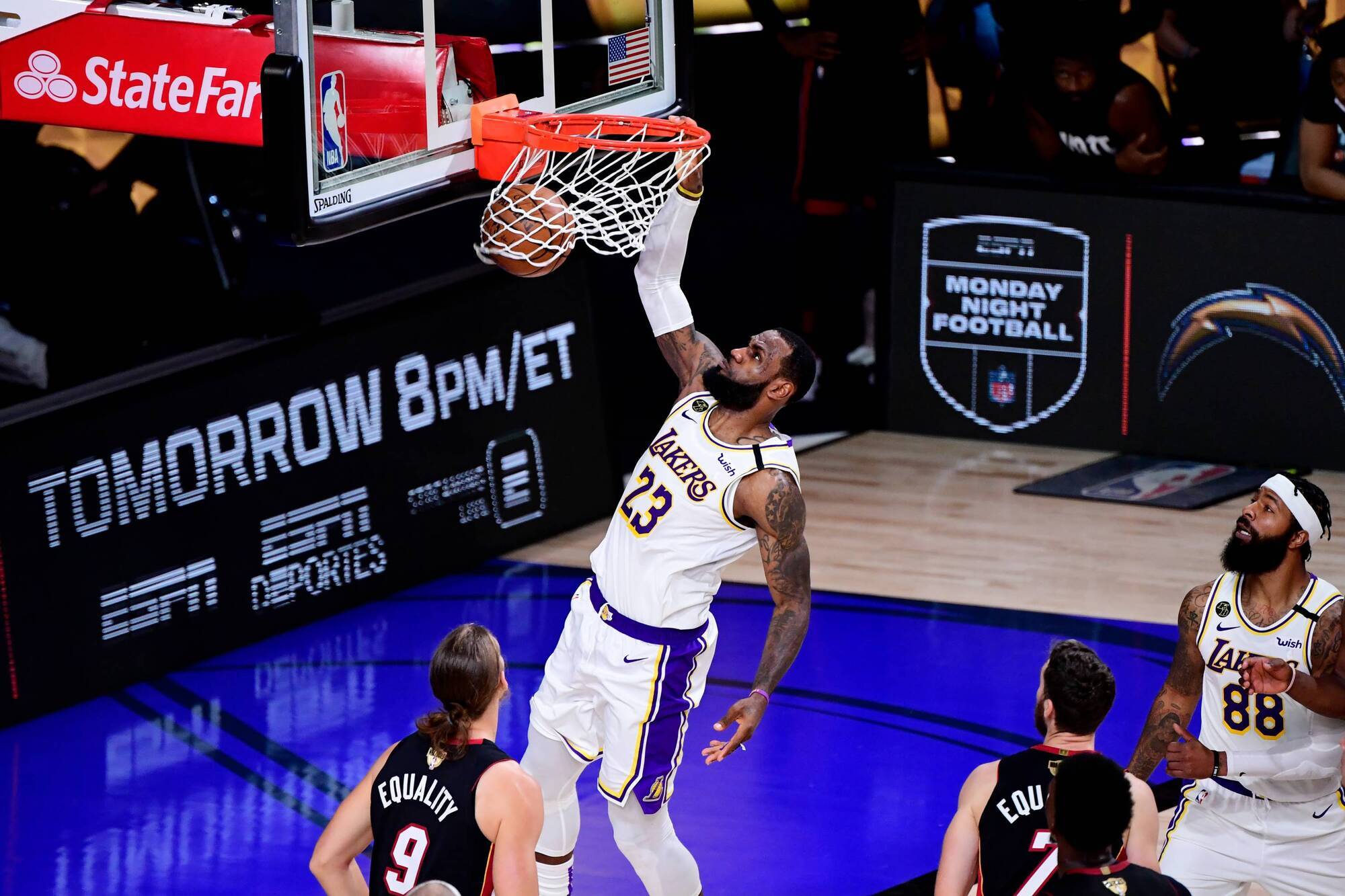
LeBron James of the Los Angeles Lakers dunks the ball during the third quarter against the Miami Heat in Game Six of the 2020 NBA Finals in October, 2020. Picture: Douglas P. DeFelice/Getty Images
THE GAA is set to enter the world of NFTs, becoming the first Irish sports brand or rights holder to issue crypto content.
Croke Park is following the lead of global sporting brands including the NBA, NFL and La Liga in issuing ‘non-fungible tokens’ as the marketplace for digital crypto is set to exceed €40 billion by the end of the year.
So what exactly are non-fungible tokens, and why does the GAA think Irish fans will rush in to purchase pieces of licensed content with the same enthusiasm as US sports collectors?
In basic terms, a sports NFT is a unique piece of fully licensed digital footage or memorabilia, which has been encrypted on the blockchain by a rights holder - in the same way as cryptocurrency - allowing for unique authenticity, allowing sale and future trading.
Effectively GAA fans will have the opportunity to buy a piece of official content that is licensed and uniquely numbered and is something that only eight other people will own.
As an owner – and now rights holder of that footage – the purchaser/collector will receive additional payment whenever that clip is shown subsequently.
NFTs first began turning heads in this part of the world when media reports revealed last year how America’s NBA had started trading and selling video clips of its leading stars in action, through a product called Top Shots.
Last year a clip of a LeBron James dunk sold for $230k (€203k) from the NBA finals in 2020 – the clip was the 23rd of a 79 clip NFT collection of the footage – James wears number 23.
The obvious question is why buy a digital video clip of a sporting moment when you can watch the same thing over and over on YouTube?
That comes down to the uniqueness and official ownership of the content, something which gives these new collectibles their unique selling point.
GAA Commercial Director Peter McKenna told : “Think back to the old times and the arrival of Kodak, that old faded picture on the mantlepiece that is priceless to the owner and is unique. This is the new Kodak moment, a piece of history caught in time and completely unique to the holder as a memory and as a piece of sports memorabilia, in the same way as football cards are stickers were in the past – except without ever losing its quality (and having its own licensed serial number).”
Currently, and in the same way as a piece of art world, the future value of NFTs is still entirely unpredictable and will be dictated by the market and demand for a particular moment.
Around the same time that US professional basketball was selling the most highly sought-after clips for hundreds of thousands of dollars, a non-fungible token piece of virtual art was sold at Christie’s auction house in New York for a staggering $70m (€61.5m) by pop artist, Mike Winkelmann.
While US sports are the world leaders in NFTs, La Liga in Spain has recently signed up to a $7.6 billion deal with Dapper Labs – the true value of the GAA collections is still being worked out as clips are currently being produced and encrypted. expects opening values to work out at somewhere between €20 and €50.
You can expect the likes of Mikey Sheehy’s 1978 lob of Paddy Cullen hit higher reserves, along with all of those standalone moments in history.
While the opening prices are still being worked out, the real fun for traders begins when they return to the marketplace and test the value of their footage with fellow collectors.
The GAA is not ready yet ready to go public on the financial detail just yet, and are busy digitalising pieces with its partners ‘Big Fan’. The project is being managed by Kilkenny hurling star and commercial manager Richie Hogan, who is currently working out with the GPA what the cut of each featured player will be.
While NFTs may very well be a passing fad, where even the most digitally native sports collector might prefer to go back to having physical collectibles to hang on their walls, or put in their bookcases, but the expectation is that it’s here to stay.
FOR too long sports organisations have been delaying introducing sustainability strategies into their overall business plans. But now Munster Rugby has grabbed the initiative and turned it into an early victory thanks to a dual approach to sport’s prickliest issue - sustainability.
By tackling climate change and the need for a more sustainable model, Munster has vowed to become one of sports greenest brands in one of the most interesting commercial activations across sport.
The Red Army has flipped their energy partner Pinergy into a sustainability sponsor and will work with the provider on a multitude of environmental and business matters.
There’s no punishable objective in Irish sport for not adopting sustainability benchmarks despite the growing climate crisis, and despite the work of Munster Rugby and other live initiatives in the GAA, the subject is still a ‘whatever’ item for most.
The danger is that sustainability will be the new governance, with no firm regulations, only aspirational strategic positions - therefore Munster’s grasping of the theme should not be underestimated.
There are also clever activations within the detail. Munster will be supported by Pinergy in the management, monitoring and reduction of energy consumption to become carbon neutral. All savings that Munster makes on energy and electricity will be sold back to Pinergy, demonstrating actual returns for providing a sustainable model. The brand will produce its own energy across its Thomond and Musgrave Parks as well as on-campus in its HPC.
Other features will include an increase in electric vehicle power point installations around the stadium and future incentives for electricity savings.
So why is sustainability in sport still being left up to proactive clubs like Munster and is not more forcibly directed by Government? There are lots of aspirational goal setting, but until firm timelines and practical objectives are put in place by those who govern sport, it will take a lot more entrepreneurial brands - like Munster Rugby - to realise real change.
· EVER since dropping Ireland from its sports asset portfolio almost two years ago, CEO of Three, ‘Ireland and UK’ Robert Finnegan has been flexing his muscle with Chelsea. The mobile operator has just announced a fresh activation in its two-year partnership with the new world club and current Champions League winners, by deploying its 5G network at Stamford Bridge. The West London stadium will be the first Premier League ground to switch up to 5G, which the clubs says paves “the way for the ultimate fan experience”.
· ONE year after announcing it was halving its sponsorship commitments Under Armour has posted record results, with $5.68bn (€5.03m) turnover (+27%) and a $360m (€318.5m) net profit. The move to free up extra marketing investment appears to be working. However, the sports equipment giant, which was established in 1996 has faced a difficult start to 2022, with falling stock price and supply chain challenges set to mark a much different year than 2021.
· MORE than one month after her appointment to CEO of Sport Ireland, Una May has still not presented to the media despite an initial commitment in the press release announcing her elevation into sports' second most important political role. Requests from at the time of Dr Mae’s appointment have been batted into February, and further enquires are now not being entertained.
· THE most influential sports competitions in the world have just been revealed, based on social media audience. According to the KPMG Football Benchmark data results, basketball's NBA sits at number one with 214m followers across Facebook, Twitter, TikTok, YouTube and Weibo. Uefa Champions League is second with 211m, well ahead of third-placed La Liga with 140.6m followers. In fourth place comes the Premier League with the FIFA World Cup fifth with 97 million followers.