From no-hopers to champions-elect: How are Wales shooting for a Grand Slam?
Warren Gatland ended as he had begun his 12-year reign as Welsh coach with a third Grand Slam. Poor old Wayne Pivac had the look of a David Moyes stepping into the shoes of Alex Ferguson when he took over. But he now has his side one step away from glory
From no-hopers to champions-elect: How are Wales shooting for a Grand Slam?

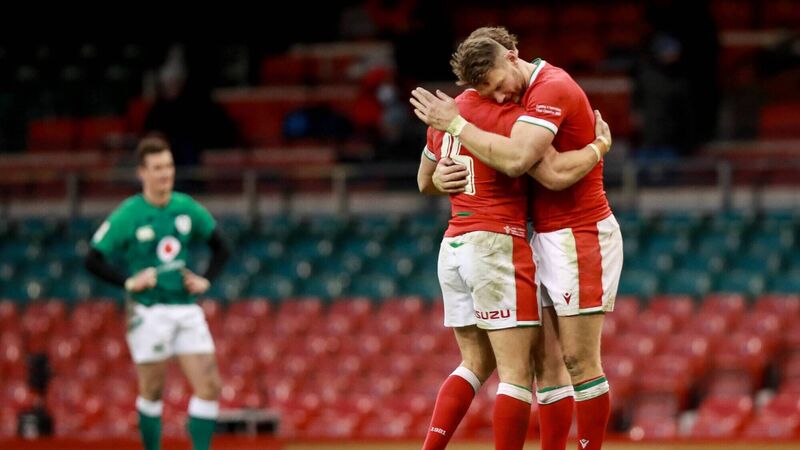
START OF THE JOURNEY: Leigh Halfpenny and Dan Biggar celebrate Wales’ win over Ireland on the opening weekend of the 2021 Six Nations. Wales transformation from no-hopers at the start of the competition has been little short of extraordinary. Picture: Inpho/Tommy Dickson
Alun Wyn Jones, the latest giant figure of Welsh rugby, can join some very good company this weekend if he can inspire his side to raise their game one more time and clinch a fourth Grand Slam for him.

Only five players in the history of the Five and Six Nations have played a part in four teams that have completed the iconic clean sweep – England duo Cyril Lowe and Dave Davies (1913,14,21,23) around WW1, two more English forwards, Ron Cove-Smith (1921,23,24,28) and Jason Leonard (1991,92,95,2003) and French lock Fabien Pelous (1997,98,2002,2004).

True, AWJ is now in his 15th season in his Six Nations, the same number as Rory Best and Brian O’Driscoll, yet he could end up twice as many Slams as them. How can that happen when you consider the gulf that exists in terms of performance between the Irish provinces and Welsh regions?

Coming into the 2021 Six Nations all the talk was about whether or not Wales could beat Italy in Rome, rather than anyone else. The title was supposed to be a clear three-way shoot-out between England, France, and Ireland.

Poor old Wayne Pivac had the look of a David Moyes stepping into the giant shoes of Alex Ferguson as he took over from Warren Gatland. Gats ended as he had begun his 12-year reign as Welsh coach on a high with a third Grand Slam and then fourth place at the 2019 World Cup in Japan.

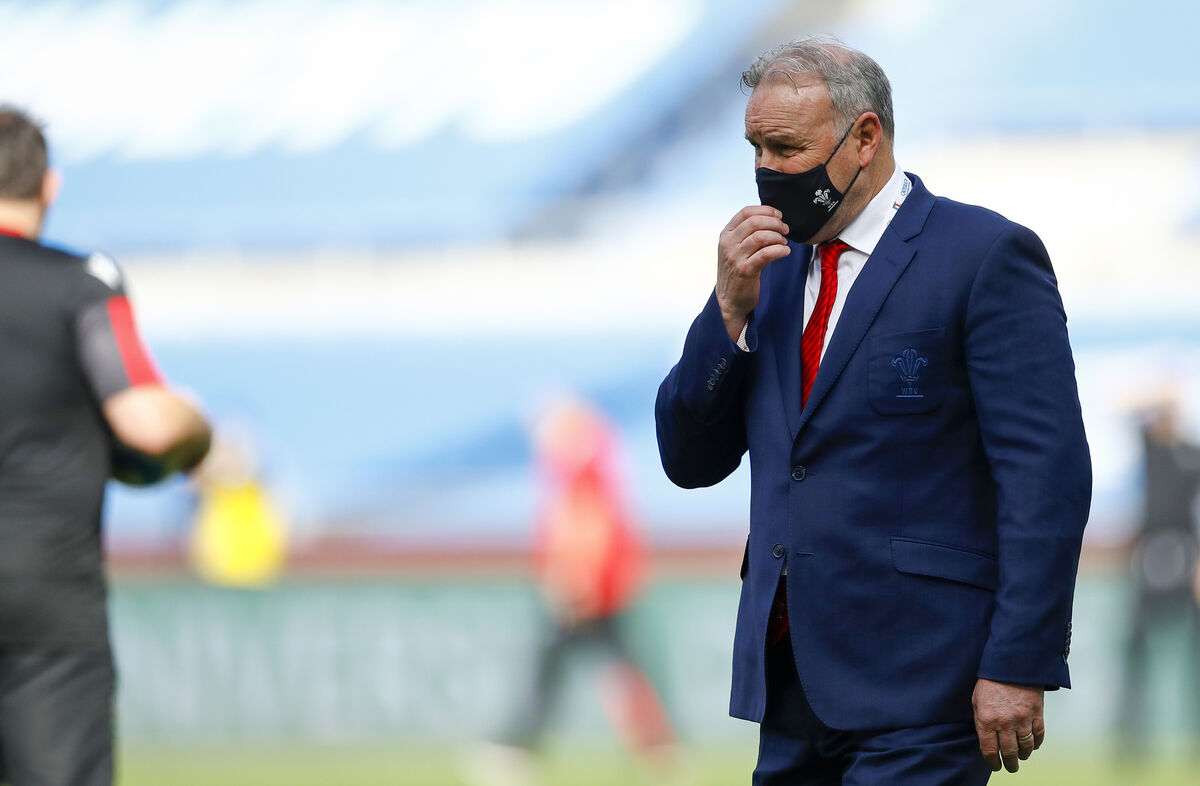
Wales head coach Wayne Pivac. Picture: INPHO/Matteo Ciambelli

With only three wins in 10 games in his first year in charge – Italy twice and Georgia – Pivac must have been viewing this Six Nations campaign with no little fear and huge trepidation. His team were written off as no-hopers, AWJ was deemed to be past his sell-by date and off the radar as a potential British & Irish Lions captain and the Kiwi coach’s interim review this summer was being seen as a potential end of the line.

Yet, in Paris Saturday night, his team will be striding out confidently at Stade de France in search of 13th Grand Slam for the Welsh nation. How on earth did this happen?

Pivac didn’t panic

Despite the pressure the results of his team must have put him under, Pivac never panicked. In much the same way as he approached the job at the Scarlets, he believed in what he was doing and gradually took everyone along with him.

It wasn’t an easy ride for the first year, and he certainly had to convince the senior players he was up to the job, but by the end of the Nations Cup he seemed to have got through to everyone that mattered.

Pivac made some bold decisions

Something had to change last year and it must have been a difficult decision to axe his former Scarlets defence coach Byron Hayward after the defeat to Scotland. They had worked so well together, along with attack coach Stephen Jones, at Parc Y Scarlets, but his methods were very different to those of Shaun Edwards before him.

You could see the cracks appearing in the previously impenetrable red wall and 11 tries conceded in the worst Six Nations campaign since 2007 told its own story.

The arrival of Gethin Jenkins

Hayward’s departure paved the way for Gethin Jenkins to step up into the defensive role, at first on an interim basis and then full time.

The former Wales loosehead legend may still have been a bit wet behind the ears in coaching terms, but he had played with most of the players, knew the international scene inside out and brought with him his own brand of uncomplicated principles. Nobody worked harder in training during his amazing playing career than Jenkins, no one took greater pride in defence on the international stage than he did and few took as much notice of Edwards’ methods over his 12-year tenure as the Wales defence coach.

When you examine the tackle statistics for the first three rounds of the championship they paint an accurate picture of how much effort has gone into the Welsh rearguard action.

There were 271 attempted tackles against the Irish and a 90% success rate; 215 in Scotland at 87% and 142 against England at 89%. They have become hard to breach, and hard to beat.

They’ve ridden their luck

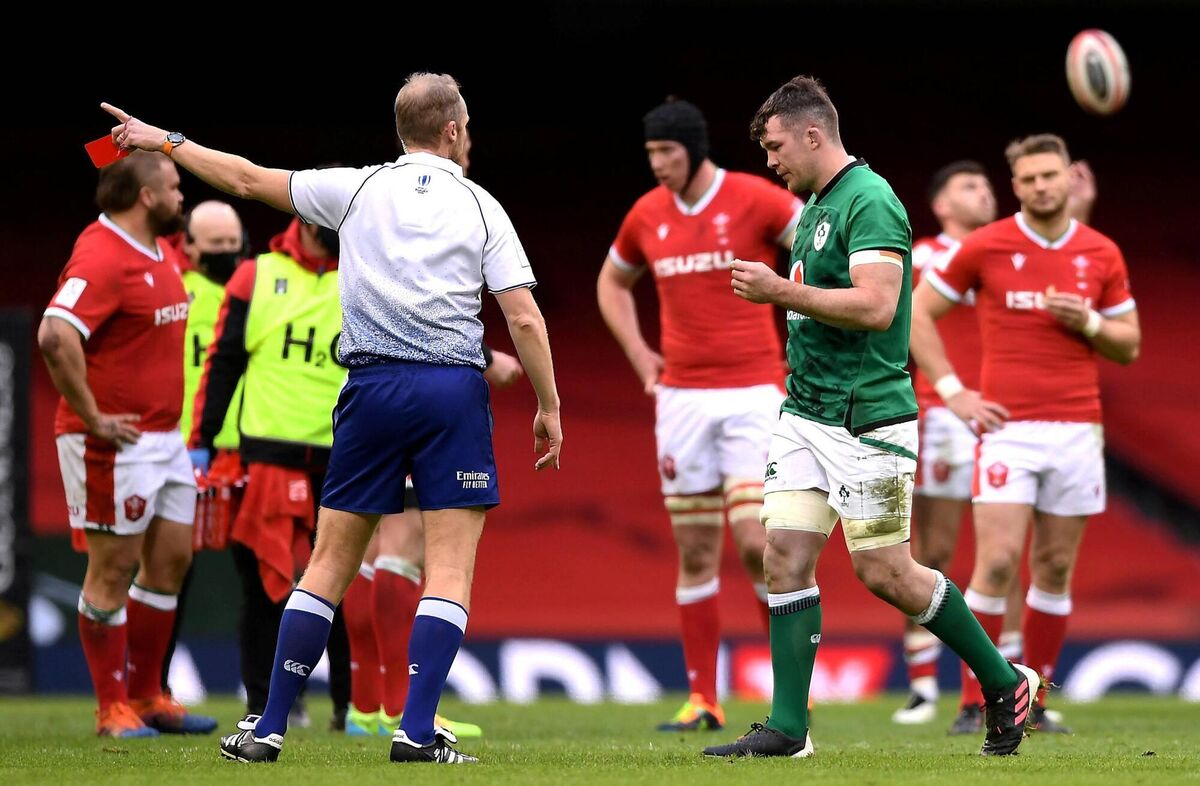
God bless the red faced Peter O’Mahony and Zander Fagerson, and give Pascal Gauzere a knighthood. For once the Welsh have been blessed with the luck of the Irish!

Peter O'Mahony leaves the pitch having being shown a red card by referee Wayne Barnes during the Guinness Six Nations Rugby Championship match between Wales and Ireland. Picture: Ben Evans/Sportsfile

That said, nobody in a red shirt told O’Mahony and Fagerson to go charging in so recklessly to the breakdown. Poor judgement, poor play and stupid red cards that ultimately cost Ireland and Scotland. But on both occasions Wales were trailing and still had to find a way to hit back and win. Yes, it was easier against 14 men, but sometimes the loss of a player can make life even harder against teams that become increasingly belligerent, even more determined and more confined in style. If you get dealt a lucky hand, are you supposed to throw it away? No, you make the most of it.

That’s exactly what Wales have done and they’ve grown in stature and confidence through that process.

Pivac picked on form not reputation

Finding a lock partner for Alun Wyn Jones when Luke Charteris retired was always going to be very important. Gatland felt he had found the right man in Adam Beard, and used him throughout the 2019 Grand Slam. Pivac had other ideas and surprisingly dropped him in the autumn last year. He gave James Botham a chance to prove to him he could step up from the Cardiff Blues and PRO14 rugby to the international stage and he passed the test.

Louis Rees-Zammit was made to sit out the whole of the 2020 Six Nations campaign, but was picked when the coach felt he was ready. The results are there for all to see. He pushed Ryan Elias at hooker, but has gone back to Elliot Dee as back up to Ken Owens because of his better line-out work. Callum Sheedy has been given his chance and is now a real threat to Dan Biggar at No 10 and, having jettisoned Rhys Webb, he picked Kieran Hardy ahead of Gareth Davies at scrum half to face England. Kieran who? You know, the one who darted away to score a quick tap penalty in the 40-24 win over the arch-enemy to clinch the Triple Crown!

Form matters in Pivac’s eyes and he has now got everyone jostling each other for a place in his side.

Back scoring tries

The calm, instinctive and creative influence of Stephen Jones as backs coach is starting to permeate its way into the Pivac game plan, in much the same way it did at the Scarlets. Remember the way in which the Llanelli outfit destroyed Munster in the PRO14 final at the Aviva Stadium in 2017.

This Welsh side has outscored each of their opponents in the try stakes to date, picked up their first try bonus-point against England and now have a record three so far from 17 touchdowns. With a game to go they have already equalled the record of 17 tries in a season from 2016 and 2005.

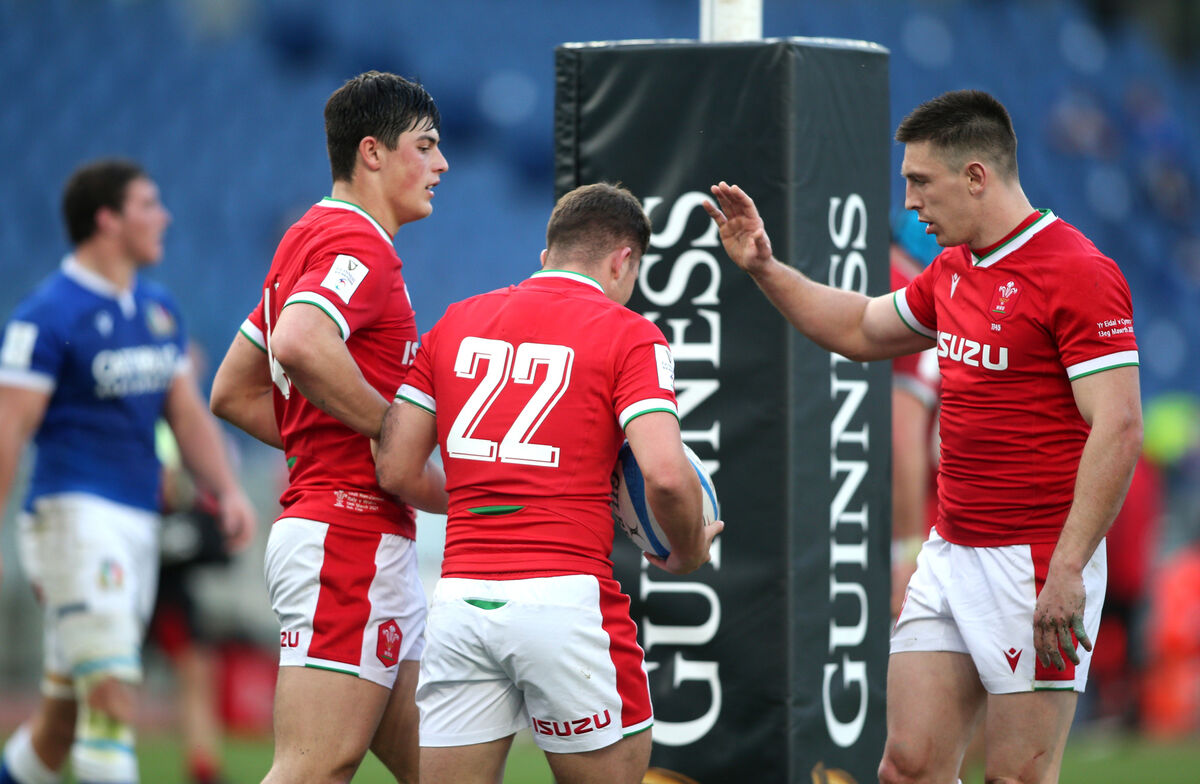
Wales' Callum Sheedy (centre) celebrates scoring their sixth try with teammates during the Guinness Six Nations match at Stadio Olimpico, Rome. 

One more in Paris will take the Welsh record and 18 points will enable AWJ’s men to surpass the most points in a season notched in the Grand Slam campaign of 2005 of 151.

England always know they can never take Wales for granted, but you get the feeling that both the Irish and Scots saw this Welsh team as easy beats after last year. They also, it appeared, fatally took into account PRO14 and European matches against Welsh opposition.

There are still huge issues with the regional game in Wales, but the pathway that takes the best talent to the international stage is still working and still producing outstanding players, many of who you will be seeing in action with the Lions this summer if they actually play against the ‘Boks.

The last three Lions tours have proved that point. Wales had eight Test players in 2017, 12 in 2013 and 10 in 2009 in a period when the Lions won four and drew another of nine Tests.

There were seven Irishmen in 2017 and 2013 and 10 in South Africa in 2009, while the English had 11 in New Zealand last time out, nine in Australia in 2013 and nine in 2009.

Pivac always knew he had quality players to work with. He just had to get his message and philosophy through to them loud and clear. This weekend will show just how much they have taken in.

More in this section

Cookie Policy Privacy Policy Brand Safety FAQ Help Contact Us Terms and Conditions

© Examiner Echo Group Limited